Critical Minerals and Materials Separations
Critical mineral and material (CMM) extraction, separation, and refining research seeks energy-efficient, elementally selective, and industrially scalable ways to glean elements and materials from a variety of domestic feedstocks, including ore, waste streams, recycled products, and seawater.
What are critical minerals and materials?
CMMs include a variety of elements and other materials used in many technologies. Examples include lithium for batteries, nickel for alloys and electronics, gallium for microelectronics, and rare-earth elements (REEs) used in magnets critical for electric cars and hard disk drives. CMMs are also crucial for U.S. defense operations—magnesium for lightweight aircraft, beryllium in missile defense systems, and scandium for next-generation aviation capabilities. Developing reliable, cost-effective, efficient, and productive domestic supply chains for CMMs is essential for U.S. energy as well as economic and national security.
Separations is a key technical step needed to convert complex feedstocks into high-purity CMM products for manufacturing. However, obtaining critical minerals economically and efficiently has become a significant bottleneck in many processes. This challenge, coupled with growing demand for many different minerals and materials, makes researching, identifying, and scaling new CMM separations technologies a time-sensitive and critical area of study.
History of physical and chemical separations
Separation science has a rich history beginning in the late 1700s, when scientists first started working to separate REEs. Because REEs are chemically very similar to one another, their separation became—and in many ways still is—a classic chemistry challenge. Even with centuries of research and progress, scientists are still seeking fundamentally new separation techniques.
Early separation attempts focused on exploiting key physical differences between different elements and materials. Smelting, for example, is an ancient separation process used on ore that works by leveraging the differences in the melting points of the metal and the material that encases it. Melting points were also a central focus when researchers first started tackling REE separations, as were other properties, like density, solubility, and particle size.
As separation science progressed, scientists moved from processes that remove one component to modern approaches that utilize factors like equilibria and thermodynamics to generate a high-purity product from dilute or otherwise challenging sources. The latest approaches go even further, using minute differences between materials as the backbone of fundamentally new processes. One such method is ligand-based liquid-liquid solvent extraction, where a species of interest in a complex mixture is targeted by a ligand, which binds to and transfers that target material from one liquid to another. Despite the specificity and tunability of such approaches, the associated energy, waste, and environmental burden of achieving high purity still presents considerable challenges.
The concept of certain materials and minerals being critical to national interests was born during World Wars I and II, when it became clear that the United States relied heavily on various supply chains that were vulnerable to disruption. However, it wasn’t until the late 2000s and early 2010s that research into critical materials began accelerating into the robust field it is today.
Separation feedstocks
While traditional sources like ores and other deposits from which CMMs can be extracted using physical means provide consistent feedstocks globally, separation science is particularly important for nontraditional resources. Such feedstocks include mining by-products, seawater, and electronic waste where the CMM concentration is variable or the target materials are challenging to access because of the complexity of the mixture.
Utilizing these resources becomes even more difficult because of the selectivity of many critical elements, which are often chemically very similar and problematic to separate. For example, separating individual REE oxides to purities of multiple “nines” (a shorthand that indicates extremely high purity, possibly 99.9 percent or higher) can be challenging. Ending up with metal salts, rather than salts that have been reduced to high-purity metals, is another undesirable result. Current research focuses on developing separations processes with tuned selectivity for a target material, yielding high-purity products while generating minimal waste and being economically feasible based on input costs and product value.
The capacity to cost-effectively extract CMMs from nontraditional and novel feedstocks at industrially relevant scales is of particular interest to the United States because many CMMs vital to energy and national security—such as REEs, high-purity nickel, platinum-group metals, and gallium—do not have an abundant supply of primary ores. The United States thus relies on trade to obtain these crucial materials for a variety of applications, including batteries, electronics, and automotive parts. As of 2025, the United States’ net import reliance was 100 percent for 13 of 58 nonfuel commodities on the final 2025 Critical Minerals List and was over 50 percent for another 20 of those commodities (USGS 2026).
Current U.S. dependence on CMM imports emphasizes the need to establish domestic supply chains, and this challenge is a central focus of the Department of Energy (DOE) Advanced Materials and Manufacturing Technologies Office’s Critical Minerals and Materials program. The program seeks to diversify supplies of and develop alternatives to CMMs, improve materials and manufacturing efficiency, and invest in recycling and reuse approaches.
Critical materials separation at Pacific Northwest National Laboratory
As a multidisciplinary DOE national laboratory, Pacific Northwest National Laboratory (PNNL) is ideally positioned to transform separations science. PNNL’s depth of experience extends across the physical and chemical separations space, including reactive separations. Researchers are also probing hydrometallurgical CMM separations, including extracting nickel using waste acid, separating critical materials from dissolved batteries, and gleaning critical minerals from domestic electronic waste. These techniques leverage chemical or electrochemical properties to convert different elements of a particular mixture, allowing separation processes to be tuned for improved efficiency and selectivity.
PNNL has also developed online sensors for process monitoring and control of REE separations. This expertise comes from over a decade of research into online spectroscopic monitoring capabilities and process control that can be applied to complex chemical separations.
The Laboratory has additional strengths in design and modeling to support industry partners. PNNL couples its molecular- and process-scale modeling and separations expertise in-house, enabling technology to be derisked before scale-up. Facilities include the Critical Minerals Laboratory, where approaches are being developed to extract critical minerals from low-grade ore, as well as the Critical Materials Separations Laboratory, a space that brings together automated instruments with agentic workflows to enable discovery and advancement in separations science and technology.
Non-Equilibrium Transport Driven Separations Initiative
The Non-Equilibrium Transport Driven Separations (NETS) Initiative at PNNL is developing and evaluating next-generation separation strategies targeting critical materials. By focusing on far-from-equilibrium conditions that are conducive to selective nucleation and precipitation, NETS seeks to develop a pathway for a sustainable domestic supply chain of critical materials, supporting national security and accelerating the transition to a new energy economy. The NETS team is developing a foundational molecular understanding of far-from-equilibrium separation processes that leverage liquid flow and applied magnetic fields. The team is also validating the scalability and applicability of such processes to real-world feedstocks sourced from industry partners.
Critical minerals extraction from seawater
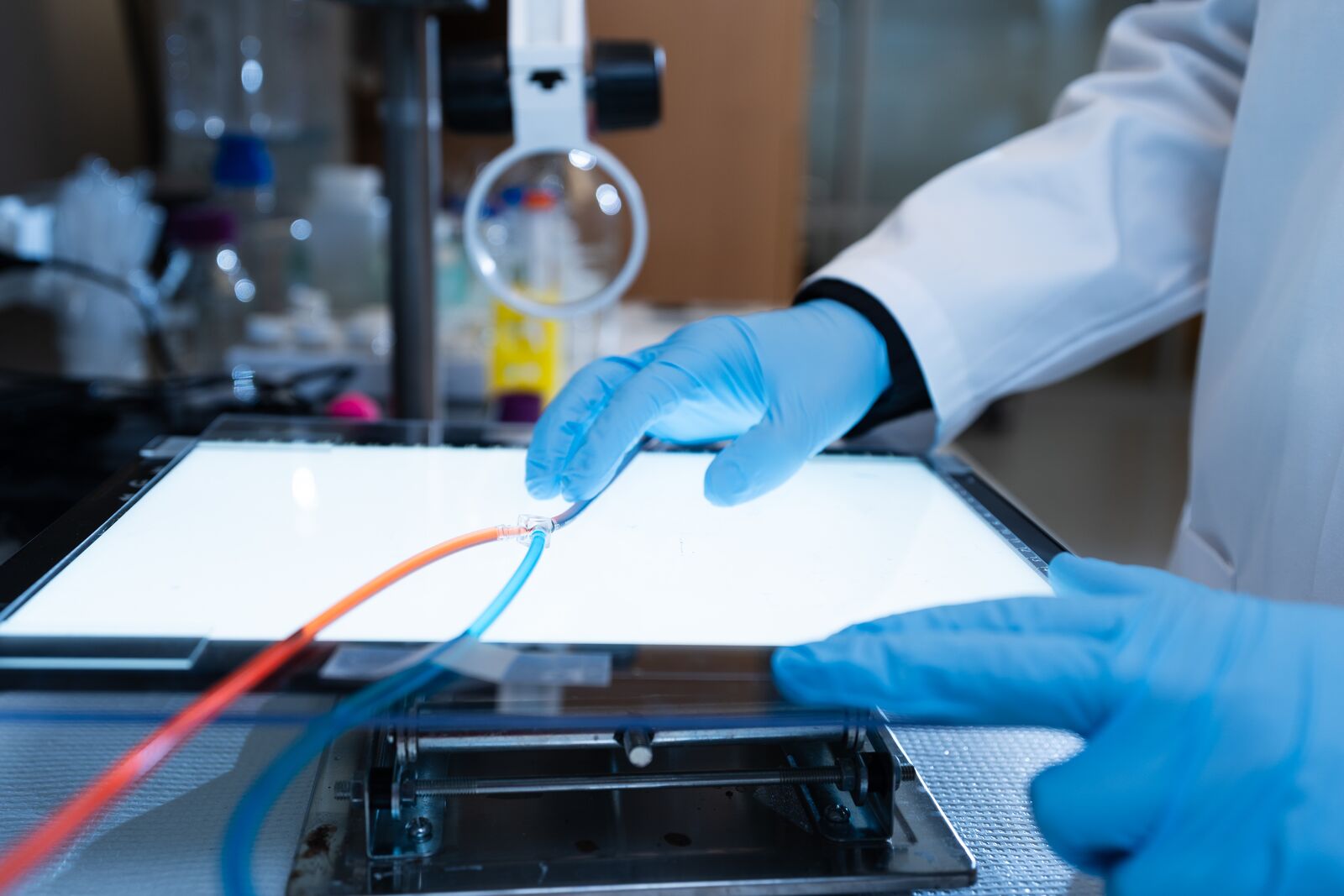
As DOE’s only marine sciences facility, PNNL-Sequim is leading the charge on seawater mining. Chinmayee Subban, a chemist who leads PNNL’s marine extraction efforts, notes that the most significant challenge is dilution—massive energy inputs are required to extract sufficient amounts of minerals from seawater. Current research, including at PNNL, is tackling this challenge by maximizing the resources recovered from every gallon of seawater through evaluation of integrated processes that generate multiple value streams (e.g., fresh water, seaweed, chemicals, and critical minerals). Efforts are focused on building modular, demonstration-scale capabilities that will allow rapid testing and evaluation of materials and technologies for critical minerals recovery from real seawater to generate the experimental data needed to derisk investments in seawater mining.
METALLIC partner lab
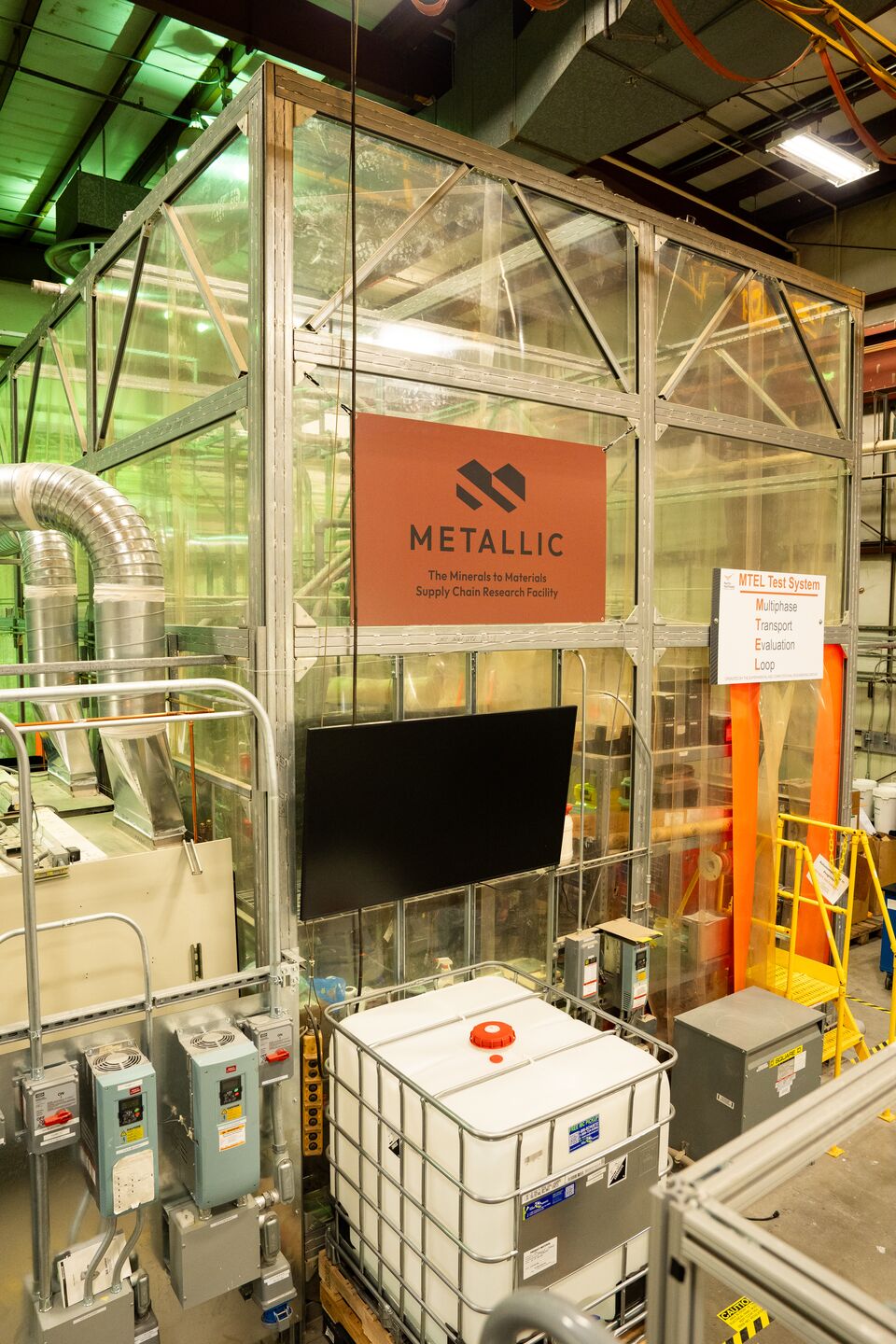
PNNL is a partner lab in the Minerals to Materials Supply Chain Research Facility (METALLIC), which builds upon existing DOE efforts to accelerate the establishment of new, domestic CMM supply chains. Led by the National Energy Technology Laboratory, METALLIC brings together the resources of nine national labs to accelerate and derisk CMM technology development and commercialization.