Critical Minerals and Materials Supply Chain Modeling
What is CMM supply chain modeling?
Supply chain modeling for critical minerals and materials (CMMs) encompasses a set of analytical, AI, and scenario modeling strategies for mapping, tracking, and simulating risks and potential future outcomes for CMM supply chains.
CMMs are minerals or materials that are considered important to the U.S. economy or national security and vulnerable to supply chain disruptions. CMM supply chain models evaluate global supply and demand, domestic production and processing, and supplier diversity for CMMs as well as risks and outcomes related to U.S. dependency on foreign entities for CMM supply or processing.
How CMM supply chain modeling works
To model CMM supply chains, researchers input current and historical data into scenario modeling software to simulate a specific mineral or material’s evolving importance, availability, dependencies, and vulnerabilities over time. Input data can vary, potentially including CMM resource availability, trade statistics, pricing, and import volume. CMM supply chain models account for various factors—such as resource constraints, trade routes, foreign influence over supply, cost trends, and market fluctuations—and simulate different future scenarios.
Various stages of the CMM supply chain can be modeled, including the following:
- exploration
- extraction/mining
- refining/concentration
- processing
- manufacturing/fabrication
- reuse/recycling.
CMM supply chain models can also be used to evaluate the impacts of different developments in the supply chain (e.g., introduction of new mining technologies, changes in international relations, or evolution of new technologies that demand CMMs). As such, they can provide direction for the most promising strategies to strengthen supply chain resilience.
Why are CMM supply chains vulnerable?
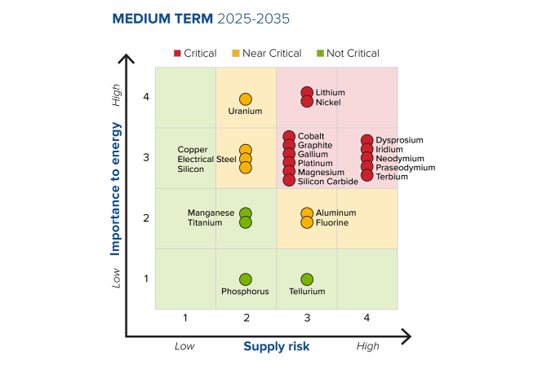
CMMs are vulnerable to supply chain risks for a variety of reasons that depend on the exact mineral or material, ranging from factors like growing demand to lack of supply diversity, lack of domestic availability, difficulty of mineral extraction and processing at scale, and/or overreliance on foreign entities for material import or processing. These are often outcomes of a material being geographically concentrated or being particularly costly to extract and refine.
While establishing new excavation sites and manufacturing facilities can help increase the flow of CMMs into the United States, it often can’t be done at the speed and scale required to keep up with accelerating demand. Additionally, leaders often need to navigate the complexities of geopolitical relationships and regulatory differences between countries.
How modeling improves CMM supply chain resilience
Supply chain modeling is a useful tool for decision-makers to use when determining which minerals and materials have the highest supply chain risk and should be prioritized for new policies, investments, and research and development efforts. Supply chain models can also spot bottlenecks and inefficiencies to inform strategies for preventing supply shortages and reducing demand.
Why are CMM supply chains difficult to model?
Part of what makes CMM supply chains difficult to model is the number of variables at play and the complex interactions among them. Another factor is the unique nature of how some critical minerals are sourced. In some cases, CMMs are extracted as by-products of other materials, which can increase the complexity of estimating incoming quantities.
Analytical and scenario models are highly useful for anticipating CMM supply chain disruptions, risks, and outcomes. Nevertheless, their accuracy can be limited by data gaps, CMM price volatility, and unpredictable processing delays due to regulatory constraints, representing an area of ongoing research and development at research institutions like PNNL.
PNNL is helping to strengthen CMM supply chains
To bolster U.S. supply chain resilience, PNNL is advancing CMM supply chain modeling by developing analytical tools capable of mapping various components of the supply chain—from initial exploration and extraction to processing and recycling. Beyond supply chain modeling, PNNL is also using other tools and high-fidelity data to develop capabilities ranging from multisectoral modeling and trade analysis to AI-enabled analytics and near-real-time global mineral flows analysis.
The work that PNNL is doing to strengthen the global supply chains of materials and minerals that are essential to U.S. energy systems, advanced manufacturing, and national security encompasses several key research areas:
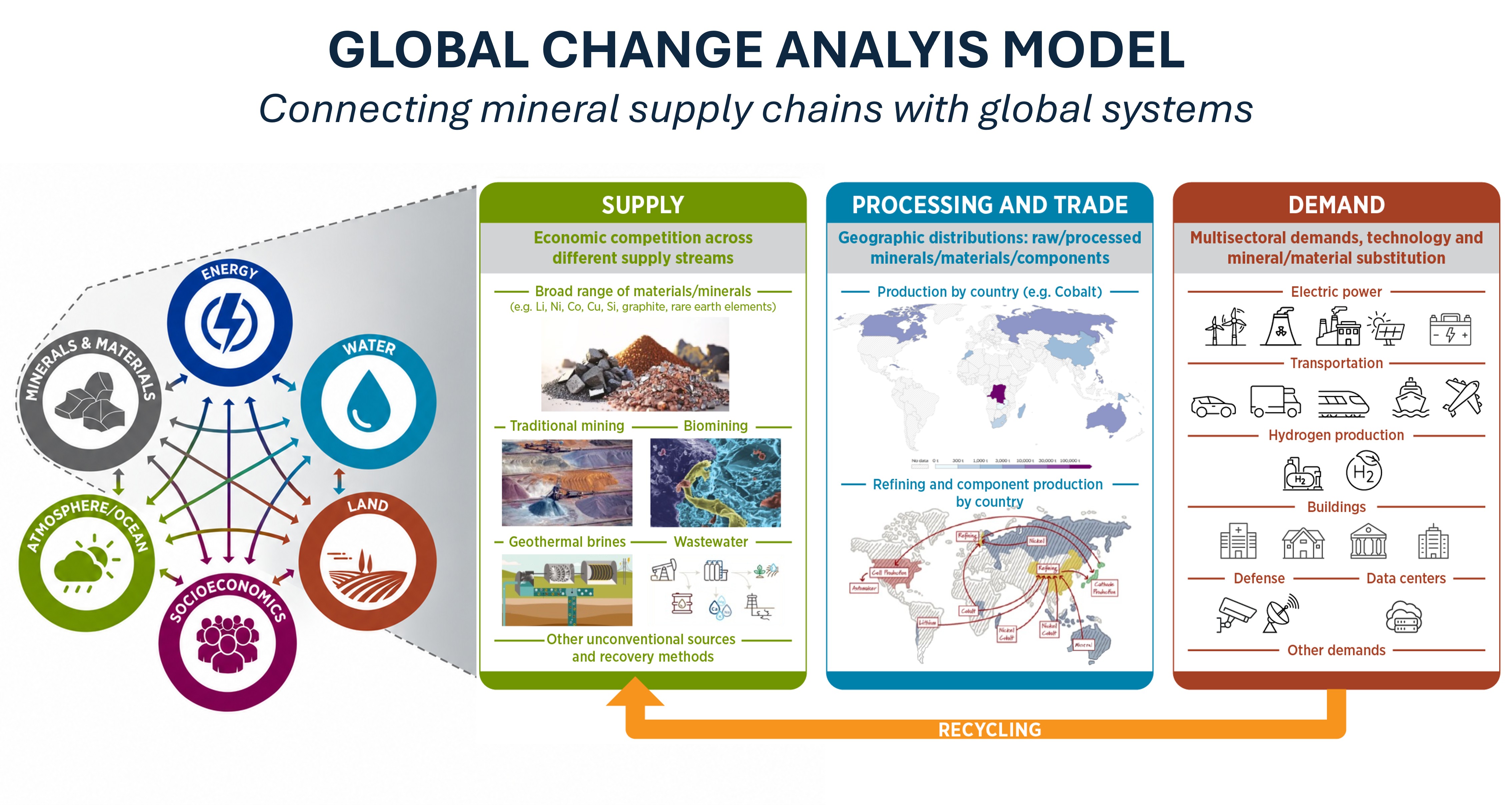
- Global Change Analysis Model: Developed through collaboration between PNNL and the University of Maryland under the Joint Global Change Research Institute, the Global Change Analysis Model (GCAM) is a global multisector model that analyzes the interrelationships among CMMs, energy, water, economy, and other systems at various scales. Modeling with the GCAM can show how global, regional, national, and subnational CMM supply, demand, and trade factors might interact with each other to create risks and bottlenecks, along with how they can interact with other systems such as energy and water systems to create cascading risks across systems.
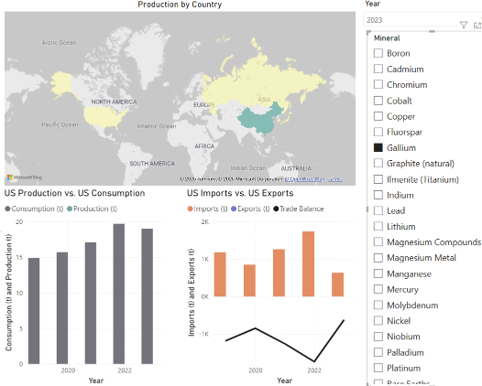
- Trade data analytics: Using trade and production data, PNNL creates dashboards visualizing global CMM flows to help map changes in mineral and material sourcing and processing and identify emerging dependencies.
- Detection of illicit activity: PNNL uses anomaly detection and corporate network analysis tools to detect illegal CMM mining and smuggling and evaluate foreign influence over CMM supply chains, looking at factors like CMM volume discrepancies and unusual routes.
- Techno-economic and policy analysis: By analyzing economic and policy factors and evaluating new and emerging technologies for CMM replacement, PNNL produces valuable insights that can help shape national policy to enhance U.S. industrial competitiveness.
- Scenario modeling: PNNL uses AI and modeling tools to simulate supply chain scenarios, revealing new insights into the potential impacts that supply changes and policy interventions could have on CMM cost and availability in the United States.
- International engagement: PNNL helps identify risks and opportunities for engaging in CMM recovery in other countries by evaluating their mining, environmental, trade, and investment practices.
- Scientific reach-back: Materials scientists, geologists, chemists, and other researchers at PNNL support current CMM recovery and processing projects by refining scenario modeling and forecasting and experimenting with new technologies.
With these diverse analytical, experimental, and technological capabilities, PNNL is helping to guide current and future efforts to strengthen CMM supply chain resilience. For more information on PNNL’s latest contributions to these research areas, visit the Critical Minerals and Materials PNNL web page.