PNNL

  • About
  • News & Media
  • Careers
  • Events
  • Research
    • Scientific Discovery
      • Autonomous Science
      • Biology
        • Chemical Biology
        • Computational Biology
        • Ecosystem Science
        • Human Health
          • Cancer Biology
          • Exposure Science & Pathogen Biology
        • Integrative Omics
          • Advanced Metabolomics
          • Chemical Biology
          • Mass Spectrometry-Based Measurement Technologies
          • Spatial and Single-Cell Proteomics
          • Structural Biology
        • Microbiome Science
          • Biofuels & Bioproducts
          • Human Microbiome
          • Soil Microbiome
          • Synthetic Biology
        • Predictive Phenomics
      • Chemistry
        • Computational Chemistry
        • Chemical Separations
        • Chemical Physics
        • Catalysis
      • Earth & Coastal Sciences
        • Global Change
        • Atmospheric Science
          • Atmospheric Aerosols
          • Human-Earth System Interactions
          • Modeling Earth Systems
        • Coastal Science
        • Ecosystem Science
        • Subsurface Science
        • Terrestrial Aquatics
      • Materials Sciences
        • Materials in Extreme Environments
        • Nondestructive Examination
        • Precision Materials by Design
        • Science of Interfaces
        • Smart Advanced Manufacturing
          • Cold Spray
          • Friction Stir Welding & Processing
          • ShAPE
      • Nuclear & Particle Physics
        • Dark Matter
        • Fusion Energy Science
        • Neutrino Physics
      • Quantum Information Sciences
    • Energy Resiliency
      • Electric Grid Modernization
        • Emergency Response
        • Grid Analytics
          • AGM Program
          • Tools and Capabilities
        • Grid Architecture
        • Grid Cybersecurity
        • Grid Energy Storage
        • Transmission
        • Distribution
      • Energy Efficiency
        • Appliance and Equipment Standards
        • Building Energy Codes
        • Building Technologies
          • Advanced Building Controls
          • Advanced Lighting
          • Building-Grid Integration
        • Commercial Buildings
        • Federal Buildings
          • Federal Performance Optimization
          • Resilience and Security
        • Residential Buildings
          • Building America Solution Center
          • Energy Efficient Technology Integration
          • Home Energy Score
        • Energy Efficient Technology Integration
      • Energy Storage
        • Electrochemical Energy Storage
        • Flexible Loads and Generation
        • Grid Integration, Controls, and Architecture
        • Regulation, Policy, and Valuation
        • Science Supporting Energy Storage
        • Chemical Energy Storage
      • Environmental Management
        • Waste Processing
        • Radiation Measurement
        • Environmental Remediation
      • Fossil Energy
        • Subsurface Energy Systems
        • Advanced Hydrocarbon Conversion
      • Nuclear Energy
        • Fuel Cycle Research
        • Advanced Reactors
        • Reactor Operations
        • Reactor Licensing
        • Nondestructive Examination
      • Renewable Energy
        • Solar Energy
        • Wind Energy
          • Wind Resource Characterization
          • Wildlife and Wind
          • Wind Systems Integration
          • Wind Data Management
          • Distributed Wind
        • Marine Energy
          • Environmental Monitoring for Marine Energy
          • Marine Biofouling and Corrosion
          • Marine Energy Innovation
          • Marine Energy Resource Characterization
          • Testing for Marine Energy
        • Hydropower
          • Environmental Performance of Hydropower
          • Hydropower Cybersecurity and Digitalization
          • Hydropower and the Electric Grid
          • Materials Science for Hydropower
          • Pumped Storage Hydropower
          • Water + Hydropower Planning
        • Grid Integration of Renewable Energy
        • Geothermal Energy
      • Transportation
        • Bioenergy Technologies
          • Algal Biofuels
          • Aviation Biofuels
          • Waste-to-Energy and Products
        • Hydrogen & Fuel Cells
        • Vehicle Technologies
          • Emission Control
          • Energy-Efficient Mobility Systems
          • Lightweight Materials
          • Vehicle Electrification
          • Vehicle Grid Integration
    • National Security
      • Chemical & Biothreat Signatures
        • Contraband Detection
        • Pathogen Science & Detection
        • Explosives Detection
        • Threat-Agnostic Biodefense
      • Cybersecurity
        • Discovery and Insight
        • Proactive Defense
        • Trusted Systems
      • Nuclear Material Science
      • Nuclear Nonproliferation
        • Radiological & Nuclear Detection
        • Nuclear Forensics
        • Ultra-Sensitive Nuclear Measurements
        • Nuclear Explosion Monitoring
        • Global Nuclear & Radiological Security
      • Stakeholder Engagement
        • Disaster Recovery
        • Global Collaborations
        • Legislative and Regulatory Analysis
        • Technical Training
      • Systems Integration & Deployment
        • Additive Manufacturing
        • Deployed Technologies
        • Rapid Prototyping
        • Systems Engineering
      • Threat Analysis
        • Advanced Wireless Security
          • 5G Security
          • RF Signal Detection & Exploitation
        • Border Security
        • Internet of Things
        • Maritime Security
        • Millimeter Wave
        • Mission Risk and Resilience
    • Data Science & Computing
      • Artificial Intelligence
      • Graph and Data Analytics
      • Software Engineering
      • Computational Mathematics & Statistics
      • Future Computing Technologies
        • Adaptive Autonomous Systems
    • Lab Objectives
    • Publications & Reports
    • Featured Research
  • People
    • Inventors
    • Lab Leadership
    • Lab Fellows
    • Staff Accomplishments
  • Partner with PNNL
    • Education
      • Undergraduate Students
      • Graduate Students
      • Post-graduate Students
      • University Faculty
      • University Partnerships
      • K-12 Educators and Students
      • STEM Education
        • STEM Workforce Development
        • STEM Outreach
      • Internships
    • Community
      • Philanthropy
      • Volunteering
    • Industry
      • Why Partner with PNNL
      • Explore Types of Engagement
      • How to Partner with Us
      • Available Technologies
      • Procurement
      • Technology Ombuds
  • Facilities & Centers
    • All Facilities
      • Atmospheric Radiation Measurement User Facility
      • Electricity Infrastructure Operations Center
      • Energy Sciences Center
      • Environmental Molecular Sciences Laboratory
      • Grid Storage Launchpad
      • Institute for Integrated Catalysis
      • Interdiction Technology and Integration Laboratory
      • PNNL Portland Research Center
      • PNNL-Seattle
      • PNNL-Sequim (Marine and Coastal Research)
      • Radiochemical Processing Laboratory
      • Shallow Underground Laboratory

Breadcrumb

  1. Home
  2. Energy Resiliency
  3. Renewable Energy
  4. Marine Energy

Marine Energy 
Innovation

Advancing the 
power of the ocean

  • News & Updates
  • Attend a Marine Energy Innovation Event
  • Publications
  • Projects

Global ocean-based industries are valued at an estimated $2.5 trillion annually and projected to double in size by 2030, compared to 2010 levels. Thriving ocean-based industries   provide economic, social, and environmental benefits from the use of the ocean and connected waterways, across sectors, including critical minerals, maritime transport, oceanographic research, ocean energy, national security, and fisheries.

Powering Ocean Based Industry and Supporting Coastal Communities 

With support from Department of Energy's (DOE’s) Hydropower and Hydrokinetic Office (H2O), Pacific Northwest National Laboratory (PNNL) is working with other national laboratories and private sector partners to accelerate the growth of ocean-based industries, while creating a multifaceted set of pathways for further development of marine energy technologies.  

To advance this effort, PNNL and partners have identified real-world applications that would benefit from integration with marine energy. These include harnessing ocean energy to power coastal communities, extracting valuable minerals from seawater, recharging underwater vehicles for ocean observations, and providing power for offshore aquaculture facilities.  Work ranges from foundational research and development projects to assisting coastal communities in addressing energy challenges with innovative power sources, and attracting researchers and developers interested in powering diverse needs at sea and onshore. 

Topic areas include:  
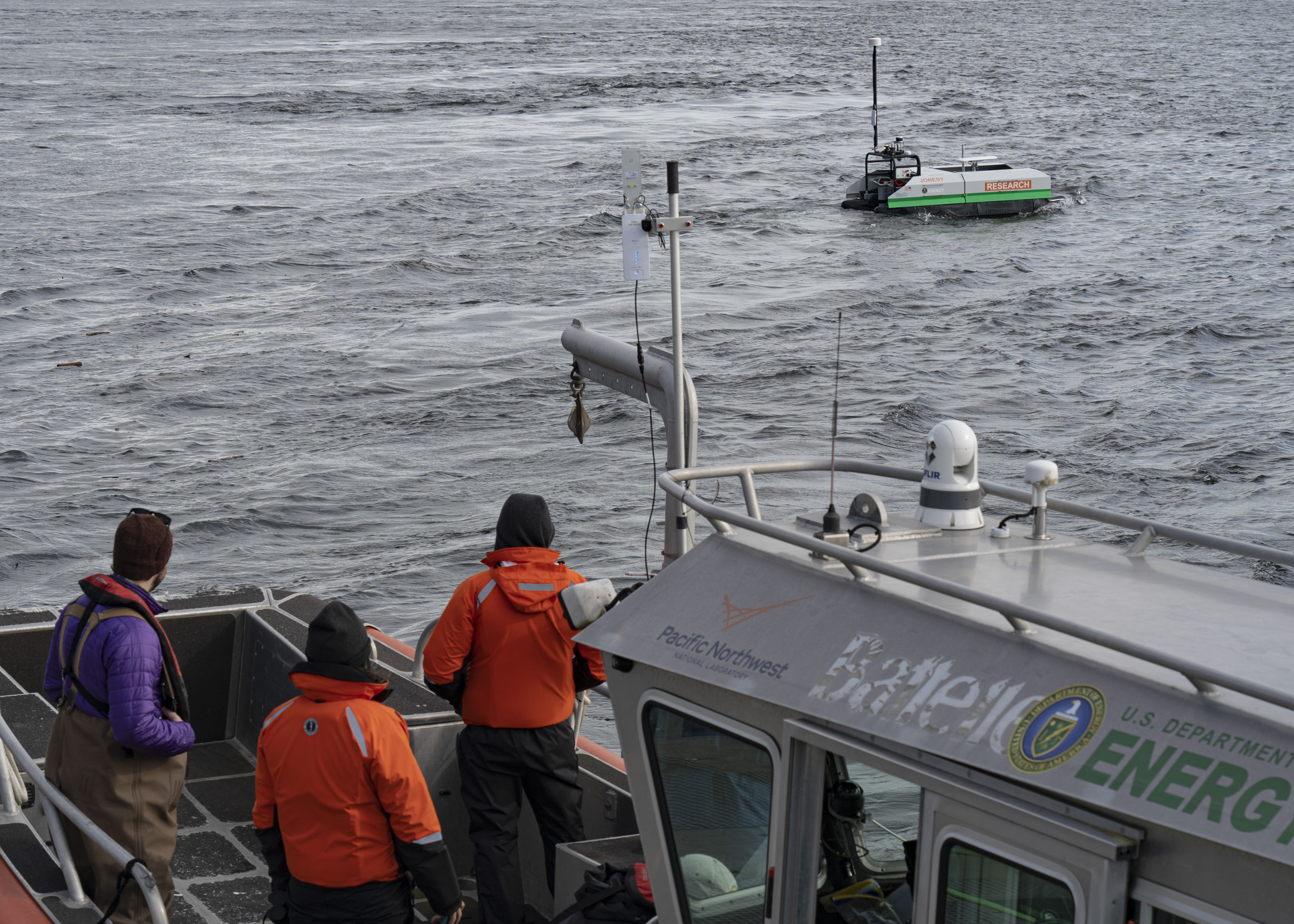
Researchers watch the maiden voyage of the new autonomous surface vehicle from deck of the R/V Desdemona in Sequim Bay
PNNL researchers have expertise in key marine development areas, including marine energy, environmental monitoring, biofuels from sustainable feedstocks, mineral extraction from seawater, and hydrogen fuel production from the ocean. This autonomous surface vehicle is a new platform that PNNL researchers are using to support technological innovation and marine energy integration to power the blue economy. (Photo by Shanon Dell | Pacific Northwest National Laboratory)
  • identifying applications for providing power at sea where marine energy provides a unique and strong value proposition, like powering drifting sensors in the arctic 
  • designing docking platforms for autonomous vehicles that can self-charge using power from the ocean 
  • modeling and developing electronic systems to provide consistent power from intermittent tidal and wave resources 
  • testing novel materials and processes for manufacturing small-scale (< 100 watts) tidal turbines 
  • drawing energy from temperature gradients in the ocean to power uncrewed vehicles and sensors 
  • extracting critical minerals dissolved in seawater for use in industry 
  • producing industrial chemicals from seawater using advanced processes able to be powered with energy from the ocean 
  • developing tools for communities to evaluate their readiness for deployment of marine energy technologies to meet their unique needs 

Supporting Marine Energy Innovation
MSLPHOTO
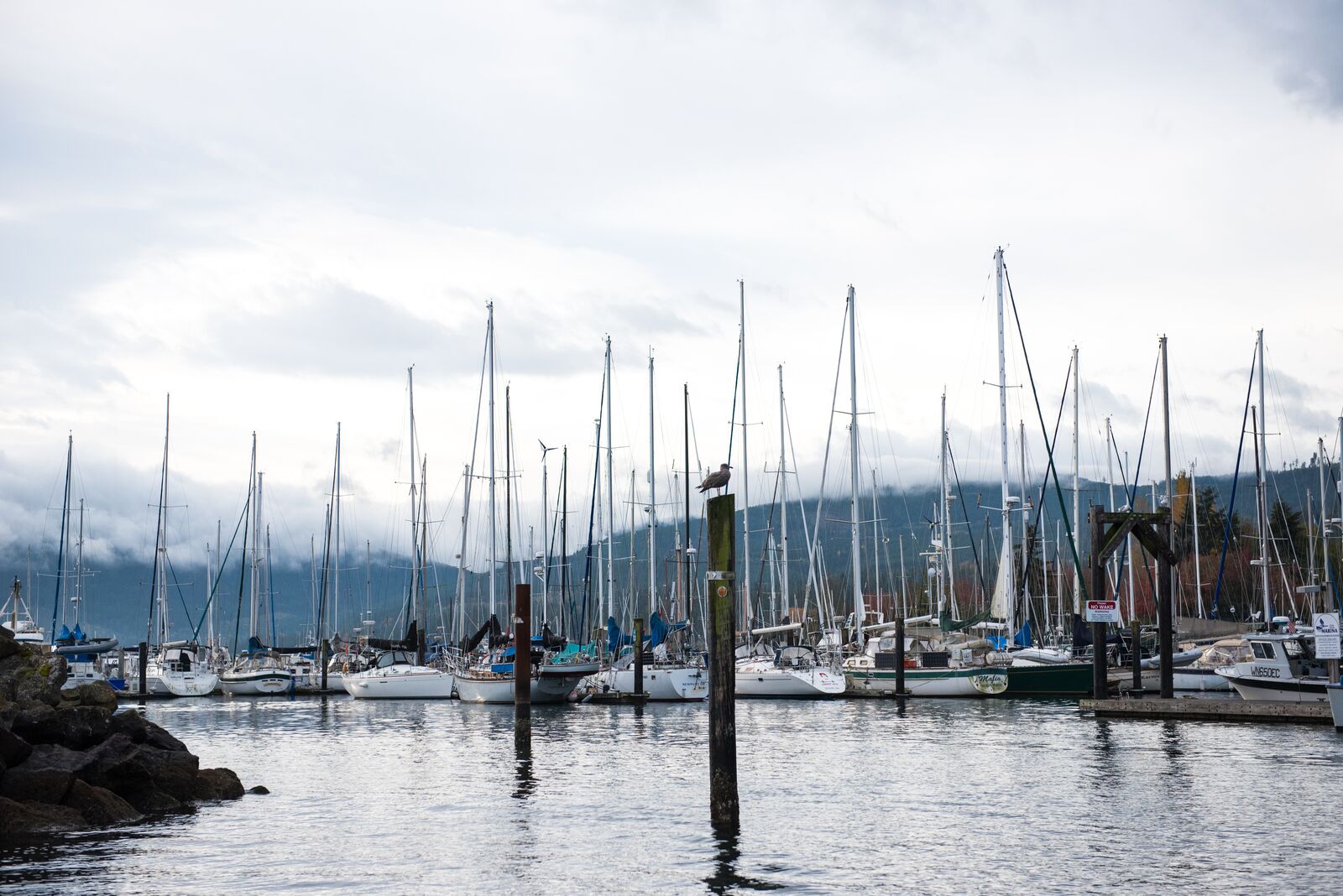
Coastal scientists at PNNL-Sequim have expertise in key marine development areas, including wave energy, tidal energy, offshore wind, environmental monitoring, biofuels from sustainable feedstocks, and hydrogen fuel production from the ocean.

PNNL is building innovative pathways to new markets for marine energy technologies. Researchers are examining the value of marine energy to complement other energy sources, evaluating conventional and innovative energy storage solutions, and exploring the creation of microgrids at sea and in coastal communities to provide reliable and affordable domestic power. 

In addition, PNNL partners with other public and private organizations to support growth in marine energy, such as through its involvement in Washington Maritime Blue. Washington Maritime Blue is a public/private alliance working to make Washington State home to a thriving domestic  maritime industry run on a variety of energy sources that can also support coastal communities facing energy challenges. 

PNNL marine energy experts are engaged in a variety of efforts across the country and in different sectors, including working with government and industry partners in the national security sector. 

Using platforms such as autonomous surface vehicles, PNNL is helping the Department of War collect better ocean measurements that lead to accurate forecasts that can be used in the field. 

Research at PNNL-Sequim

Scientists and engineers at PNNL have expertise in key marine development areas, including wave energy, tidal energy, environmental monitoring, biofuels from feedstocks, seawater mineral extraction, and even shipbuilding. This expertise, combined with PNNL’s unique facilities and capabilities, allows researchers to discover and develop new ways to leverage the ocean.

PNNL serves as a hub for ocean-based industry innovation, where government, the private sector, and university partnerships can advance ocean technologies. 
Subscribe to the Water@PNNL Newsletter

Recent News

MARCH 28, 2024
Feature

Clean Energy, One Community at a Time

Read
Digital image of a hand holding bubbles that contain various icons. These include icons for carbon dioxide reduction, recycling, wind energy, solar energy, and more.
JANUARY 12, 2023
Feature

New Generator Rolls into Ocean Energy

Read
An illustration of a new wave energy generator
SEPTEMBER 23, 2022
Feature

Simple Process Extracts Valuable Magnesium Salt from Seawater

Read
A droplet of water containing a sphere labeled magnesium superimposed on a photograph of a wave
SEE MORE RELATED NEWS

Facilities

Biotechnology Laboratories at PNNL-Sequim Marine Test Sites The Arctic Research Laboratory at PNNL-Sequim

Related Divisions

Coastal Sciences Division
Energy Processes & Materials Division

Research Topics

Marine Energy Environmental Monitoring for Marine Energy Testing for Marine Energy Renewable Energy Marine Energy Resource Characterization

Contacts

Rob Cavagnaro
Mechanical Engineer
robert.cavagnaro@pnnl.gov
(206) 528-3372
Simon Geerlofs
Advisor
simon.geerlofs@pnnl.gov
(360) 681-3677

PNNL

  • Get in Touch
    • Contact
    • Careers
    • Doing Business
    • Environmental Reports
    • Security & Privacy
    • Vulnerability Disclosure Policy
    • Notice to Applicants
  • Research
    • Scientific Discovery
    • Energy Resiliency
    • National Security
Subscribe to PNNL News
Department of Energy Logo Battelle Logo
Pacific Northwest National Laboratory (PNNL) is managed and operated by Battelle for the Department of Energy
  • YouTube
  • Facebook
  • X (formerly Twitter)
  • Instagram
  • LinkedIn