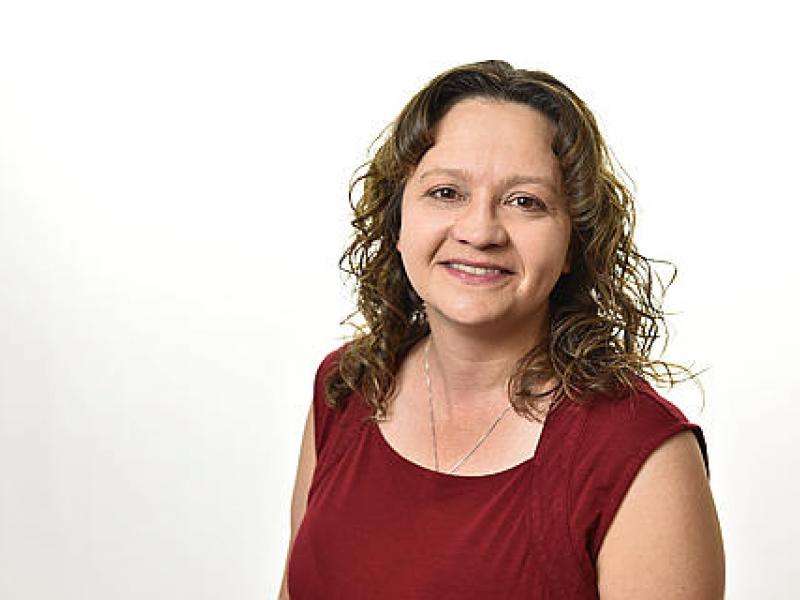
PNNL computational biologist Bobbie-Jo Webb-Robertson was recently awarded the “Spirit of nPOD award” to acknowledge her hard work in building, coordinating, and leading the Data Science Working Group.
PNNL microbial ecologist Janet Jansson will serve on a committee representing the U.S. soil science community in the International Union of Soil Sciences.
After 50 years in science and on the eve of retirement, Laboratory Fellow Karin Rodland, a cancer cell biologist at PNNL, is working on experiments she has dreamed about for decades.
PNNL biomedical scientist Ernesto Nakayasu brings expertise in host-pathogen interactions and the interconnection between the immune response and cellular metabolism to provide constructive review for submitted manuscripts.
Sam Chatterjee, a senior operations research scientist at PNNL, was recently appointed as associate editor for the specialty section, “Water and the Built Environment” at the peer-reviewed, open access journal Frontiers in Water.
Two PNNL researchers are helping define the future of transparency and accountability for public and private use of autonomous and intelligent systems.
PNNL researchers Lisa Bramer and Sarah Reehl were on a team that received a patent for its work with electron microscopy. Electron microscopy allows scientists to make nanoscale observations of materials.
Bill Cannon, senior scientist and biophysicist in the Computational Mathematics Group, was a co-author of a recent article published in Nature Partner Journals-Digital Medicine.
Jason McDermott is a PNNL computational biologist whose research interests include machine learning, data integration, and network inference. He unravels complex data related to cancer, infectious disease, and soil microbiomes.
PNNL scientists Richard (Dick) Smith and Ljiljana (Lili) Paša-Tolić are recognized by The Analytical Scientist in its 2019 Power List as two of 2019’s top 100 minds in analytical science.
Francesca Grogan grew up in Southern California, gravitated to competitive swimming, and chose to stay close to her geographical roots for her undergraduate and postgraduate studies.
The first phase, which started in 2014, generated foundational data from developing mouse and human lungs, created a web portal for public data sharing, and established a repository of human lung tissues.