RemPlex Seminar: Enhanced Natural Attenuation

Pathways to Sustainable Remediation
- Tuesday, June 16, 2026
- Seminar cohosted by RemPlex and SURF
About the Speakers
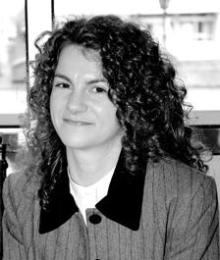
Dr. Maria de Lurdes Dinis is a professor in the Department of Mining Engineering at the University of Porto, Portugal. She holds a PhD and an MSc in environmental engineering from the University of Porto, as well as a five-year degree in mining engineering. With 25 years of experience in environmental issues related to radioactive contamination, her work focuses on the environmental impacts of uranium mining, environmental remediation, and sustainable approaches for the treatment of contaminated water. Currently, her research explores bio-based adsorbent materials, including Moringa oleifera seeds, for the removal of uranium from aqueous solutions, with an emphasis on environmentally responsible and cost-effective strategies for real-world applications. She has also collaborated with NATO and the IAEA for several years on capacity-building projects.
Presentation: "Sustainable Remediation of Uranium Mining Sites with Green Adsorbents"
Abstract: Safe and sustainable treatment of uranium-contaminated water remains a pressing environmental challenge. This study explores the potential of green adsorbents as low-impact alternatives to conventional materials, focusing on crushed Moringa oleifera seeds and chitosan. Laboratory tests conducted under acidic conditions and at different uranium concentrations showed that Moringa oleifera seeds achieved removal efficiencies of up to 86%, particularly at higher concentrations and longer contact times, whereas chitosan was less effective under the same conditions. Under optimized conditions, the removal efficiency could be increased to 99%. These results underscore the promise of plant-based materials as cost-effective, environmentally responsible options for water remediation. Wider adoption, however, will require further optimization, pilot-scale validation, and clear communication of benefits to decision-makers, practitioners, and communities. Overall, the study supports the development of greener and more socially acceptable approaches to environmental remediation.
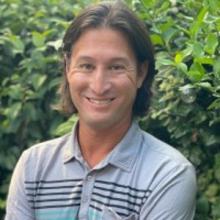
Mr. Chris Gale is president of Applied Natural Sciences, a North Carolina company that specializes in phytoremediation. Mr. Gale has worked on dozens of phytoremediation systems across the United States and in the European Union. He has over 20 years of experience managing and implementing a wide variety of environmental site investigation, characterization, and remediation projects, including all aspects of building and leading successful teams on large-scale complex projects. Mr. Gale also has expertise with a variety of remedial technologies including in situ bioremediation, in situ chemical oxidation, in situ chemical reduction, in situ thermal treatment, soil vapor extraction, and dual-phase extraction.
Presentation: "Let it Grow: Plant-Driven Enhancement of Natural Attenuation Processes"
Abstract: Engineered phytoremediation, specifically TreeWell-based remediation systems, has been used to treat impacted groundwater for over 30 years. Trees are the engines that move groundwater through TreeWell systems, and it has been understood for years that the native microbiome has been responsible for the observed degradation of many organic compounds. Recent data have helped to better explain the role of microbes in the success of these systems further demonstrating that TreeWell units are biostimulation machines. Efforts to measure contaminants in plant tissue and in the transpiration stream have repeatedly demonstrated that substantial degradation is occurring in the TreeWell units prior to contaminants reaching the trees. These in-situ processes results in contaminant mass reduction while also protecting the trees from potentially phytotoxic conditions. Some recent work has been completed to better define how the microbiome within TreeWell units can enhance natural attenuation processes. This presentation will discuss the empirical data that demonstrate that microbial driven natural attenuation is occurring for multiple organic constituents within TreeWell units. The results of genetic testing demonstrate how TreeWell units can stimulate the growth of native microbial populations to enhance natural attenuation processes for multiple organic compounds.
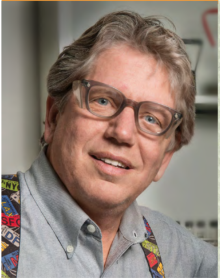
Dr. Brian Looney is a research environmental engineer at Savannah River National Laboratory and an adjunct professor at Clemson University in South Carolina. For more than 40 years, he has coordinated applied research, development, and deployment for environmental characterization and clean-up methods. His work encompasses subsurface access techniques, remediation methods, and characterization tools, including horizontal drilling, bioremediation, and tracer testing. Currently, Dr. Looney supports technical activities related to attenuation-based remedies and he serves as a senior technical advisor supporting the DOE Environmental Management Program.
Presentation: "Putting Enhanced Attenuation to Work: Three Perspectives – from Idea to Implementation"
Abstract: Challenges and opportunities for Enhanced Attenuation (EA) derive from a fundamental mass balance understanding of plume behavior and plume evolution over time. Three reports and the associated three perspectives illustrate EA from concept, to design and regulatory strategy, through implementation and performance. Using a mass balance paradigm, clear and specific opportunities for sustainably improving contaminant attenuation can be identified. The available strategies for performing EA are diverse and include physical, biological, or chemical methods that can accelerate degradation, decrease toxicity, increase sequestration, lower mass flux to receptors, and/or accelerate progress toward remedial goals. The Interstate Technology and Regulatory Council (ITRC) has formalized technical and regulatory guidance to support implementation of EA for chlorinated organic contaminants. The centerpiece of the guidance is a flowchart that provides a framework for supporting EA decision-making. Using the mass balance approach and the ITRC technical and regulatory guidance, a full-scale EA was performed at a former landfill (OU1) at the DOE Mound site in Ohio. The treatability study demonstrated that the specific EA approach was effective and sustainable at this site. The Mound OU1 remedy was implemented using both neat (pure) vegetable oil and commercially-available emulsified oil amendments to create structured geochemical zones. This design supported sequential anaerobic and aerobic areas in the plume to allow sustainable and efficient biological degradation with minimal adverse collateral impacts on the locally important buried valley aquifer. The Mound OU1 EA remedy supported discontinuation of an ongoing pump-and-treat remedy and simultaneously accelerated the progress toward remedial goals—reducing the time needed to reach maximum contaminant levels in all locations for all constituents by approximately 12 years (projected 2028 for EA versus 2040 for pump and treat).