PNNL has formed a partnership with the Orlando-based firm Refinity, which has licensed a key process from PNNL that will help the company convert mixed plastic waste into valuable industrial products like chemicals, plastics, and fuels.
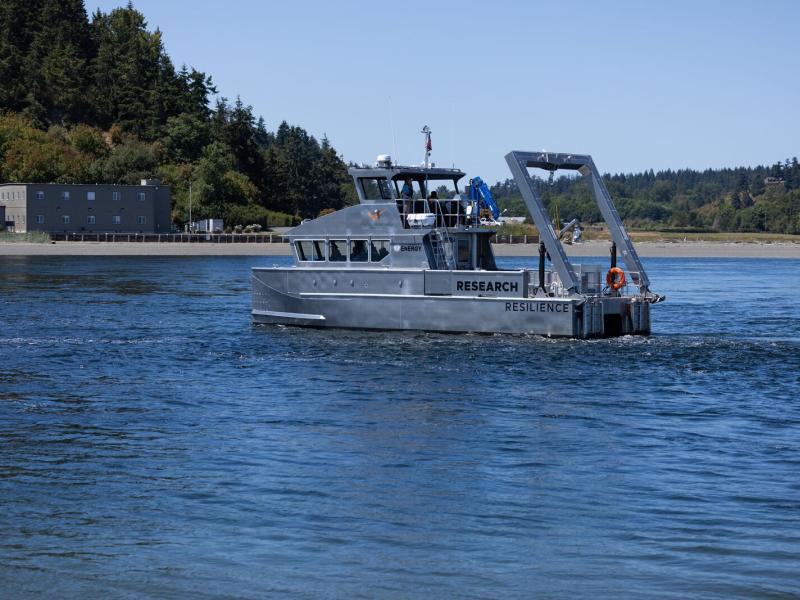
Connecting energy generation, electricity storage, and using sensors and control software to track load, including precommercial market marine energy generation technologies.
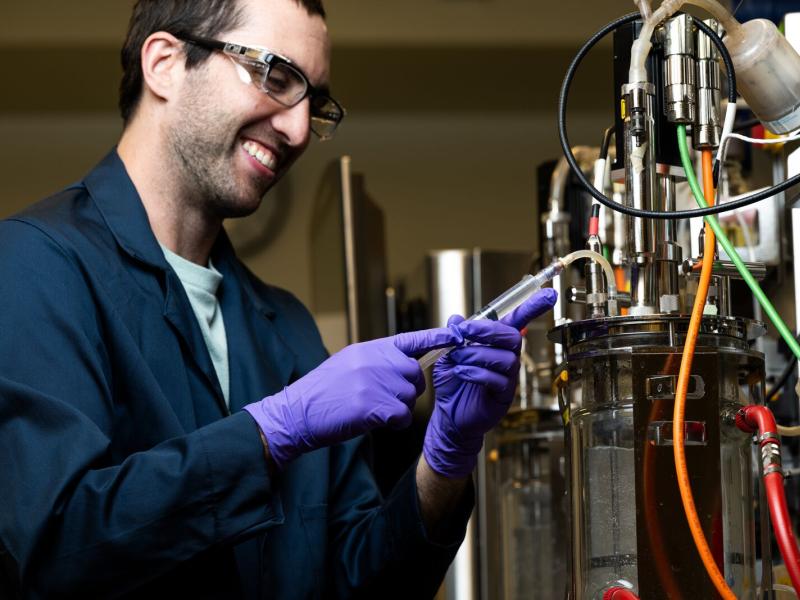
Predicting how organisms’ characteristics respond to not only their genes, but also their environments (a nascent field called predictive phenomics), is extraordinarily challenging. Researchers at PNNL are using AI to tackle that challenge.
PNNL researchers have found yet another way to turn trash into treasure: using algal biochar, a waste production from hydrothermal liquefaction, as a supplementary material for cement.
PDX, PNNL, and Sandia National Laboratories are exploring the feasibility of hydrogen fuel for the PDX bus fleet—an idea that could have novel benefits for hazard resilience.
After 20 years of contributions to the field of hydrogen safety, the Hydrogen Safety Panel launched its new mentoring program at PNNL earlier this year. Now, the program has selected its first two mentees.
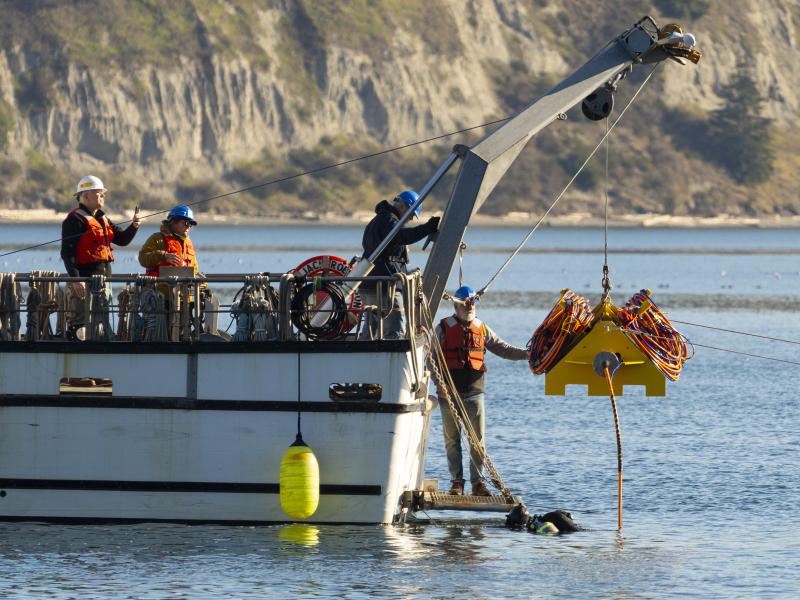
The first tidal turbine deployed in the Pacific Northwest at PNNL-Sequim showcases the Lab’s growing role as a regional center for marine energy research.
Recycling polyolefin materials is challenging. One waste management strategy is plastic upcycling. New work demonstrates a single-step upcycling route coupling cracking and alkylation, recycling carbon and keeping valuable resources active.
PNNL’s patented Shear Assisted Processing and Extrusion (ShAPE™) technique is an advanced manufacturing technology that enables better-performing materials and components while offering opportunities to reduce costs and energy consumption.