July 6, 2026
Feature

JASPER Collaboration Hits Nuclear Bullseye

New plutonium capability at PNNL supports nuclear deterrence mission

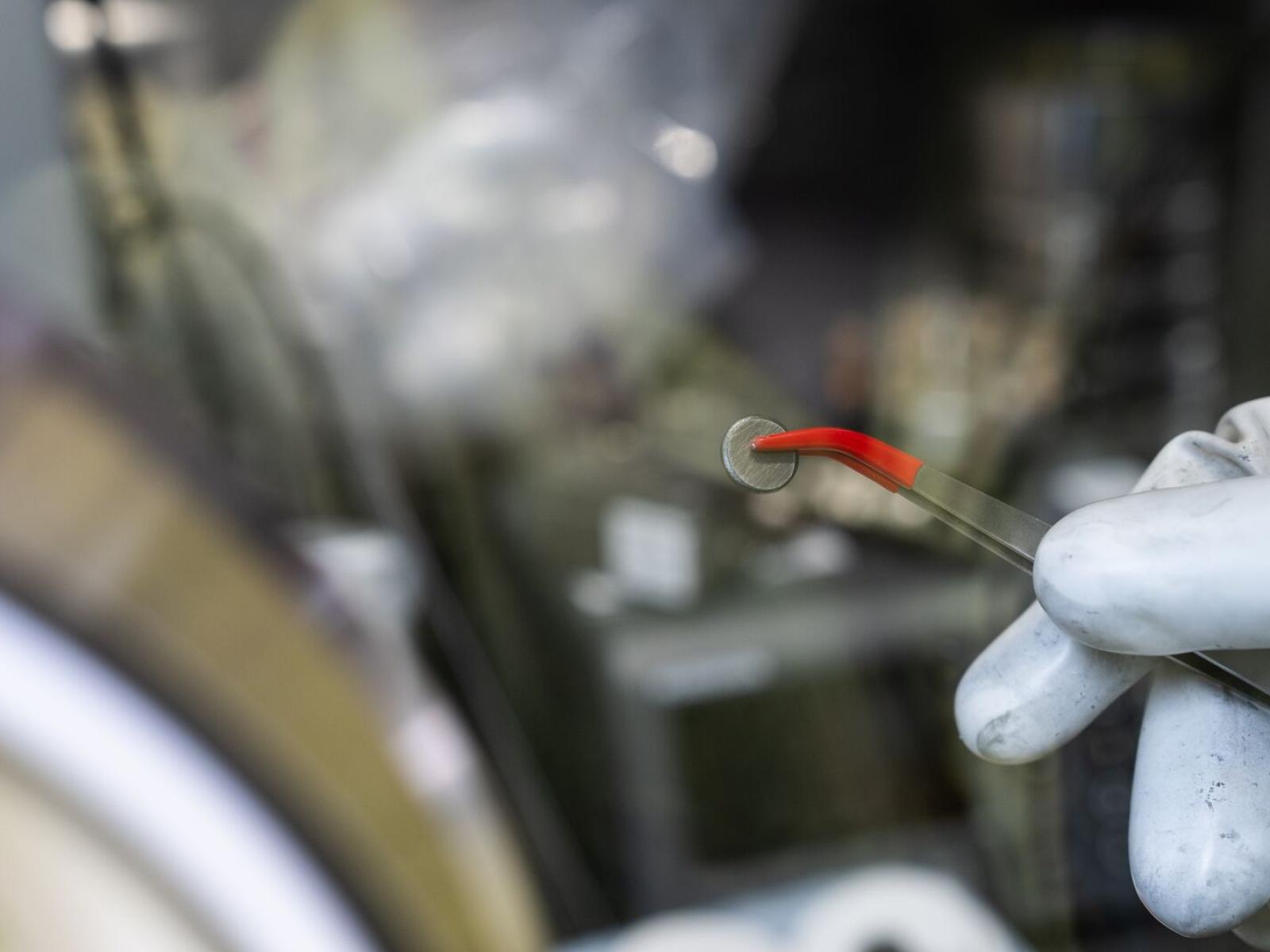
Photo of JASPER target

PNNL researchers have established a new capability to fabricate and characterize plutonium experiment targets, supporting the nation’s nuclear security mission.

(Photo by Andrea Starr | Pacific Northwest National Laboratory)

When Aaron Nicholas served in the U.S. Army, he became familiar with “Hail Mary” scenarios where unanticipated, high-pressure conditions push a team to succeed in ways that normal circumstances would not.

Nicholas and his team at Pacific Northwest National Laboratory (the Laboratory) faced such a challenge in a project supporting the Joint Actinide Shock Physics Experimental Research program in which scientists study the properties of plutonium under extreme pressures and temperatures. As part of the program, PNNL’s team has overcome significant challenges in the last two years to establish new capabilities in plutonium metal processing at the Radiochemical Processing Laboratory.

The JASPER program, funded by the Department of Energy’s National Nuclear Security Administration, is led by Lawrence Livermore National Laboratory in collaboration with the Nevada National Security Sites. Nicholas serves as the project manager for PNNL’s activities in support of the program.

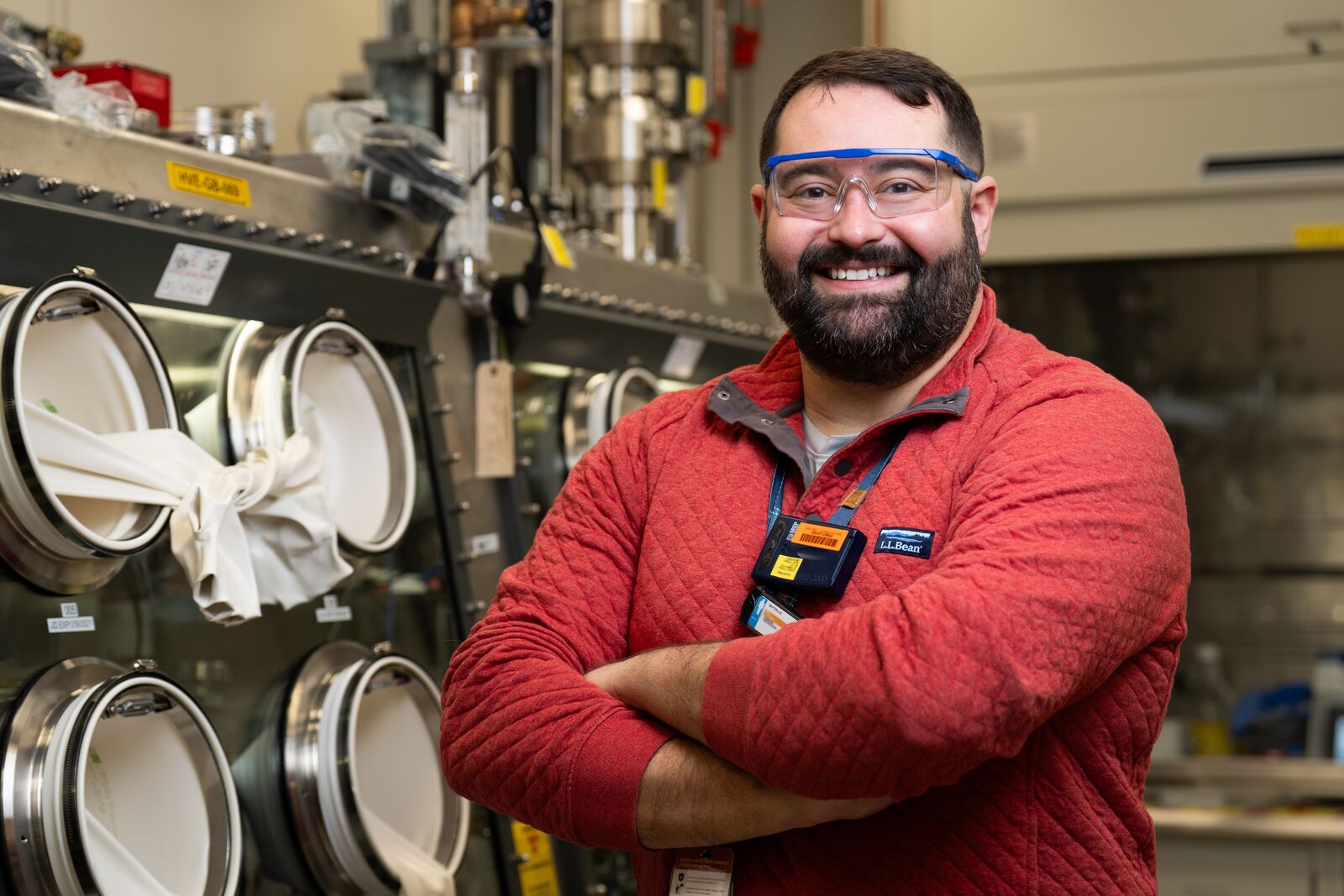
Photo of Chemist Aaron Nicholas in the laboratory
Aaron Nicholas, a chemist, oversees PNNL’s contributions to the JASPER program. (Photo by Andrea Starr | Pacific Northwest National Laboratory)

Dynamic materials experiments

The primary driver of JASPER experiments is the science of observing materials at high pressures, temperatures and strain rates. This field of study is central to the JASPER facility, where propellant is used to launch a high-velocity object into a plutonium metal target. Scientists use a two-stage gas gun to make sophisticated materials measurements.

“JASPER is a key part of U.S. nuclear strategic deterrence,” said Nicholas, a chemist. “It helps the United States study how materials behave under extreme conditions.” The program desires to increase their experimental cadence, and PNNL has the opportunity to support this effort with its ability to fabricate and characterize plutonium metal targets.

Through previous collaborations related to plutonium science for other applications, including detecting and characterizing illicit trafficking of nuclear materials, LLNL was familiar with PNNL’s deep expertise and experience in plutonium processing and analysis. The two organizations teamed up to identify how PNNL’s capabilities could be augmented such that plutonium metal targets approximately the size of a dime could be fabricated and characterized at RPL.

Target practice

The PNNL team, led by Matthew Athon, Nicholas, Mark Engelmann (retired) and Andy Casella, soon learned the challenges of building out a new capability for plutonium metal target fabrication. They quickly assembled a small core team to bring equipment online, establish workflows and implement the best practices on plutonium processing required for experimental targets and associated diagnostics.

Early on, a change in LLNL’s schedule for JASPER experiments prompted the PNNL team to tackle a pressing target fabrication challenge. In what Nicholas described as a “Hail Mary” effort driven by an urgent deadline, the PNNL team set to work.

In less than two months during the summer of 2024, PNNL researchers were able to make their first plutonium metal target subassembly, a remarkable achievement for the Laboratory and an important contribution to the study of plutonium science through the JASPER program.

“The targets we’ve built are the first of their kind fabricated at RPL,” said Nicholas. “There has been a steep learning curve to establish the skills, processes and tooling needed for this target fabrication work. We’re fortunate to have a highly motivated, capable team that has responded so quickly.”

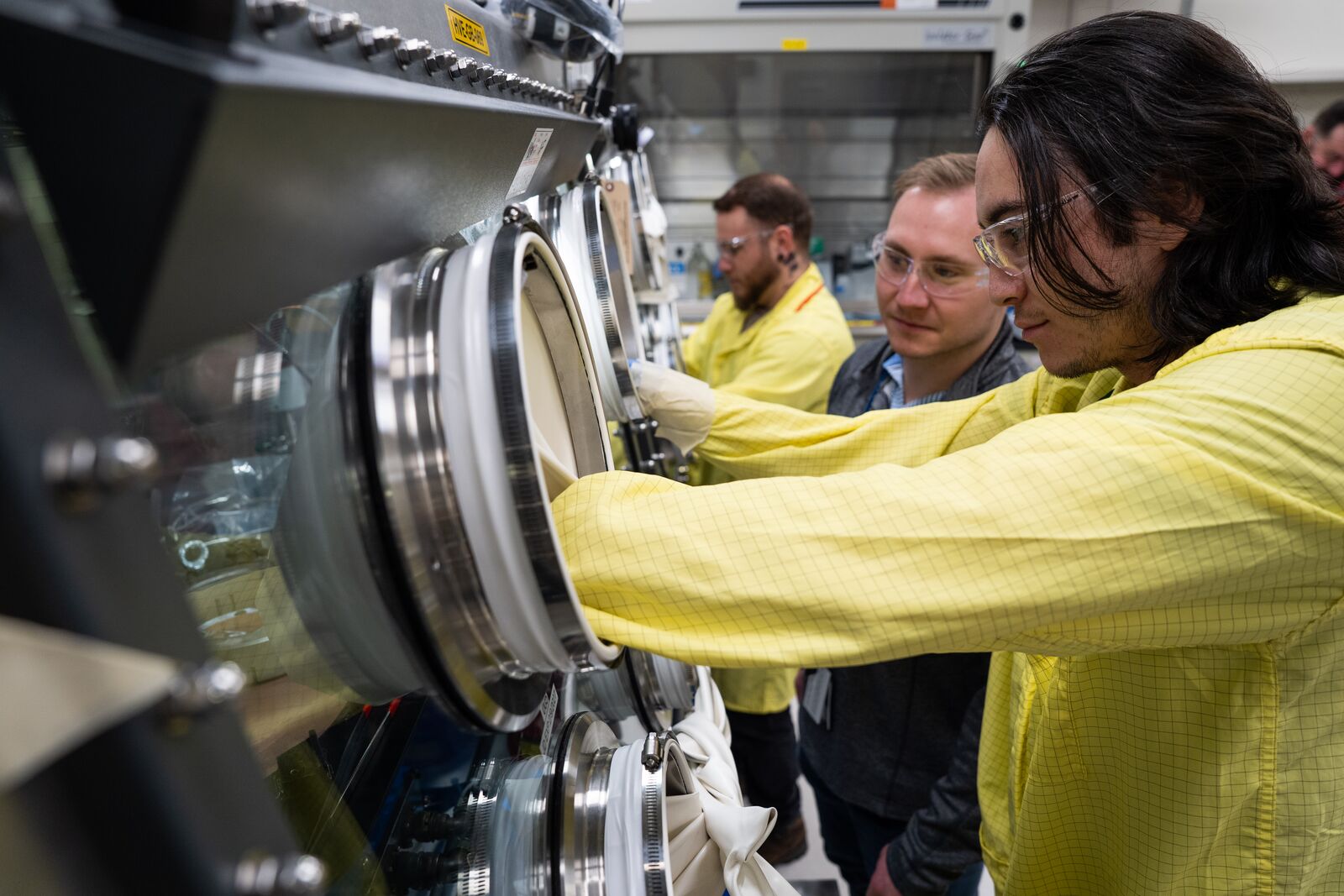
Building on the success of the first target, the PNNL team assessed ways to improve. Last fall, PNNL installed a new glove box at RPL dedicated to fabricating targets for shock physics experiments, including those performed at the JASPER facility. In anticipation of a growing portfolio in experimental targets, two early-career staff members were added to the team.

Photo of researchers at the JASPER glovebox
A new glovebox was installed at PNNL’s Radiochemical Processing Laboratory to support the JASPER project. (Photo by Andrea Starr | Pacific Northwest National Laboratory)

The efforts paid off. While the first target took about six weeks to produce, the team doubled its output in a similar time frame late last year.

“We plan to continue fabricating JASPER targets to help deepen the understanding of how plutonium metal behaves in extreme conditions,” said Nicholas. “This work supports the U.S. nuclear deterrent, and we’re proud that PNNL is contributing directly to that mission.”

###

About PNNL

Pacific Northwest National Laboratory draws on its distinguishing strengths in chemistry, Earth sciences, biology and data science to advance scientific knowledge and address challenges in energy resiliency and national security. Founded in 1965, PNNL is operated by Battelle and supported by the Office of Science of the U.S. Department of Energy. The Office of Science is the single largest supporter of basic research in the physical sciences in the United States and is working to address some of the most pressing challenges of our time. For more information, visit the DOE Office of Science website. For more information on PNNL, visit PNNL's News Center. Follow us on Twitter, Facebook, LinkedIn and Instagram.