June 30, 2026
Feature

The Nuclear Materials Check-Up

PNNL’s nondestructive evaluation expertise for the Nuclear Regulatory Commission helps keep nuclear power reactors operating safely

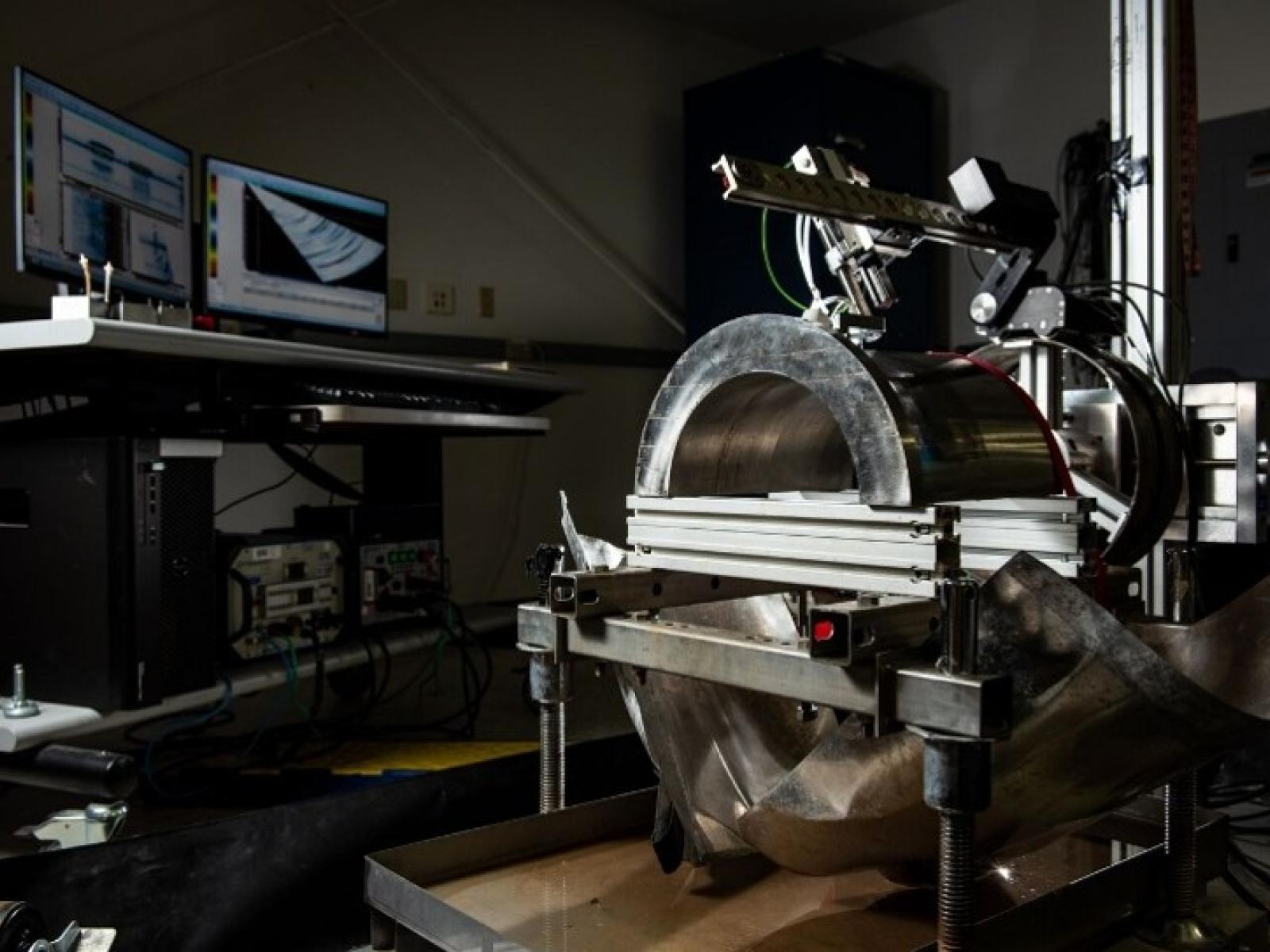
A room with computer screens in the background hooked up to a device that is scanning a large piece of metal material

Pacific Northwest National Laboratory’s nondestructive evaluation (NDE) capabilities support advancements in nuclear energy, including research for the U.S. Nuclear Regulatory Commission to preserve the nation’s existing fleet of nuclear power reactors. NDE also is used to examine the integrity of critical infrastructure, from oil and gas pipelines to the Hanford Site’s radioactive waste tanks. 

(Photo by Andrea Starr | Pacific Northwest National Laboratory)

When you go to the doctor for a routine medical exam or a prenatal check-up, they often use an ultrasound or an X-ray to see what’s happening inside your body without needing surgery. At Pacific Northwest National Laboratory (PNNL), researchers are doing essentially the same thing, but for the nation’s nuclear power plants.

With nondestructive evaluation (NDE), PNNL experts use advanced sensors and imaging to "see" through solid steel and concrete. This allows them to detect significant cracks that are otherwise invisible or monitor material health without damaging the components they are testing. It is a critical line of defense for a nuclear fleet that provides nearly 20% of the nation’s electricity.

50 years of safeguarding nuclear power

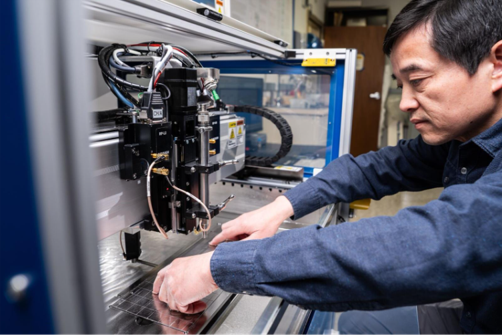
Person reaching his hands into a advanced acoustic microscope to adjust it
PNNL physicist Yanming Guo performs nondestructive evaluations of metal and other materials using advanced acoustic microscopy. (Photo by Andrea Starr | Pacific Northwest National Laboratory)

For nearly five decades, PNNL and the U.S. Nuclear Regulatory Commission (NRC) have partnered to solve inspection challenges across the nuclear fleet. The partnership’s confirmatory research has turned the “uninspectable” into inspectable, built the technical basis for industry practice, and produced more than 250 reports and peer-reviewed journal articles. This research has also notably influenced the American Society of Mechanical Engineers Boiler & Pressure Vessel Code so that modern ultrasound methods and digital tools can be used more widely, including for today’s reactors and the next generation of designs.

“It’s a close and important partnership. We work with NRC staff, but we remain independent so our research results aren’t influenced,” said Richard Jacob, a physicist on the Nondestructive Evaluation team at PNNL. “The NRC helps steer the direction and frame the questions, and we provide the data and information they need to make nuclear safety and regulatory decisions.”

Teaming up with regulators and industry

Some PNNL researchers push the boundaries of sensors and physics using ultrasound, laser ultrasound, eddy current, and X-ray computed tomography, while PNNL’s work for the NRC focuses on confirmatory research and providing technical bases necessary for near-term NRC licensing decisions for the nuclear industry. 

In addition, PNNL manages an NRC-owned library of hundreds of nuclear-related components and samples, including some components from cancelled plants. Many of these materials contain fabricated defects so that researchers can inspect realistic conditions to evaluate the NDE methods. This exclusive collection allows researchers to test techniques on real materials and flaw types without manufacturing new parts or removing pieces from operating plants. 

Paired with dedicated radiography, ultrasonics, and electromagnetic labs—as well as cable aging facilities like the ARENA cable/motor test bed—the team can monitor the effects of the harsh temperatures, radiation, and corrosive environments found in nuclear reactors.

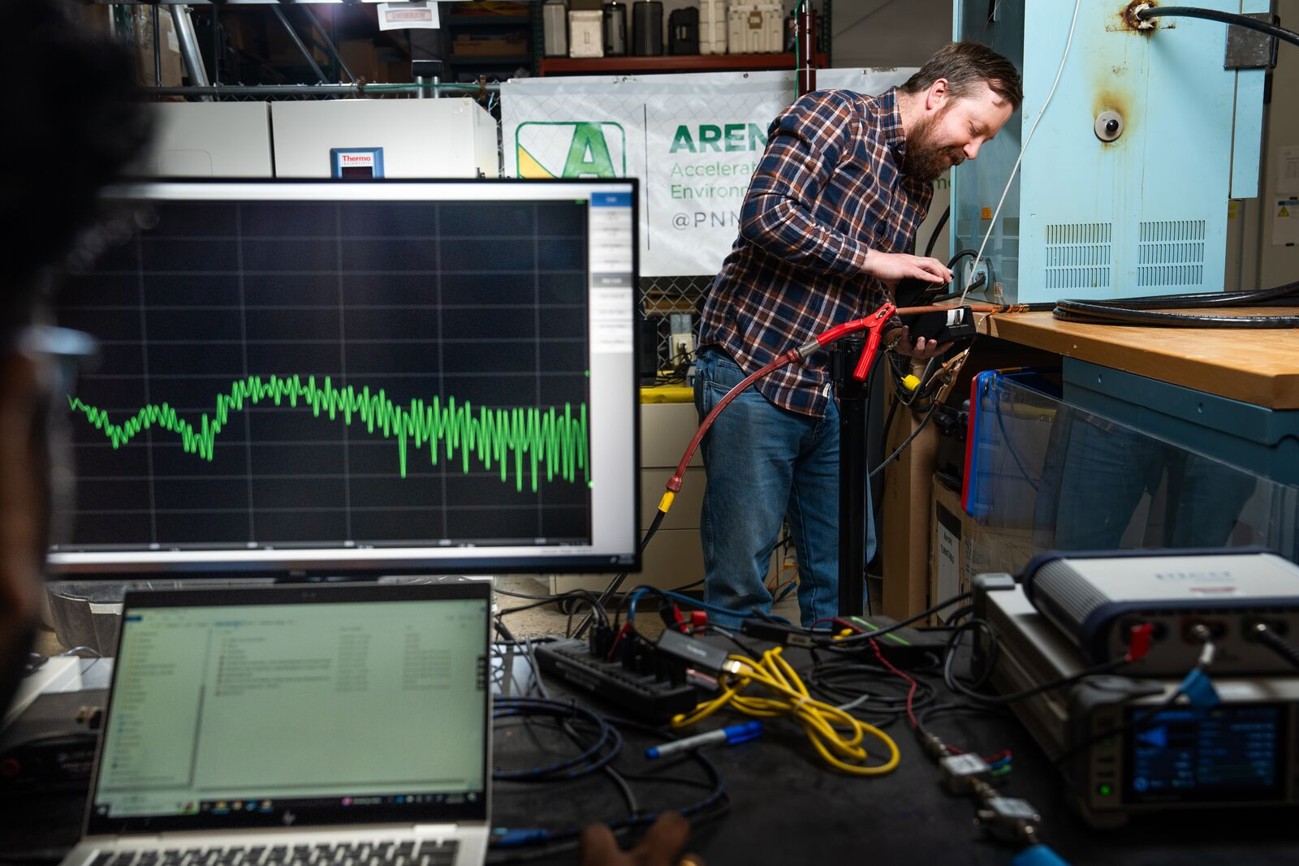
Computer screen with data displayed as man in background uses clam shell coupler on cable
Physicist Matt Prowant uses an innovative clam shell coupler device developed by PNNL to identify inconsistencies across different cable types. Nuclear power plant infrastructure includes hundreds of miles of polymer cables. (Photo by Andrea Starr | Pacific Northwest National Laboratory)

“Our program has evolved alongside advances in inspection technology,” said Katie Wagner, manager of PNNL’s Nuclear Regulatory programs. “For example, cast austenitic stainless steel, or CASS, was once considered uninspectable. Our work for the NRC helped demonstrate that, with modern NDE methods, this material can be inspected reliably, giving the NRC the technical foundation for evaluating and approving the regulatory framework for CASS inspections.”

PNNL’s partnership with the NRC helps PNNL researchers match real-world needs with scientific foundation. Their modeling and simulation work links physics-based understanding to inspection signals, while new AI and automated data analysis research aims to speed up interpretation and reduce plant shutdown time.

“We’re evaluating an AI tool to screen data from traditional NDE ultrasonic data analysis and flag the most important signals,” Jacob explained. “Inspectors can then focus only on the relevant data, which is expected to significantly cut inspection time and shorten plant shutdowns, keeping reactors online longer and providing more power to the grid.” 

Inspecting the next generation

While much of PNNL’s work focuses on helping the NRC answer key questions to sustain the current fleet, the team is already looking toward the future of the grid. As the industry moves toward advanced reactor systems and innovative manufacturing techniques, the challenges of "seeing the unseeable” become even more complex.

Advanced materials, 3D printing, and new component designs challenge conventional NDE, so PNNL researchers are evaluating new ways to inspect and monitor them including novel additive manufacturing methods, which build three-dimensional objects layer-by-layer from digital designs. Researchers are also evaluating robust sensors that can be attached to components and withstand even harsher reactor conditions, enabling long-term monitoring without downtime.

“Additive manufacturing is the future for nuclear power, and we suspect it will play a strong role with advanced reactor designs, but it is important to demonstrate that the new materials and components developed with new manufacturing methods can be inspected,” Jacob said. 

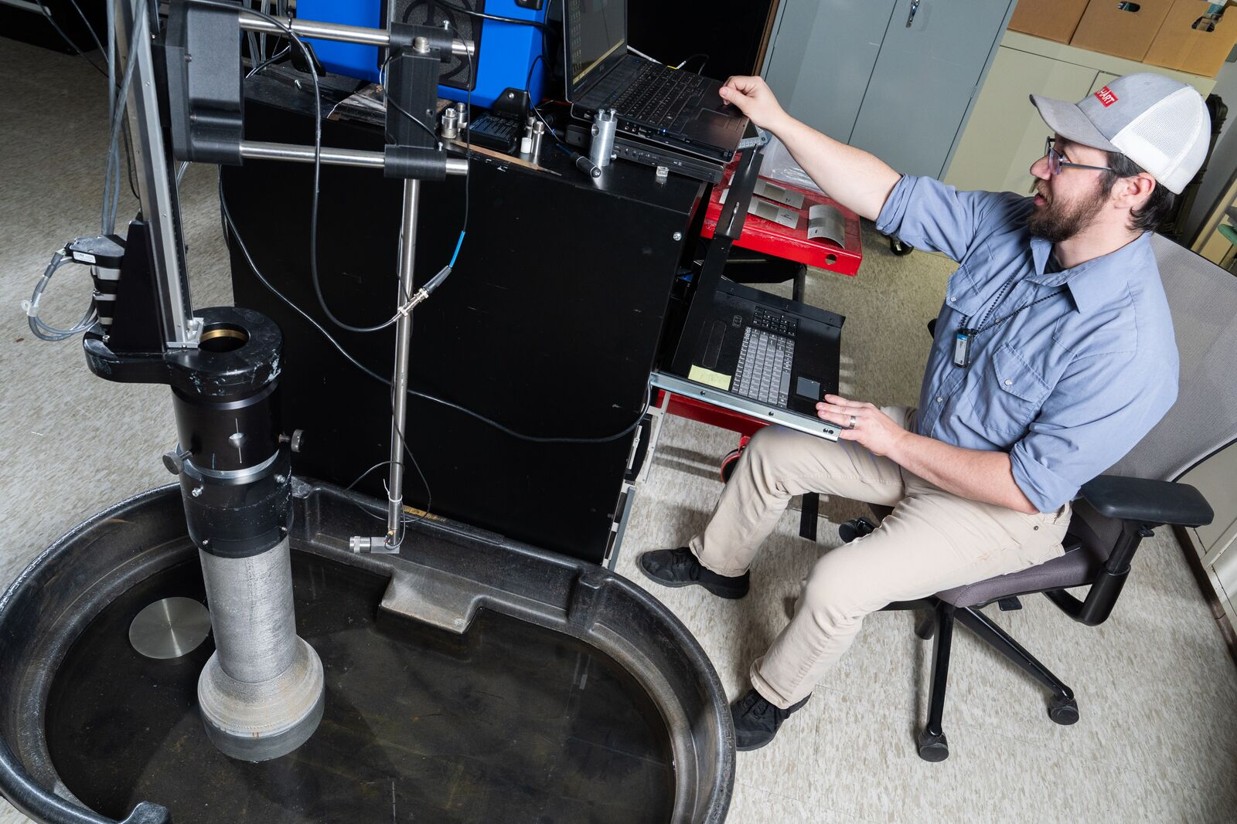
Man sitting in a chair looking at a computer screen next to 3D imaging equipment
NDE technician Nick Conway uses 3D imaging technology to assess an advanced reactor component—made through additive manufacturing—for flaws or defects that would affect its ability to withstand the extreme environment of a nuclear power plant. (Photo by Andrea Starr | Pacific Northwest National Laboratory)

PNNL’s NDE future and legacy

Through it all, it is the people behind the instruments that matter most. PNNL’s multidisciplinary NDE team brings together physicists, materials scientists, senior inspectors, signal processing experts, radiographers, and AI practitioners to solve complex problems holistically. Their work is supported by advanced laboratory spaces housed with the latest in NDE technology and an unparalleled component library—investments designed to empower researchers to be the best at what they do.

“PNNL’s work plays a key role in the NRC’s efforts to ensure U.S. nuclear power plants use effective non-destructive examinations of their safety systems,” said Stephen Cumblidge, a materials engineer in the NRC’s Office of Nuclear Reactor Regulation. “We’re confident in the procedures and methods validated by PNNL research.”

From the first studies conducted in 1976 to today’s AI-enhanced inspection research, PNNL and the NRC have built a trusted foundation for safe, reliable nuclear energy. It is quiet work. Most people will never see an ultrasonic probe scanning a weld or an X-ray image of a cable, but the impact is seen every time the lights stay on. 

“We’ve built this capability together over decades,” said Wagner. “The NRC funds the work, PNNL invests in the people, and together our staff are helping support the U.S. nuclear fleet one report, inspection, or NDE breakthrough at a time.”

###

About PNNL

Pacific Northwest National Laboratory draws on its distinguishing strengths in chemistry, Earth sciences, biology and data science to advance scientific knowledge and address challenges in energy resiliency and national security. Founded in 1965, PNNL is operated by Battelle and supported by the Office of Science of the U.S. Department of Energy. The Office of Science is the single largest supporter of basic research in the physical sciences in the United States and is working to address some of the most pressing challenges of our time. For more information, visit the DOE Office of Science website. For more information on PNNL, visit PNNL's News Center. Follow us on Twitter, Facebook, LinkedIn and Instagram.