As author of her first publication, PNNL bioinformaticist Isabelle O’Bryon developed the first forensic proteomics method to more quickly detect ricin, a toxin often crudely made in home laboratories that can kill in trace amounts.
A strong interdisciplinary team with a high-performance track record recently received their third Award of Excellence in five years from the National Nuclear Security Administration (NNSA).
For the past several years Sam Chatterjee, PNNL data scientist and lead editor, has worked hard to make a book about homeland security risk analysis a reality. And in June, his perseverance paid off.
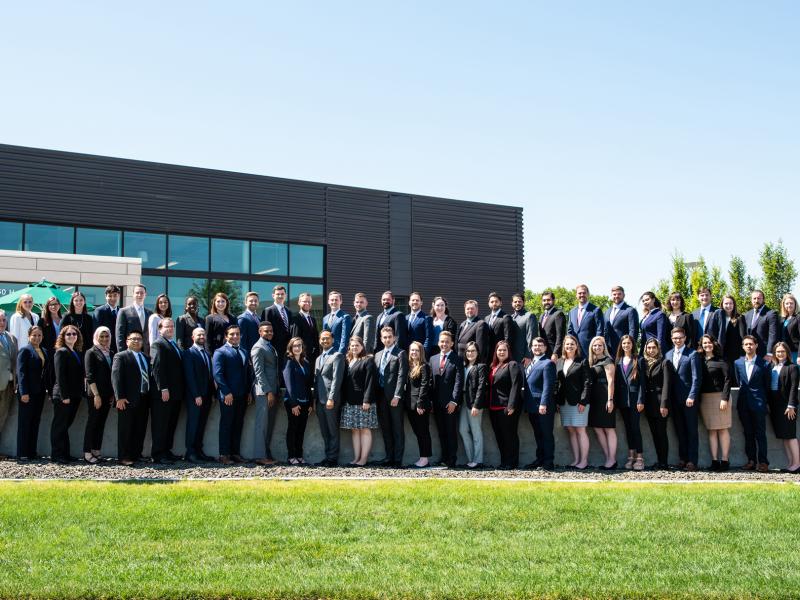
Like many graduates crossing the finish line in 2020, the National Nuclear Security Administration Graduate Fellowship Program class of 2019-2020 transitioned its closing ceremony to a virtual environment, joined by NNSA and PNNL leaders.
Two PNNL team members, Courtney Corley, a data scientist, and Kyle Bingman, an advisor on assured artificial intelligence (AI), were featured on a recent episode of the U.S. Department of Energy Direct Currents podcast.
Sam Chatterjee, a senior operations research scientist at PNNL, was recently appointed as associate editor for the specialty section, “Water and the Built Environment” at the peer-reviewed, open access journal Frontiers in Water.
Ten staff members from PNNL were invited to attend and lead the various breakout sessions at the Department of Energy Office of Science 5G Enabled Energy Innovation Workshop (5GEEIW), which was held in early March.
Software vulnerabilities are likely to be discussed on social media before they’re revealed on a government reporting site, a practice that could pose a national security threat, according to computer scientists at PNNL.
Two PNNL researchers are helping define the future of transparency and accountability for public and private use of autonomous and intelligent systems.
PNNL and the National Nuclear Security Administration are building future leaders for nuclear security through the NNSA Graduate Fellowship Program, a hands-on fellowship spanning the nuclear security enterprise.
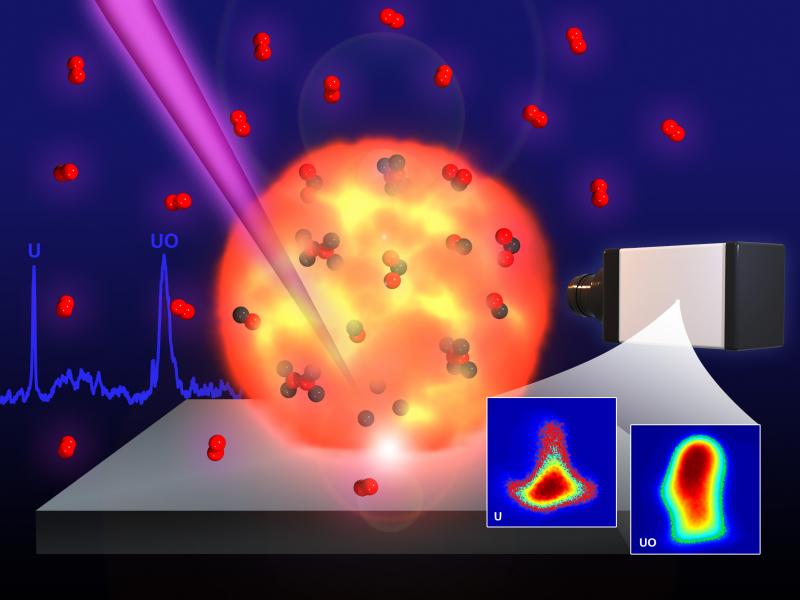
A team of researchers is working to expand our uranium chemistry understanding using a surprising tool: lasers. This capability gives never-before-seen insight into uranium gas-phase oxidation during nuclear explosions.
David Senor, PNNL researcher and tritium expert, has been named to the Texas A&M University Nuclear Engineering Advisory Council. This appointment follows Senor’s eight consecutive years of mentoring Texas A&M’s nuclear engineering senior
Verizon recently announced a partnership that will make Pacific Northwest National Laboratory the U.S. Department of Energy’s first national laboratory with Verizon 5G ultra wideband wireless technology.
PNNL researchers Lisa Bramer and Sarah Reehl were on a team that received a patent for its work with electron microscopy. Electron microscopy allows scientists to make nanoscale observations of materials.
PNNL researchers and professional staff led discussions ranging from biothreats and climate change to science careers at the 2020 annual meeting of the American Association for the Advancement of Science, held this year in Seattle.
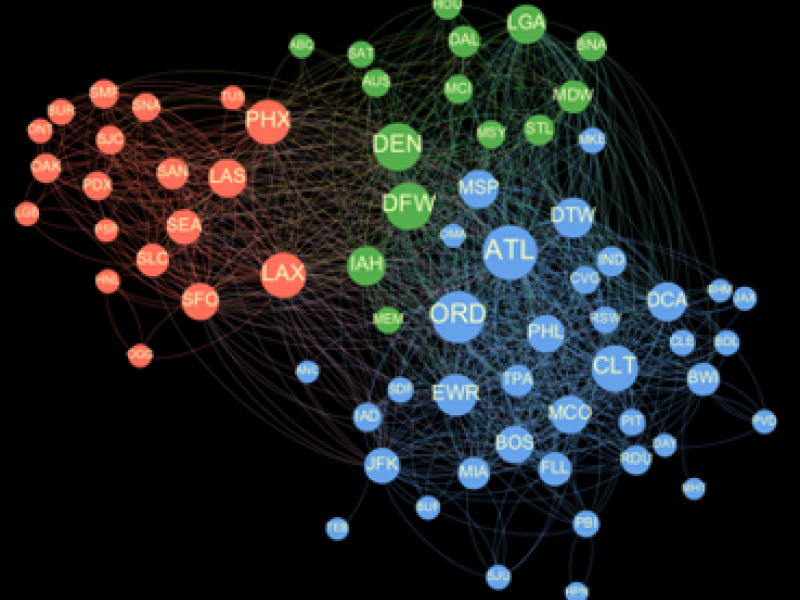
First-of-its-kind network analysis on a supercomputer can speed real-time applications for cybersecurity, transportation, and infectious disease tracking
Bill Cannon, senior scientist and biophysicist in the Computational Mathematics Group, was a co-author of a recent article published in Nature Partner Journals-Digital Medicine.