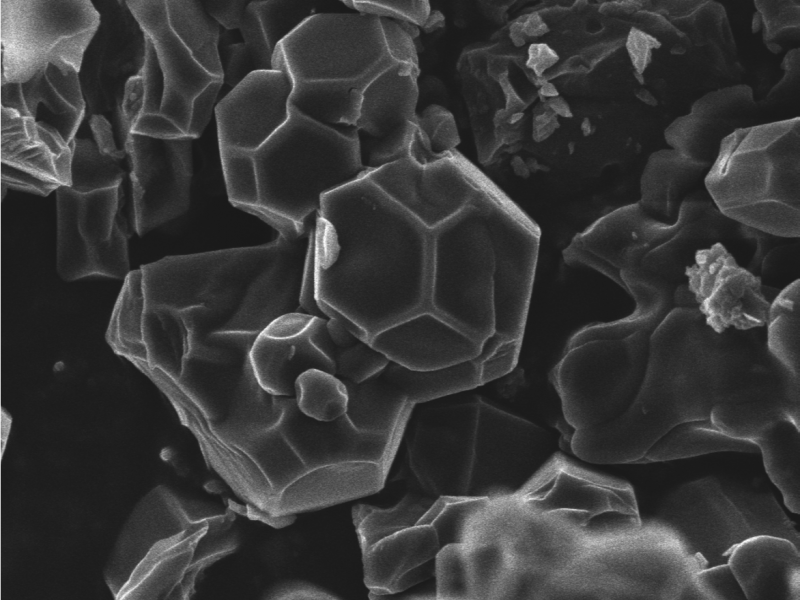
PNNL and Oklahoma State University join forces to understand the chemistry of sodium-ion and potassium-ion batteries thanks to an award from the U.S. Department of Energy's Established Program to Stimulate Competitive Research (EPSCoR).
Corresponding PNNL authors assembled a team of experts to show that supercritical carbon dioxide is a promising media for the construction of metal-organic frameworks (MOFs).
New technique galvanizes iron-based nanoparticles to create an exceptional catalyst. PNNL researchers describe a new technique that produces metal nanoparticles supported on solid iron oxide, in one step, at near room temperature.
A chemistry paper on the used nuclear fuel recycling process, led by PNNL lab fellow Gregg Lumetta, ranked 18th in Scientific Reports for downloads in 2019
PNNL’s Karthikeyan Ramasamy was elected to a three-year term as a director in the American Institute of Chemical Engineers’ Fuels and Petrochemicals Division.
Jonathan Male originally joined PNNL in 2006 as a scientist focused on catalysis. After more than seven years leading DOE’s Bioenergy Technologies Office, he's back at PNNL as a chief scientist in the Energy Processes & Materials Division.
The PNNL team that made history, working with industrial partner LanzaTech, by creating the first jet fuel from industrial waste gas will receive a 2020 IRI Achievement Award for its breakthrough.
James Mayer, Charlotte Fitch Roberts Professor of Chemistry at Yale University and research leader at PNNL's Center for Molecular Electrocatalysis (CME), has been elected to the American Academy of Arts and Sciences.
Deepika Malhotra, an organic chemist at PNNL, will lend her expertise to help shape the content and quality of Pollutants a new, interdisciplinary, open access, journal focusing on a range of environmental science research.
Scientists at the U.S. Department of Energy’s Pacific Northwest National Laboratory have developed and continue to maintain a global database of measurements made of soil-to-atmosphere CO2 flows, termed soil respiration.
Dr. Xiao-Ying Yu, a physical chemist at PNNL, was recently invited to join the editorial board of Atmosphere, an international peer-reviewed journal that publishes work related to—you guessed it—the atmosphere.
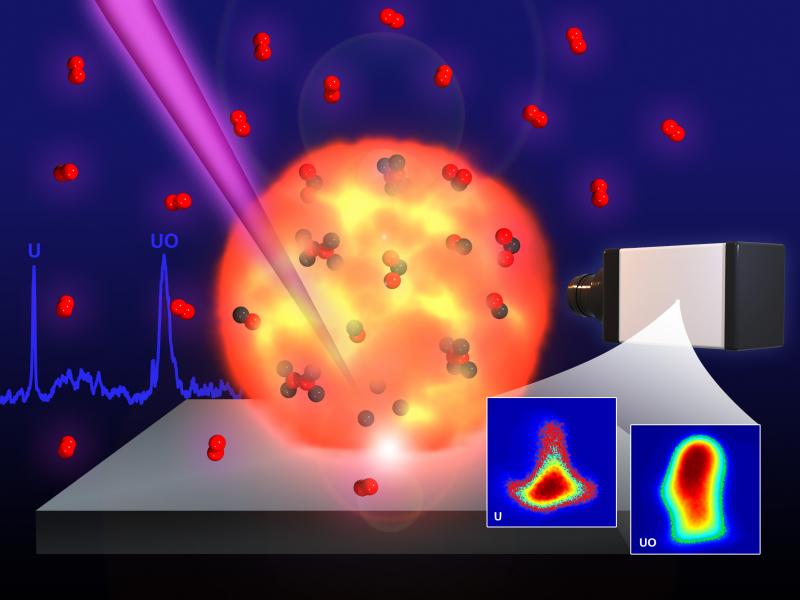
A team of researchers is working to expand our uranium chemistry understanding using a surprising tool: lasers. This capability gives never-before-seen insight into uranium gas-phase oxidation during nuclear explosions.