A research team from Pacific Northwest National Laboratory used machine reasoning to schedule scientific workflows while guaranteeing quality of service (QoS).
Researchers at PNNL have developed an interpretable, lightweight AI model that can easily predict weld microstructure features using only basic machine sensor inputs.
Matteo Muratori, director of transportation and industry programs at PNNL, has been named to the 2026–2028 cohort of the National Academies of Sciences, Engineering, and Medicine’s New Voices Program.
This summer, PNNL hosted the inaugural “As Conductive As Copper” (AC2.0) workshop, fostering a collaborative conversation on the future of the U.S. copper supply chain.
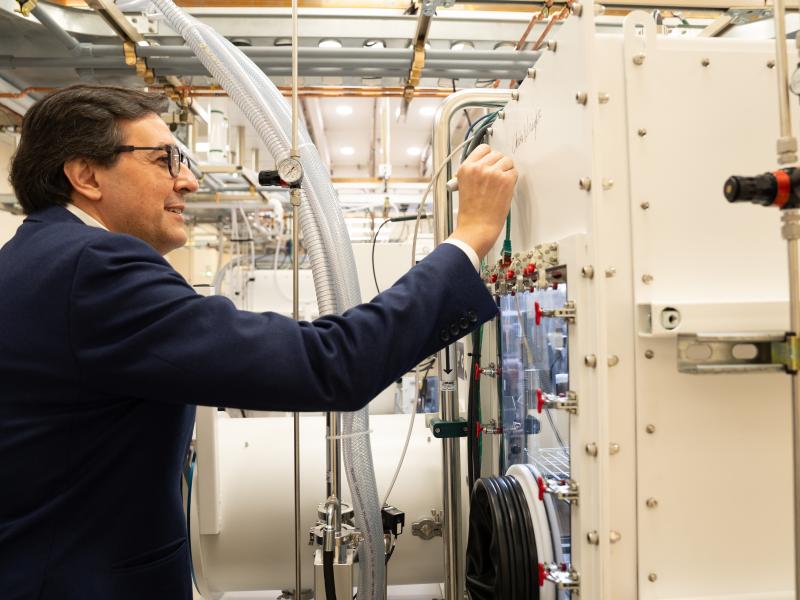
Shear Assisted Processing and Extrusion (ShAPE) imparts significantly more deformation compared to conventional extrusion. The latest ShAPE system at PNNL, ShAPEshifter, is a purpose-built machine designed for maximum configurability.
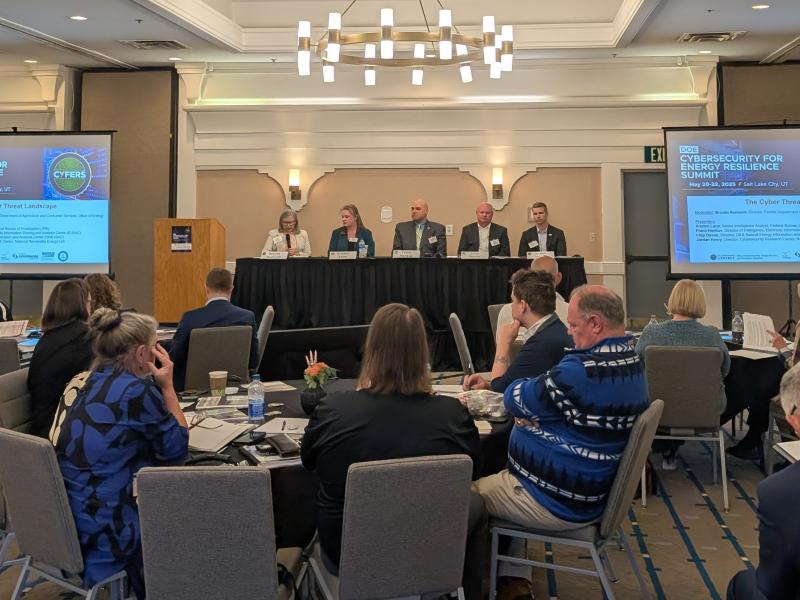
CESER and PNNL convened a three-day summit with more than 100 state officials, cybersecurity experts, and industry leaders across 35 states to advance energy security planning, cyber risk assessment, and fortify protections against attacks.
PNNL researchers have developed a new, physics-informed machine learning model that accurately predicts how heat accumulates and dissipates during friction stir processing.
In a recent publication in Nature Communications, a team of researchers presents a mathematical theory to address the challenge of barren plateaus in quantum machine learning.
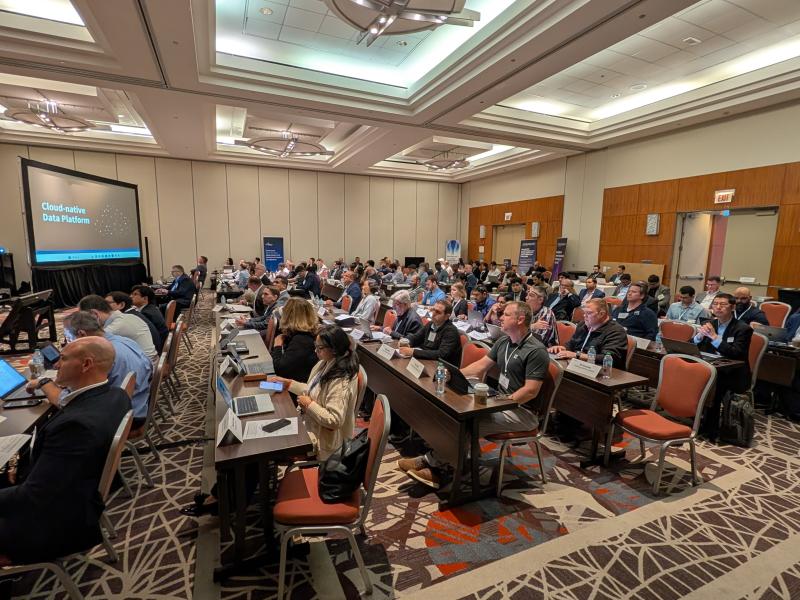
PNNL played host in mid-May to the Artificial Intelligence for Robust Engineering & Science workshop, an annual event that explores advances in artificial intelligence
PNNL computing experts Robert Rallo and Court Corley contribute their knowledge to a recent DOE report on applications of AI to energy, materials, and the power grid.