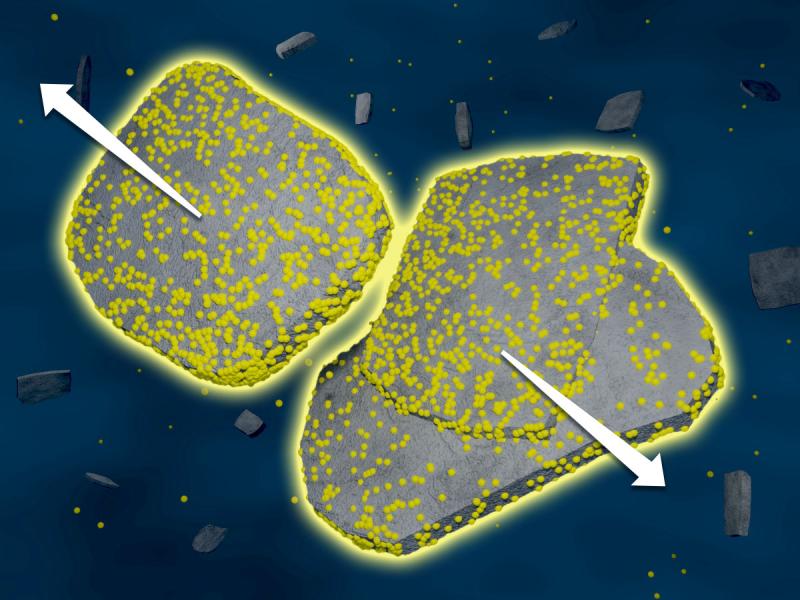
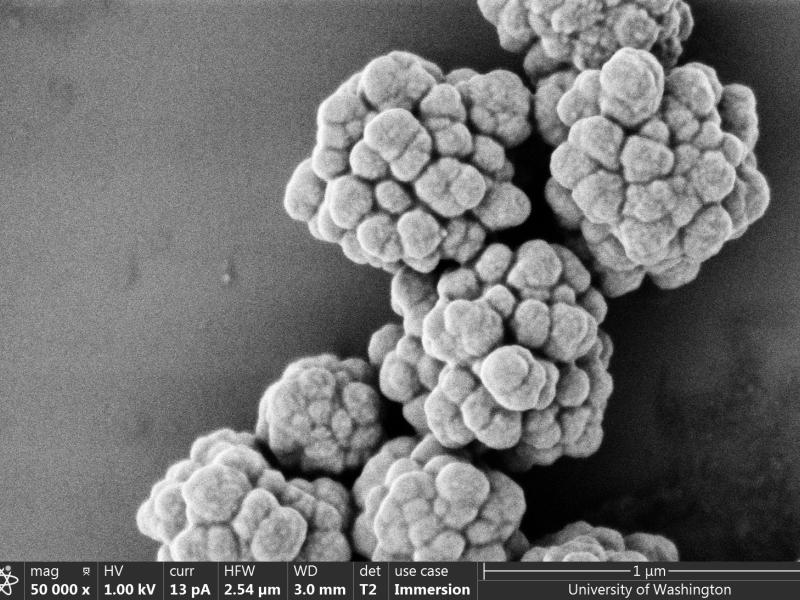
JUNE 2, 2025 Research Highlight Rougher Materials Get Along Better: Surface Roughness Influences Nanoparticle Attachment Under an optical field, nanoparticle attachment in a model system heavily depends on surface roughness. ( Read More )
JUNE 2, 2025 Research Highlight Researchers Develop New, Integrative, and Automated Approach to Identify Multiple Types of Protein Modifications Flexible, high-throughput proteomics approach identifies protein modifications related to pancreatic stress and insulin production. ( Read More )
MAY 30, 2025 Research Highlight Assessing the Properties That Enable Reduction Potential Tuning in Iron/Sulfur Clusters Directionally biased electrostatic interactions are the key to significantly tuning the reduction potential of iron/sulfur clusters. ( Read More )
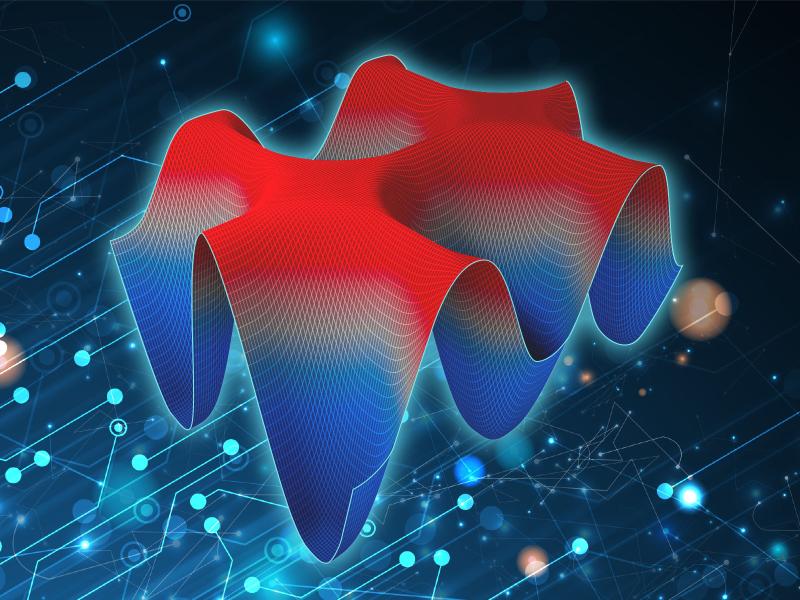
MAY 23, 2025 Research Highlight Unleashing Quantum Computing for Quantum Chemistry from Constrained Optimization Developing a new scheme to more efficiently solve quantum chemistry problems. ( Read More )
MAY 20, 2025 Research Highlight Ion Behavior Near Interfaces Affects Aggregation Increasing concentrations of ions slows the rate of particle aggregation in boehmite suspensions. ( Read More )
MAY 19, 2025 Research Highlight Natural Rhythms Boost Product Synthesis in Sleep-Deprived Cyanobacteria Scientists uncover how cyanobacteria's circadian cycle controls carbon and energy metabolism, increasing carbon dioxide-to-bioproducts yields. ( Read More )
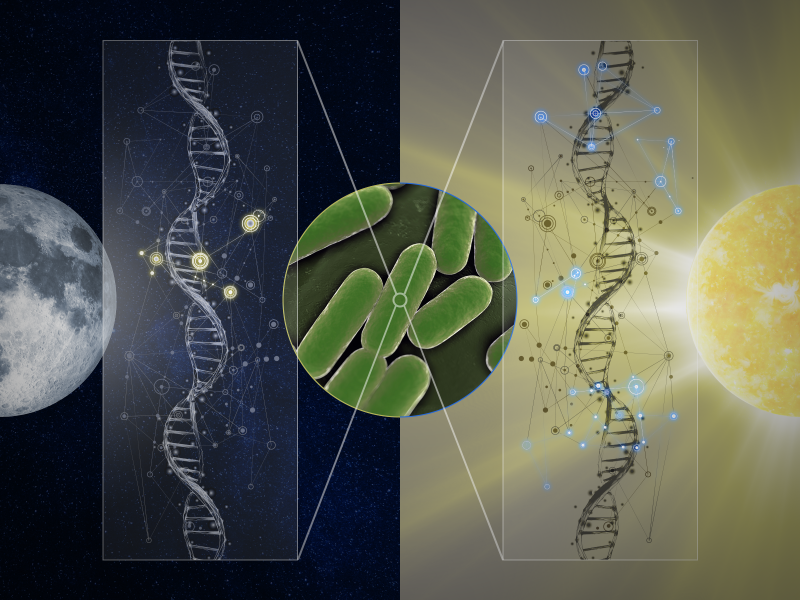
MAY 19, 2025 Research Highlight Gene Regulatory Networks Respond to Day and Night Cues to Affect Phenotype in Cyanobacteria Scientists map how transitions from day to night control gene regulatory networks in cyanobacteria, revealing key orchestrators of metabolic switching. ( Read More )
JANUARY 17, 2025 Article Democratizing Computational Chemistry with the Cloud PNNL Program Development Office Director Karl Mueller explains how the TEC4 project seeks to make advanced chemical computations accessible to all. ( Read More )
JANUARY 14, 2025 Research Highlight Porting Scalable Computational Chemistry to Cloud Computing Electronic structure codes in a cloud environment can enable efficient computational chemistry simulations. ( Read More )
JANUARY 10, 2025 Article New AI Agent Connects Computer Reasoning with Chemistry CACTUS provides AI-powered cheminformatics for autonomous science. ( Read More )
JANUARY 10, 2025 Research Highlight Mineral Surfaces Stabilize Organic Matter through Patchy Multilayer Coatings Molecular simulations highlight the key interactions between mineral surfaces and organic matter that lead to carbon stabilization in soils. ( Read More )
DECEMBER 12, 2024 Research Highlight Molecular-Level Understanding of How Electrolytes Affect Boehmite Particle Aggregation New IDREAM research explores the effects of electrolyte species on boehmite nanoparticle aggregation in legacy wastes. ( Read More )
DECEMBER 10, 2024 Research Highlight Polaritonic Chemistry with the Density Matrix Renormalization Group Method Pacific Northwest National Laboratory researchers developed a new theoretical method for studying highly correlated systems. ( Read More )
DECEMBER 5, 2024 Research Highlight Scientists Make Surprising Discovery About How Microbes Trade Goods and Services ( Read More )
DECEMBER 2, 2024 Research Highlight Structural Proteomics Sheds New Light on Mechanisms Improving Cardiovascular Health PNNL scientists use proteomics to unveil how high-density lipoproteins protect against cholesterol accumulation in the artery wall. ( Read More )
NOVEMBER 19, 2024 Research Highlight Using Artificial Intelligence to Mine Protein Interactions Within Biological Literature Computing and artificial intelligence aid scientists who seek to understand function-driven design and control of biological systems. ( Read More )
NOVEMBER 7, 2024 Article Longtime PNNL Collaborator Received Nobel Prize University of Washington Professor David Baker won the 2024 Nobel Prize in Chemistry for computational protein design. ( Read More )
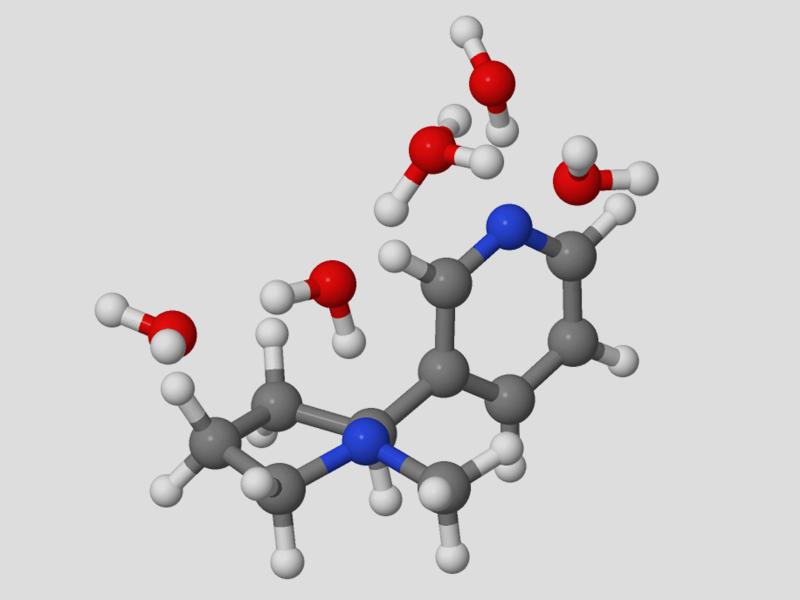
SEPTEMBER 24, 2024 Research Highlight Observing the Mechanism of Protonation Site Switching in Hydrated Nicotine Proton shuffling in hydrated nicotine at low temperatures occurs via a Grotthuss mechanism, identified through experimental and computational work. ( Read More )
AUGUST 22, 2024 Article Novel Computing Tool Learns the Language of Chemistry ChemReasoner combines decades of chemistry knowledge with large language models to propose strategies for effective new catalysts. ( Read More )
![Image of the [4Fe-4S] cluster.](/sites/default/files/styles/thumbnail/public/media/image/Raugei%2C%20hero.jpg?h=08b866d1&itok=EJ1D9uUX)