A PNNL team is working to counter the negative impacts of fentanyl in the environment. Their journal article was selected this summer by the Journal of Environmental Quality as its outstanding paper of 2025.
PNNL’s Center for the Remediation of Complex Sites inducted leaders Director David Peeler, Deputy Director Carolyn Pearce, Operations Director Christian Johnson, and advisors with multidisciplinary subsurface research expertise.
PNNL researchers continue to deliver high-quality, high-impact research on radioactive waste and nuclear materials management, earning “Papers of Note” and “Superior Paper” awards.
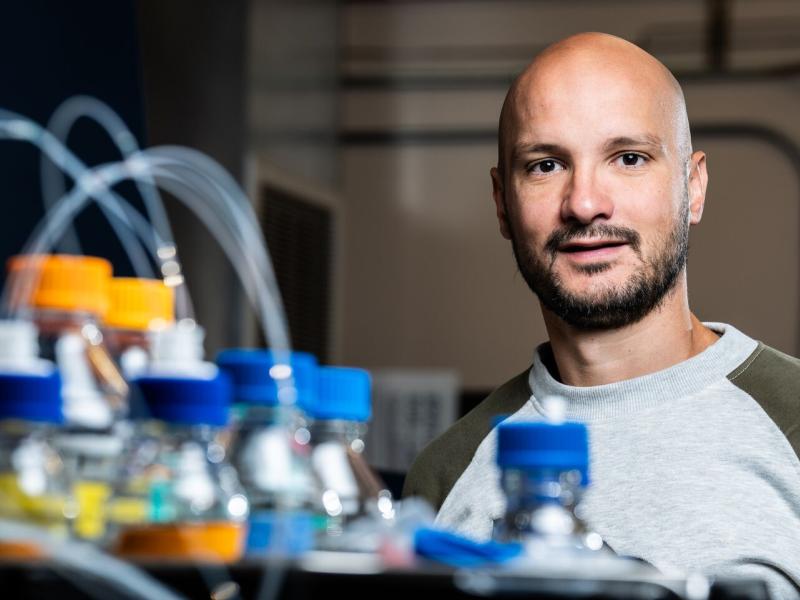
Dušan Veličković, a PNNL mass spectrometry imaging scientist received a $2.1 million grant to develop techniques to understand how changes in carbohydrate structure affect human health.
PNNL's ASSORT model will help airports balance passenger screening and security risks with throughput. It also quantifies risks for different traveler types and optimizes checkpoint operations, improving efficiency while enhancing safety.
Four engineers at PNNL received awards for nuclear science presentations related to Hanford Site cleanup at the annual meeting of the world's leading organization for chemical engineering professionals.
PNNL Earth scientist Alison Delgado will serve as an author for the “Science of Response Management” chapter of the Sixth National Climate Assessment (NCA6.)
International compliance analyst Madalina Man highlighted the history of international safeguards on a podcast by the United Arab Emirates Federal Authority for Nuclear Regulation.
At the 2024 Aviation Futures Workshop, researchers from PNNL joined other subject matter experts and representatives from the stakeholder community in reimagining the passenger experience.
PNNL researchers earned five Papers of Note, 17 Superior Papers, and one poster award for their environmental remediation, radioactive waste, and nuclear energy-related presentations.
At the National Homeland Security Conference, researchers shared how partnerships and emerging technologies like artificial intelligence can play a key role in emergency management preparedness and response.