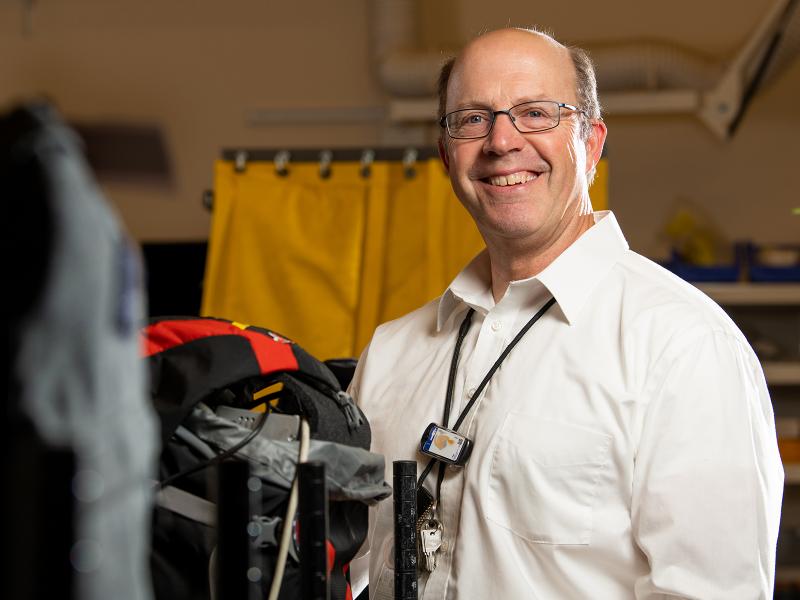
Eric Smith, a Laboratory Fellow and program manager at PNNL, was selected for induction into the Academy of Distinguished Engineers at the 2026 Oregon Stater Awards Ceremony.
The new Washington State Academy of Sciences electees from PNNL represent expertise in nuclear forensics, soil sciences, electricity infrastructure, and more.
PNNL recently led a team effort that secured external accreditation for the Office of Radiological Security Radiological Security Awareness and Response Communications Workshop.
PNNL’s Matt Paiss heads NFPA 800, shaping a unified battery safety code for hazards from production to disposal with the aim of safeguarding communities and guiding safe practices worldwide.
Staff at PNNL recently traveled to Cyprus to facilitate a multilateral workshop on chemical forensics investigations hosted by the U.S. Department of State, Office of Weapons of Mass Destruction Terrorism.
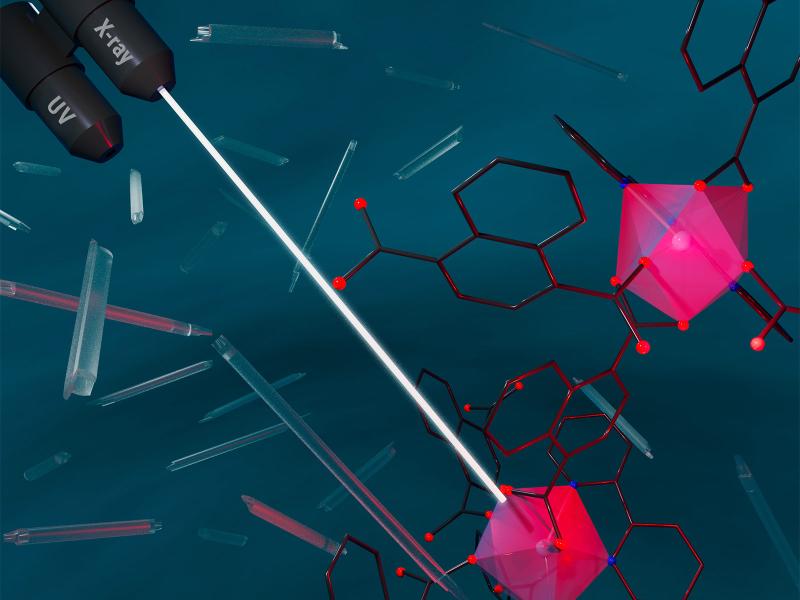
Making it on CrystEngComm’s HOT list, the article, “Designing scintillating coordination polymers using a dual-ligand synthetic approach,” highlights research on existing materials that are non-traditional scintillators.
Katalenich was selected to attend the Grainger Foundation Frontiers of Engineering 2023 Symposium—an honor given to only 100 early-career engineers annually.
PNNL engages in expert panels to address emerging policy issues surrounding deep space exploration; forms new partnership with University of Washington Space Policy and Research Center.
Nuclear Engineer Jacob Benz was inducted into the Council of Outstanding Early Career Engineers, recognizing notable alumni for service, community, and leadership.
PNNL is highlighting scientific and technical experts in the national security domain who were recently promoted to scientist and engineer level 5, one of PNNL’s most senior research roles.
Chemist April Carman was recognized for her career accomplishments with the Professional Achievement Award from the University of Nevada, Reno, College of Science.
Rey Suarez is a nuclear nonproliferation researcher who is working on equipment that can detect radionuclides emitted from a nuclear explosion as part of treaty monitoring.
A paper by PNNL scientists on nuclear explosion monitoring technology is among top articles in nuclear instruments journal to draw most social media “buzz.”
Fifty-eight PNNL staff members were recognized as members of enterprise-wide teams that helped address challenges in national health and security through transformative science and technology solutions.