PNNL mathematician Aaron Luttman contributed to the organizing committee for workshop exploring robust machine learning and artificial intelligence systems for the U.S. Army.
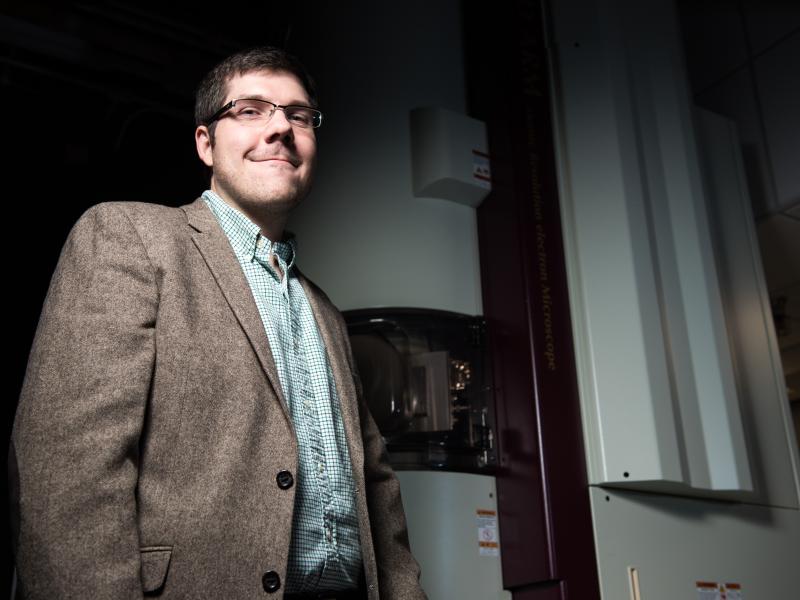
Steven Spurgeon’s research is featured in the cover of the MRS Bulletin along with his team’s invited perspective on the future of machine learning for electron and scanning probe microscopy.
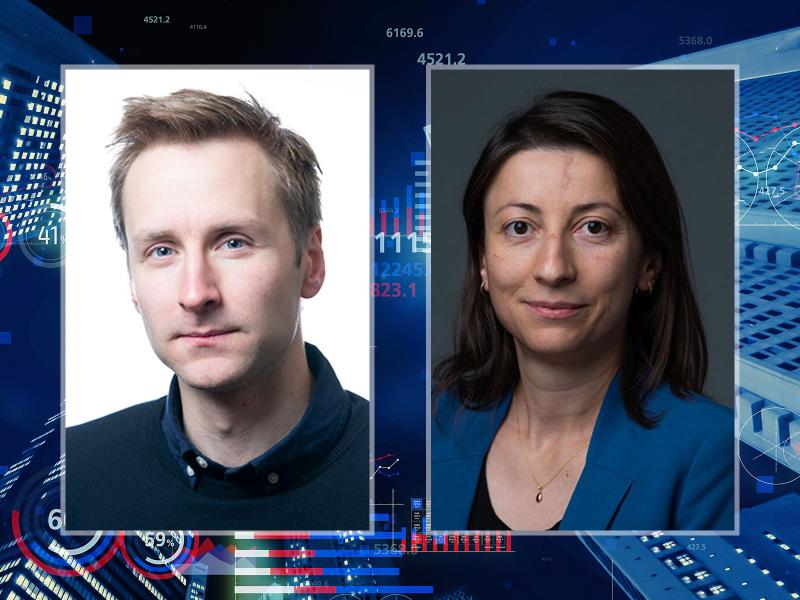
PNNL’s Ján Drgoňa and Draguna Vrabie are part of an international team that authored a most-cited paper on Model Predictive Control, an approach for improving operations, energy efficiency, and comfort in buildings.
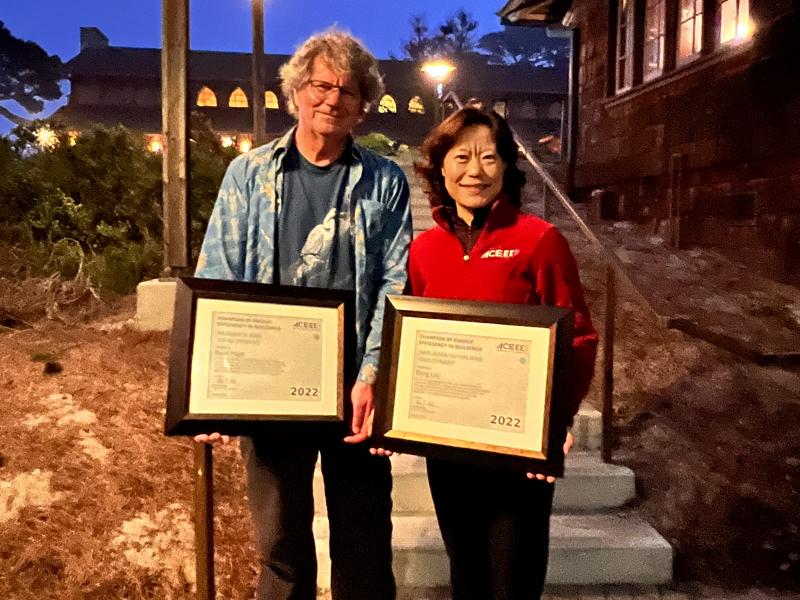
PNNL’s Reid Hart and Bing Liu have earned individual Champions of Energy Efficiency in Buildings awards from the American Council for an Energy-Efficient Economy.
PNNL Chief Scientist for Computing Jim Ang will be part of a DOE Office of Science virtual discussion regarding industry collaborations on AI hardware.
PNNL data scientist to edit collection of research articles focused on understanding how microcircuits function in the brain and in artificial intelligence systems.
A paper co-authored by Courtney Corley was recently selected as the most influential paper for the Twenty-First National Conference on Artificial Intelligence.
Four research staff from PNNL are part of an international team that earned top honors for a journal paper focused on a new algorithm-evaluation approach for buildings.
Anika Halappanavar’s research into COVID-19 misinformation earned her recognition by the Washington State Academy of Sciences as one of the state’s top high school researchers.
The eighth Arab-American Frontiers of Science, Engineering, and Medicine Symposium, co-organized by PNNL engineer and research line manager Leonard Pease, brought together multi-disciplinary researchers from around the globe.