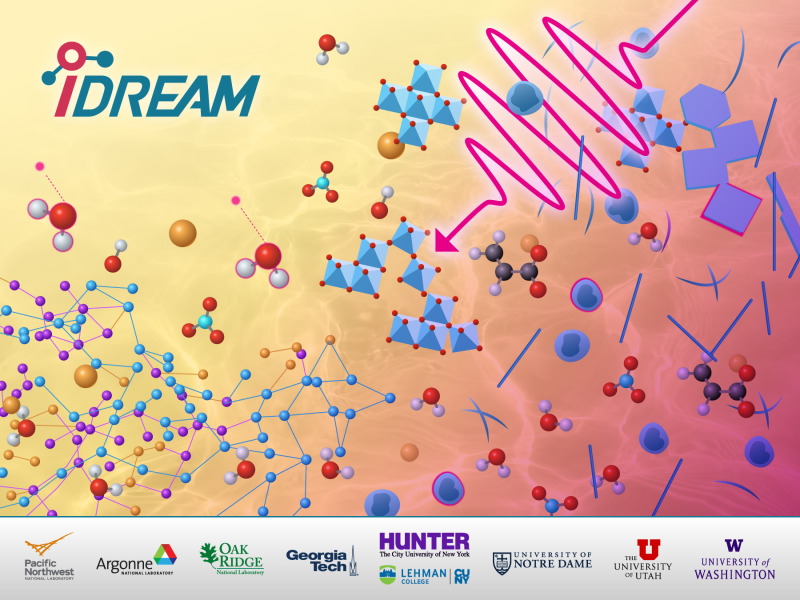
The Ion Dynamics in Radioactive Environments and Materials (IDREAM) Energy Frontier Research Center (EFRC) conducts fundamental science to support innovations in retrieving and processing high-level radioactive waste.
The Isotope Program at PNNL supports scientific advances in the production and use of radioisotopes for research, medicine, and industrial applications.
The Joint Global Change Research Institute conducts research to advance fundamental understanding of human and Earth systems and provide decision-relevant information for management of emerging global risks and opportunities.
PNNL is leading a consortium that provides funding opportunities to the automotive industry for accelerating new lightweight technologies in on-highway vehicles.
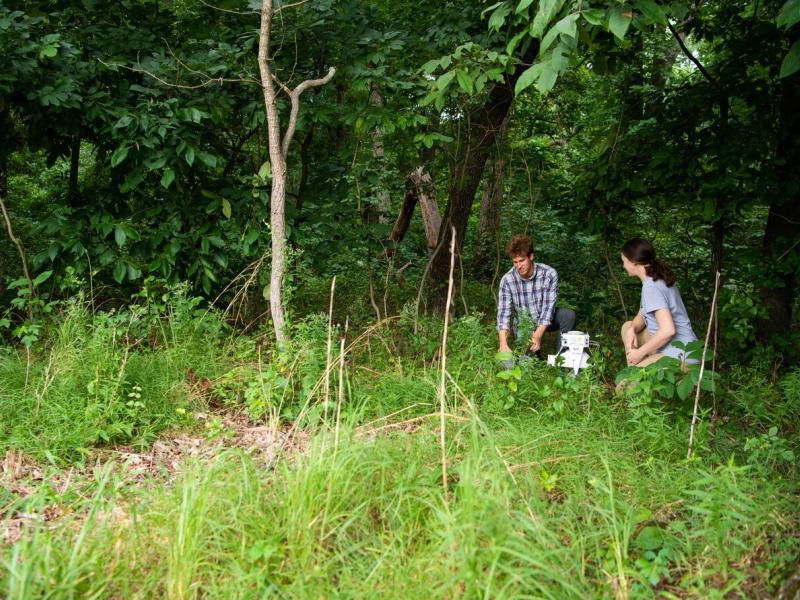
The Molecular Observation Network is a national open science network designed to produce a comprehensive database of molecular and microstructural information on soil, water, microbial communities, and biogenic emissions.
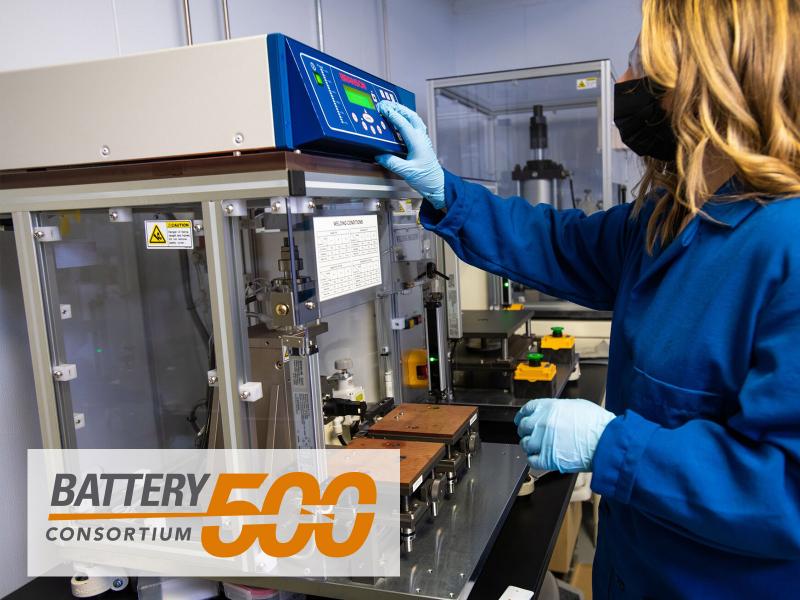
National laboratories, industry and academia are collaborating to provide electric vehicle manufacturers with batteries that are more reliable, high-performing, safe, and less expensive.
The Institute for Quantum Science brings together PNNL's expertise to develop the science, tools, and workflows needed to operate quantum systems as scientific instruments for DOE mission science.
The Water cycle: Modeling of Circulation, Convection, and Earth system Mechanisms (WACCEM) Scientific Focus Area advances predictive understanding of water cycle variability and change.