Cyber networks are constantly under attack by bugs, bots, and nefarious actors. While system owners acutely understand the need to secure their networks, they’re not always sure of the best actions to take.
The Data-Model Convergence (DMC) Initiative is a multidisciplinary effort to create the next generation of scientific computing capability through a software and hardware co-design methodology.
In January 2024, CESER—in partnership with GDO, NASEO, and PNNL—created a set of state energy security cohorts to support the coordination and technical development of state energy security planning, assessment, and mitigation.
The E-COMP Initiative is creating new capabilities that enable the optimized design and operation of energy systems subject to multiple objectives and with high levels of power electronics.
PNNL will partner with the U.S. Department of Transportation’s Volpe Center to explore ways to to achieve federal goals for developing electric transmission infrastructure in transportation rights-of-way (ROWs).
PNNL’s ESMI is a Laboratory-funded research and development (R&D) program focused on transforming and accelerating materials development processes for next-generation energy storage technologies.
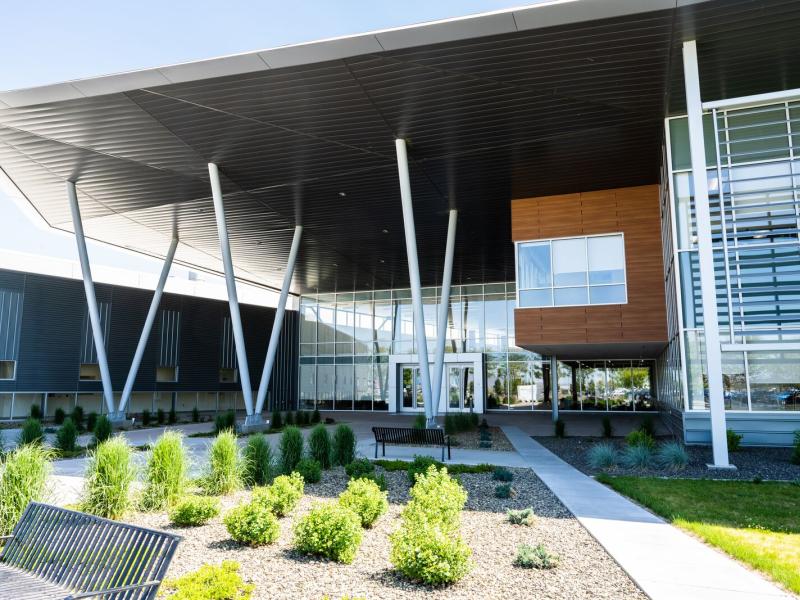
The Grid Storage Launchpad (GSL) is a national capability for energy storage research funded by the Department of Energy Office of Electricity and located on the Pacific Northwest National Laboratory (PNNL) campus in Richland, Washington
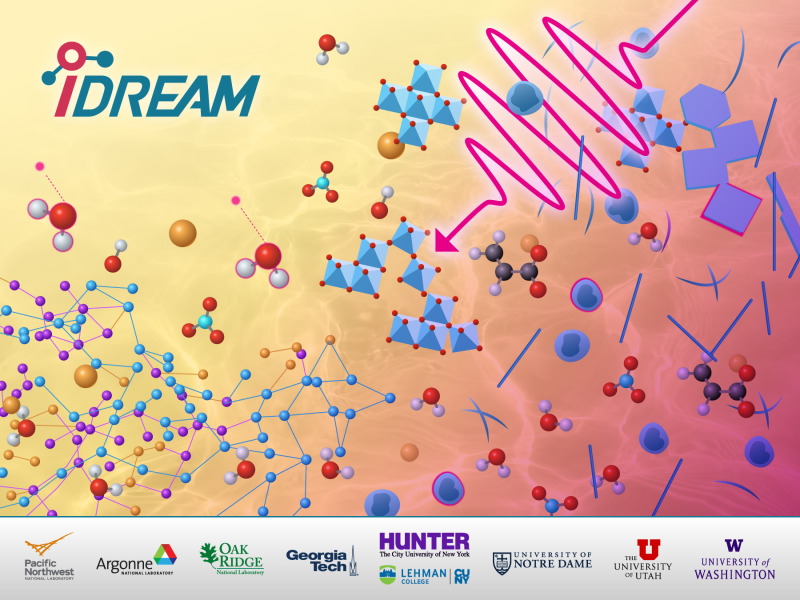
The Ion Dynamics in Radioactive Environments and Materials (IDREAM) Energy Frontier Research Center (EFRC) conducts fundamental science to support innovations in retrieving and processing high-level radioactive waste.
The Institute for Integrated Catalysis (IIC) at Pacific Northwest National Laboratory explores and develops the chemistry and technology of catalyzed processes that enable a carbon-neutral future.