Scientists at PNNL are addressing big challenges using big science.
November 2025
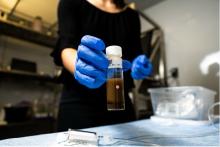
Predicting River Sediment Respiration Rates Using Machine Learning
Data-driven models enhance understanding of biogeochemical processes in river environments.
July 2025

EMSL Summer School inspires hands-on research opportunity for undergraduate students
Experience sheds light on possibilities for expanding scientific access through institutional partnerships.
May 2024
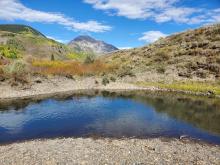
Continental-scale analyses of river sediments shows that microbial respiration is primarily constrained by organic carbon concentration, with additional influences from organic matter diversity.
July 2023
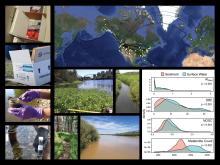
Global Science to Unravel Patterns in River Metabolomes
Research from the PNNL-led WHONDRS consortium reveals chemistry and spatial gradients of metabolomes from river water and sediments around the globe.
January 2022
Investing from Within: Software that Drives Scientific Advancements | Part 3 of a 3-Part Series
Experts in EMSL’s realm of Computing Analytics and Modeling develop software that eases the analysis of experimental data.
February 2021
Investing from Within: Exploring Environmental Interactions | Part 1 of a 3-Part Series
Mission-guided facility research projects help develop new instruments, workflow processes, and collaborations for EMSL users.
December 2020
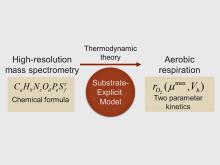
Explicit Representation of Complex Organic Matter Chemistry in Biogeochemical Modeling
New biogeochemical modeling uses high-resolution mass spectrometry data to reveal how organic matter thermodynamics affect ecosystems across scales.
December 2020
The Future of EMSL Science
After a series of workshops in early 2020, EMSL laid out a roadmap of where it aspires to be by 2030.
October 2020
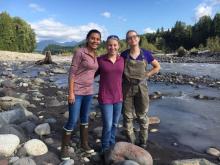
Genome Insider Episode 3: River Microbiomes From Around The World
Kelly Wrighton and her group at Colorado State University in Fort Collins have a massive undertaking: sequencing the world’s river microbiomes. And they’re using team science to do it.
Joint Genome Institute podcast, May 2020
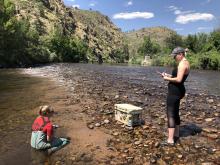
PNNL Watershed Sciences: Fluid, Fast, and Impactful
From microscopic bacteria in river sediments to vast watersheds to global-scale data and inquiries, a PNNL scientist plays a big research role.
December 2019
New Directions for Watershed Science
A recent workshop at PNNL celebrates collaborative inquiries into the defined landscapes that control the fate of water.
October 2019
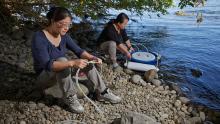
PNNL Research Promotes River Health
The cool waters of the Columbia River bring relief to many during our hot Tri-Cities summers.
July 2019
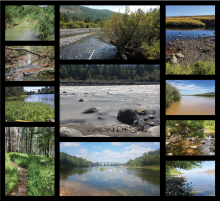
EMSL and WHONDRS Collaborate on Global River Sampling Study
Metabolomics data will help understand integrated river corridor function and develop predictive models.
June 2018