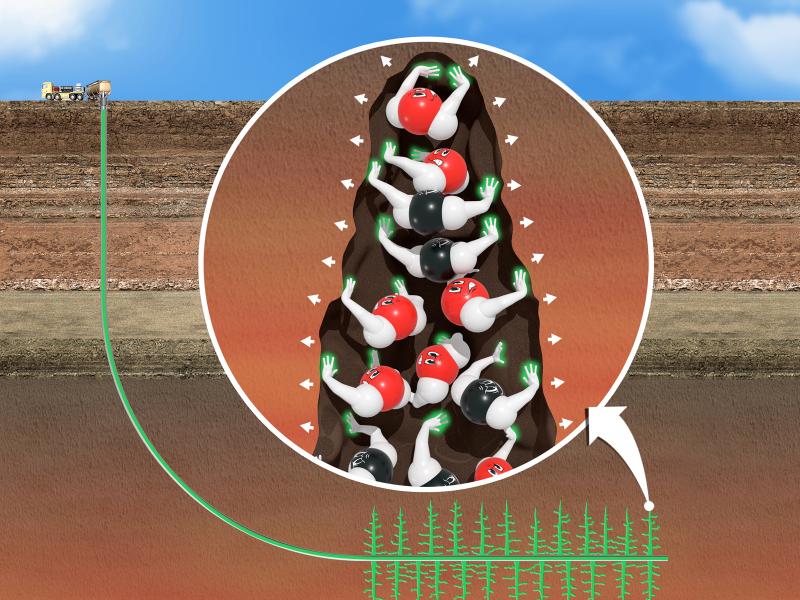
A research team from Pacific Northwest National Laboratory developed an apparatus that evaluates the performance of high-temperature fluids in hydraulic fracturing for enhanced geothermal systems.
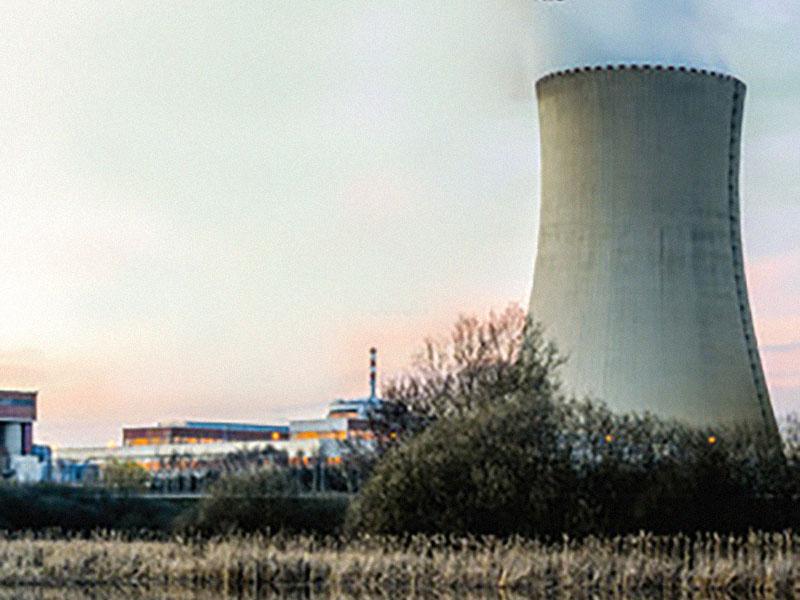
Magazine cover article—“Combating corrosion in the world’s nuclear reactors”—features PNNL research leaders Mark Nutt, Aaron Diaz, and Mychailo Toloczko.
PNNL’s Steven Spurgeon, a materials scientist, was recently elected leader of the Microscopy Society of America (MSA) aberration-corrected microscopy focused interest group.
In a new review, PNNL researchers outline how to convert stranded biomass to sustainable fuel using electrochemical reduction reactions in mini-refineries powered by renewable energy.
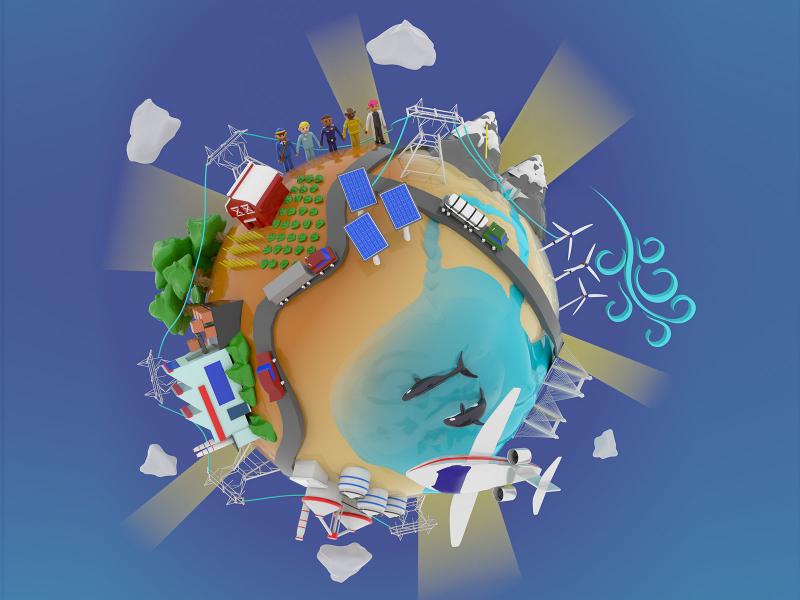
A cadre of physical scientists, engineers and computing experts at Pacific Northwest National Laboratory is poised to participate in the launch of three new DOE Office of Science-sponsored quantum information science research centers.
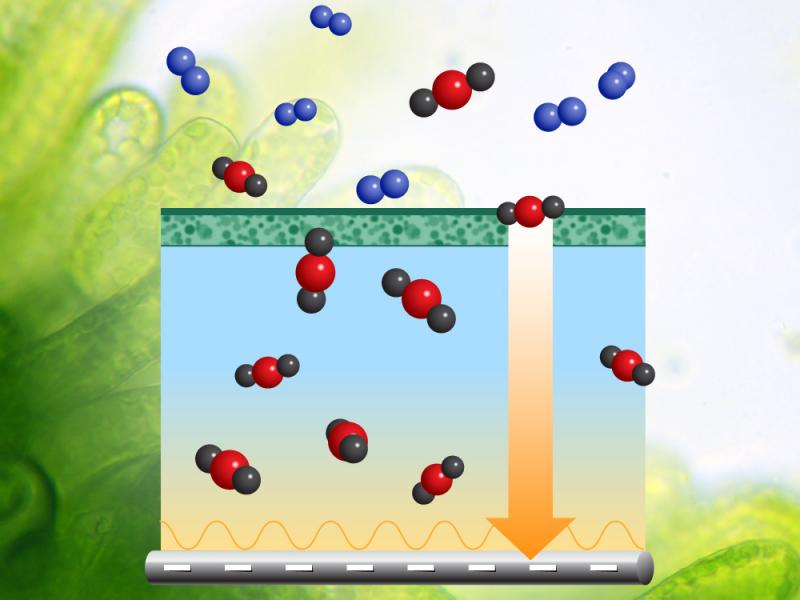
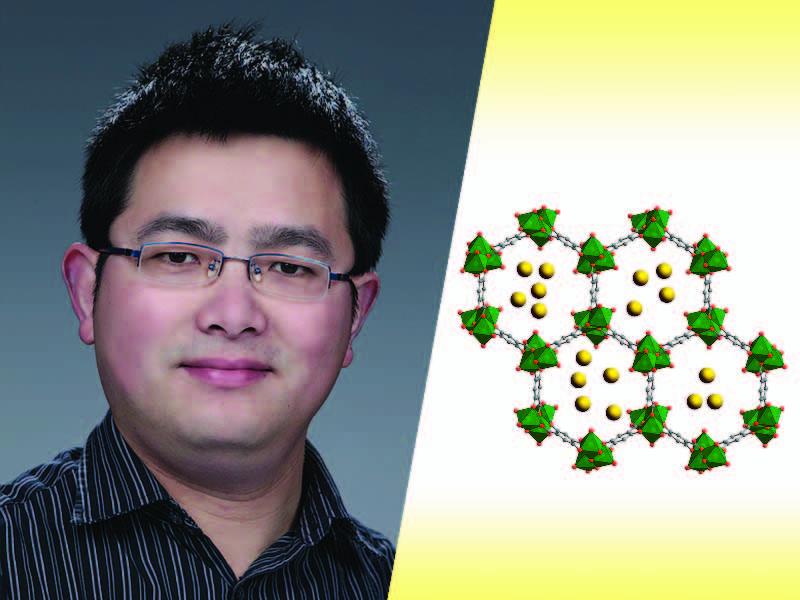
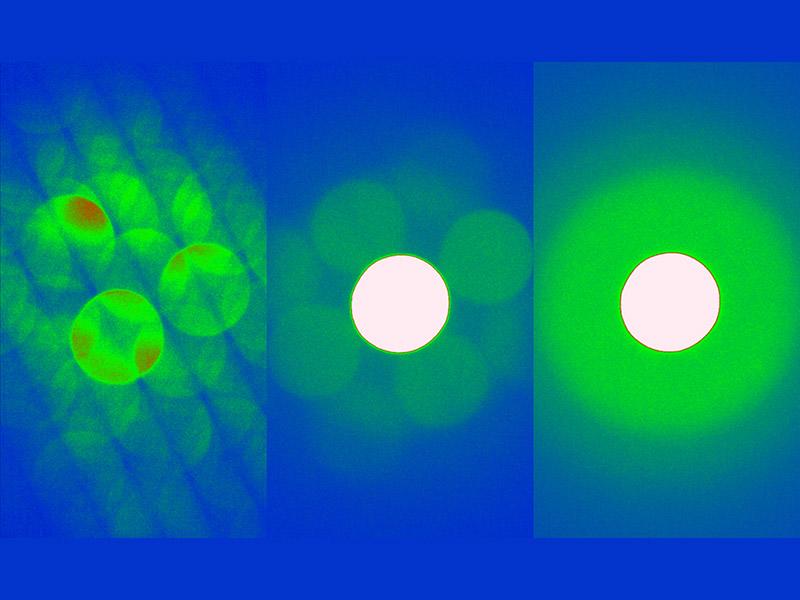
A new radiation-resistant material for the efficient capture of noble gases xenon and krypton makes it safer and cheaper to recycle spent nuclear fuel.
International editing team provided 15-year update, with Devanathan focused on intersection of nuclear science, materials science, and multiscale modeling.
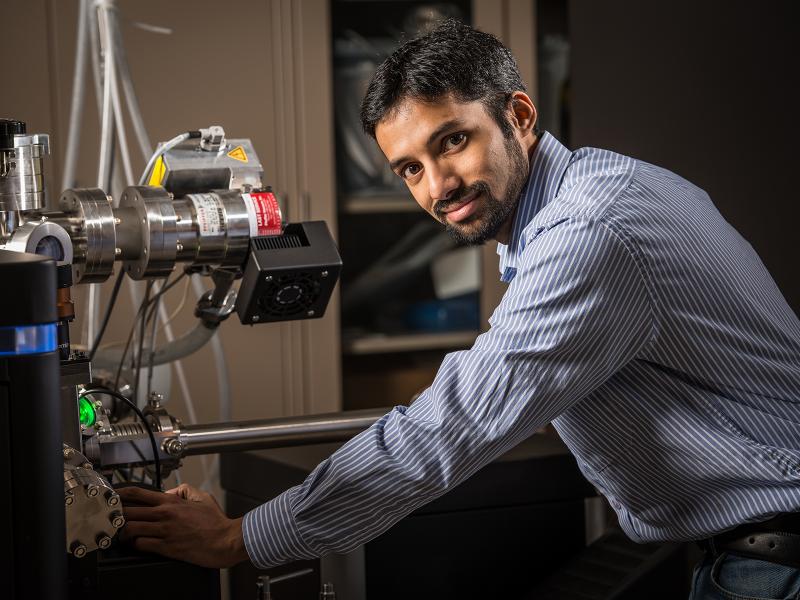
Materials Scientist Arun Devaraj has been selected among 76 recipients nationwide to receive a 2020 Early Career Research Program award from the U.S. Department of Energy
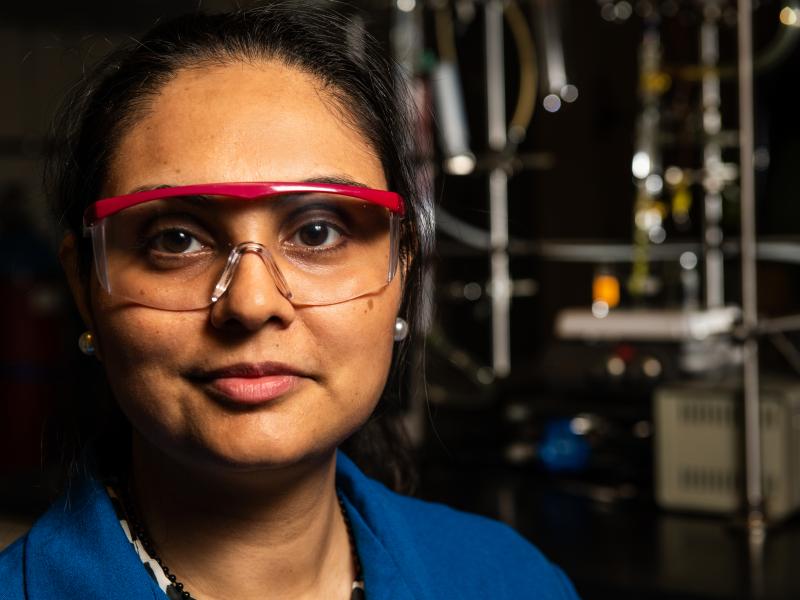
Deepika Malhotra, an organic chemist at PNNL, will lend her expertise to help shape the content and quality of Pollutants a new, interdisciplinary, open access, journal focusing on a range of environmental science research.
Researchers found that certain oxide interface configurations remain stable in extreme environments, suggesting ways to build better performing, more reliable devices for fuel cells, space-based electronics, and nuclear energy.
Malhotra, a chemist, will apply her expertise on designing and creating modular solvents for carbon capture, acid gas separations, catalysis, and rare earth metal extractions to provide constructive review for the submitted manuscripts.
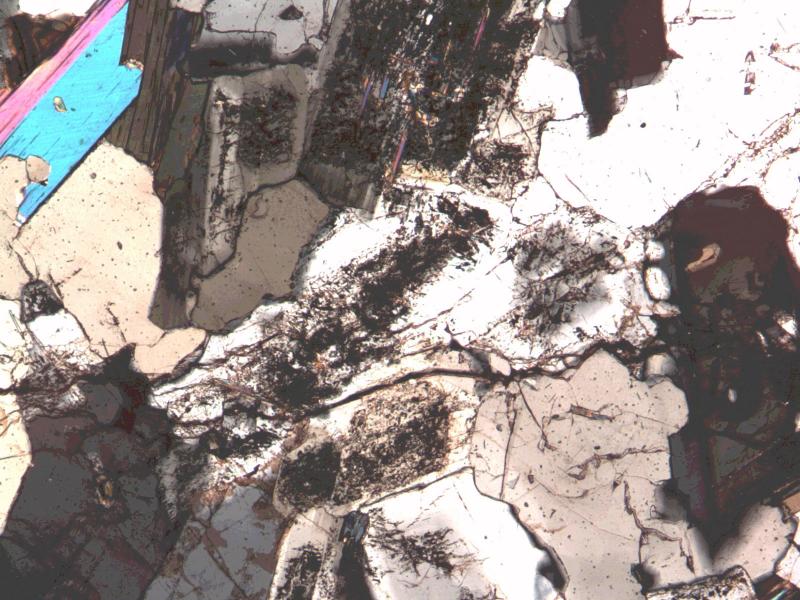
Researchers have identified two processes responsible for fracturing rock at lower pressures for geothermal energy production using PNNL’s fracturing fluid, StimuFrac™.