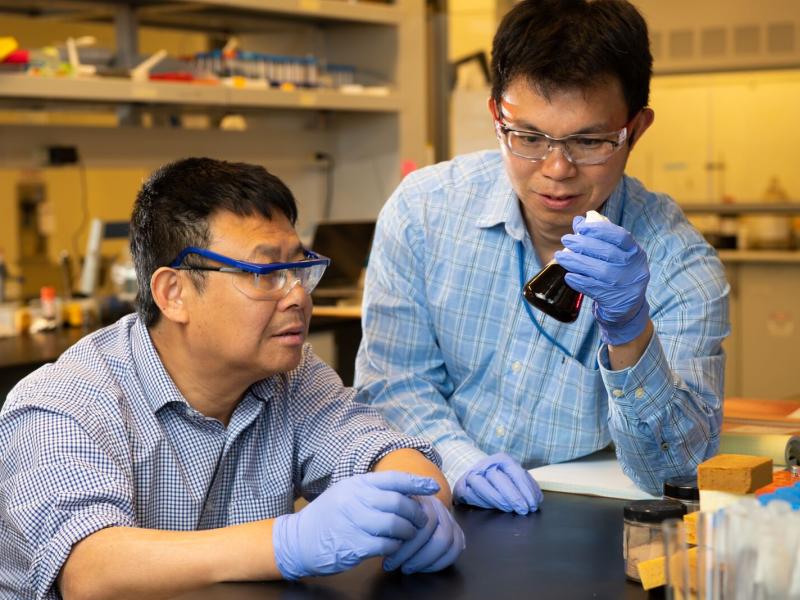
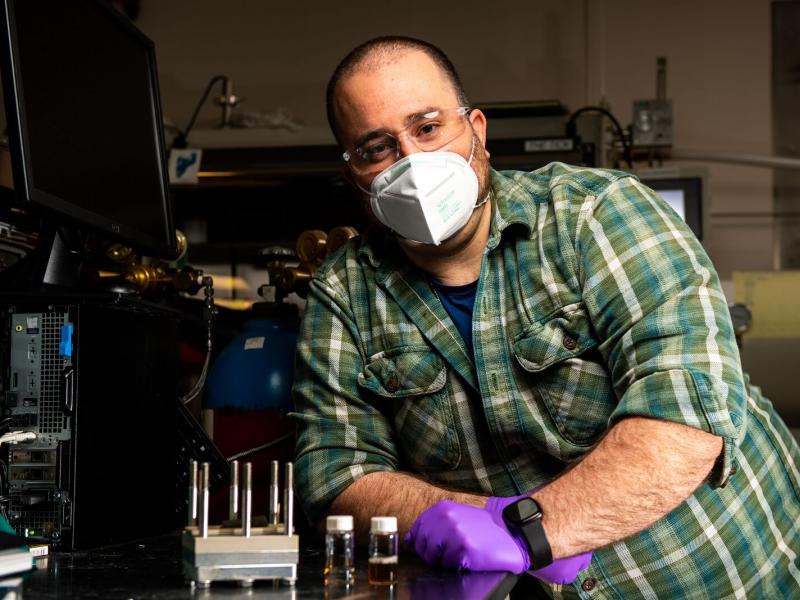
An innovative artificial enzyme has shown it can chew through woody lignin, an abundant carbon-based substance that stores tremendous potential for renewable energy and materials.
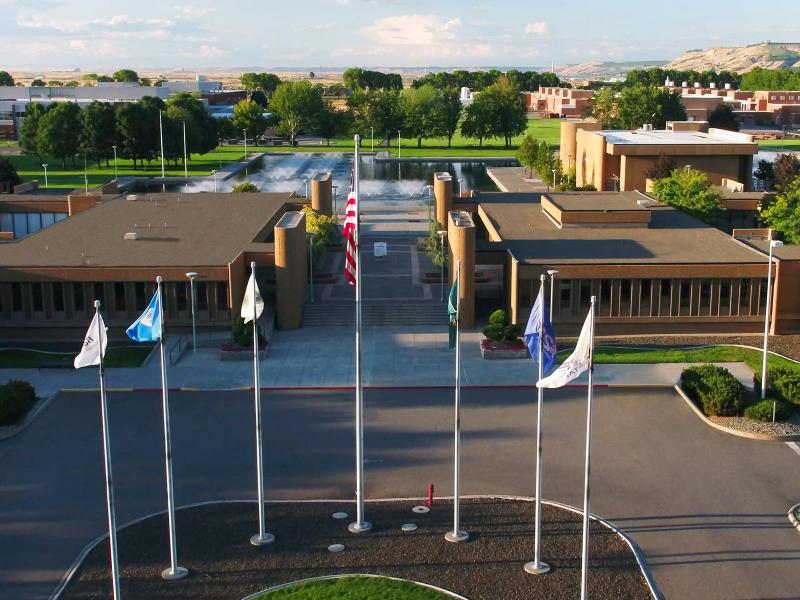
PNNL will demonstrate how new technologies, innovative approaches and partnering with others can lead to net-zero emissions and decarbonization of operations.
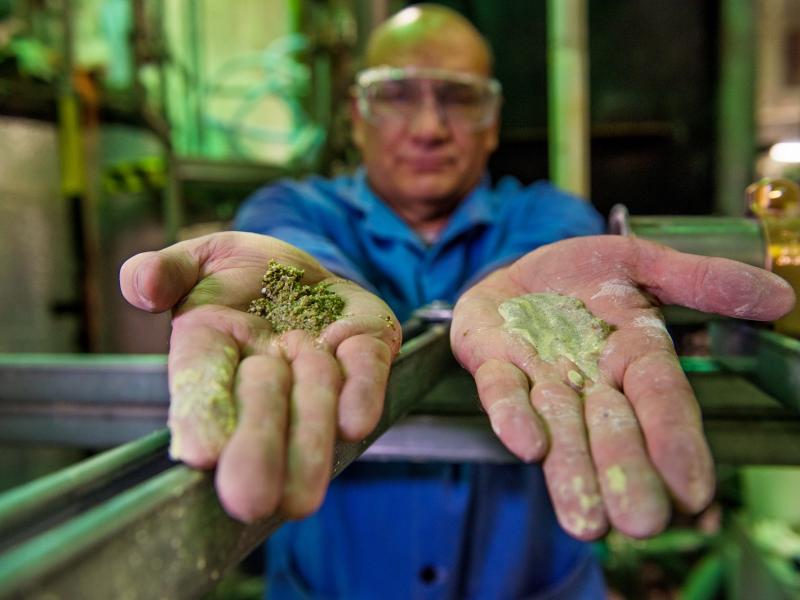
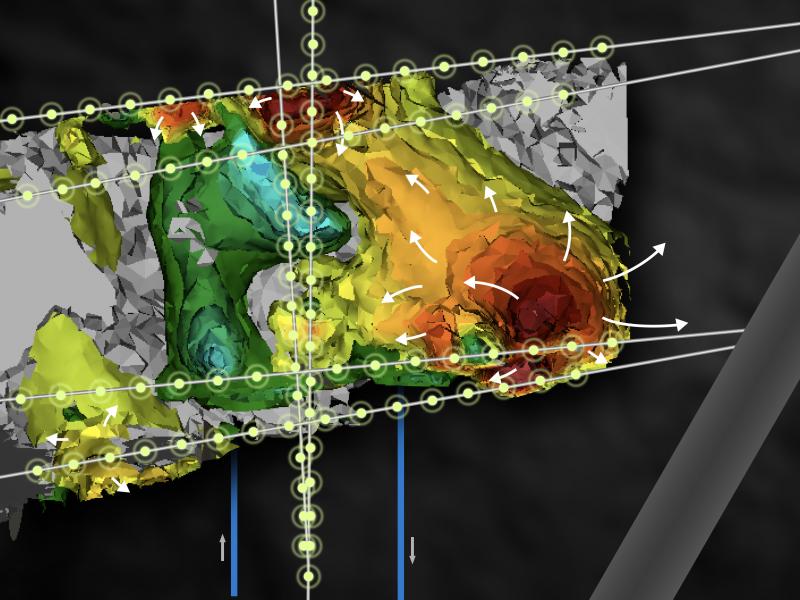
This PNNL-developed separation system quickly and successfully separates larger particles from smaller ones at various scales, in different solid-liquid mixtures and at different flow rates.
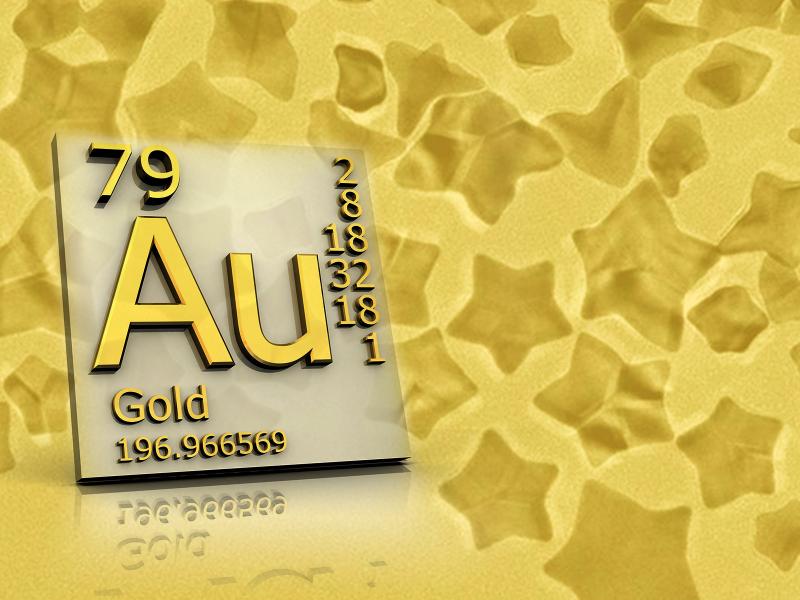
A bioinspired molecule can direct gold atoms to form perfect five-pointed nanoscale stars. The feat is the product of a collaborative team from PNNL and the University of Washington.
A team of researchers developed a simulation approach to identify how atomic structures can affect the phonon transport of energy and information in quantum systems near absolute zero temperatures.
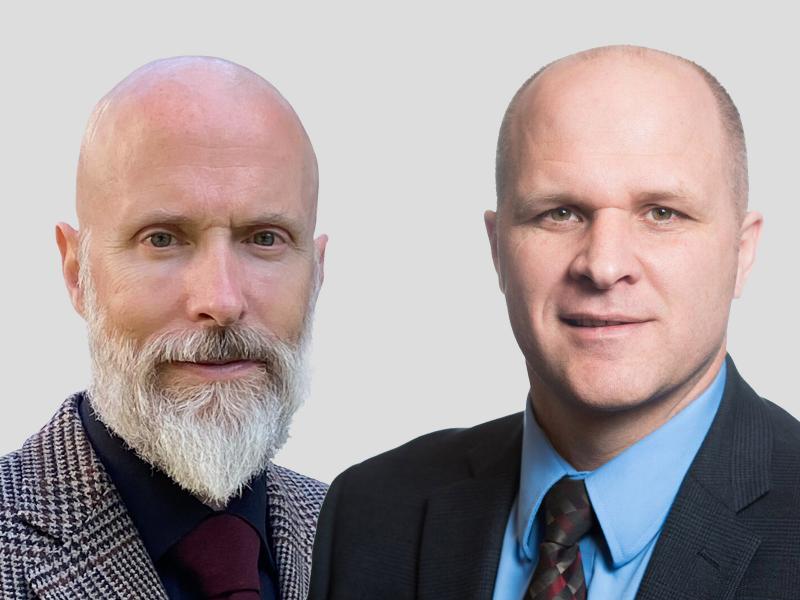
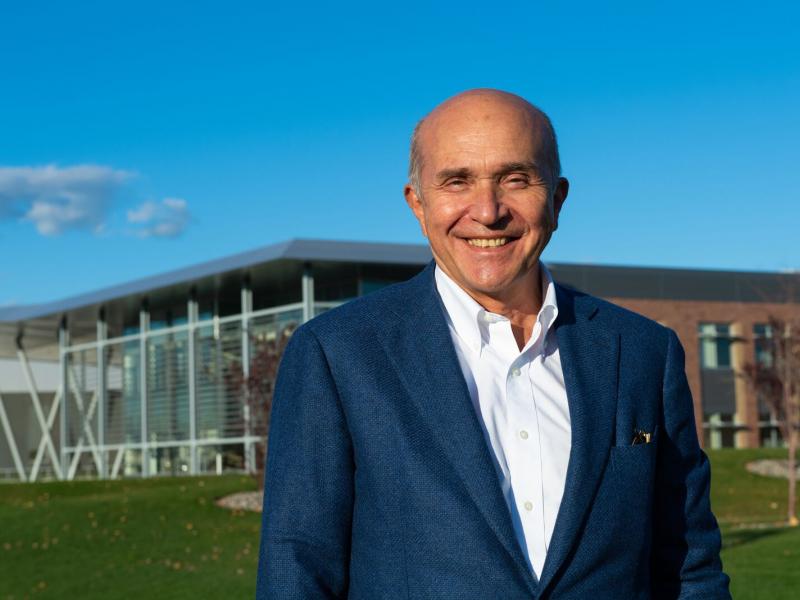
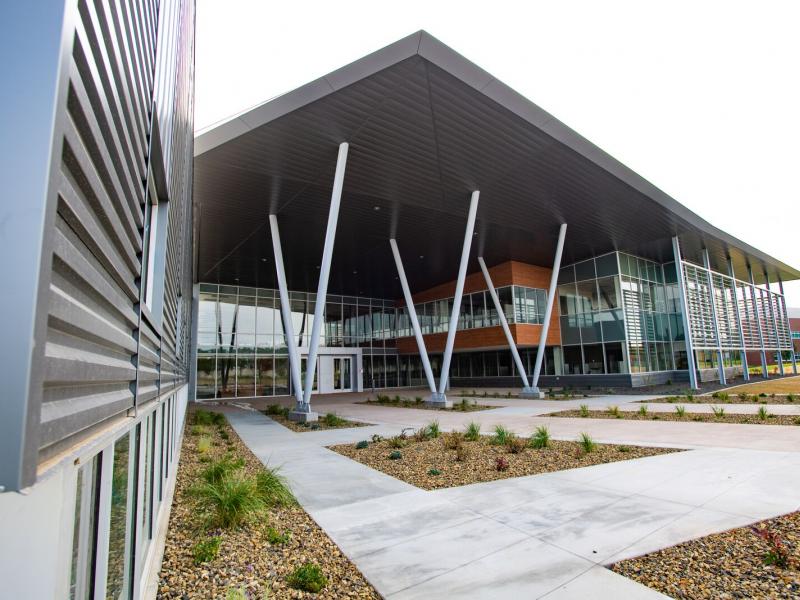
Johannes Lercher, Battelle Fellow and director of the PNNL Institute for Integrated Catalysis, envisions energy storage solutions at the new Energy Sciences Center.
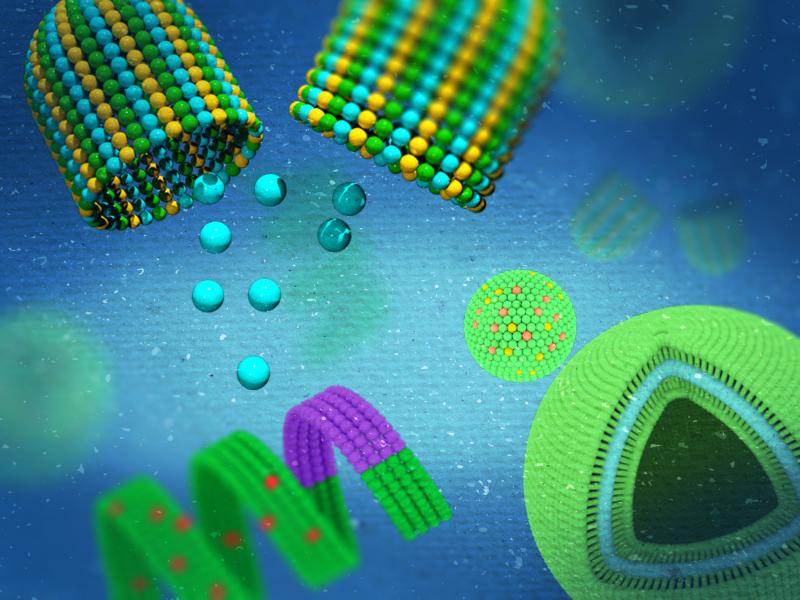
Molecular self-assembly expert Chun-Long Chen describes the challenges and opportunities in bio-inspired nanomaterials in a special issue of Chemical Reviews.
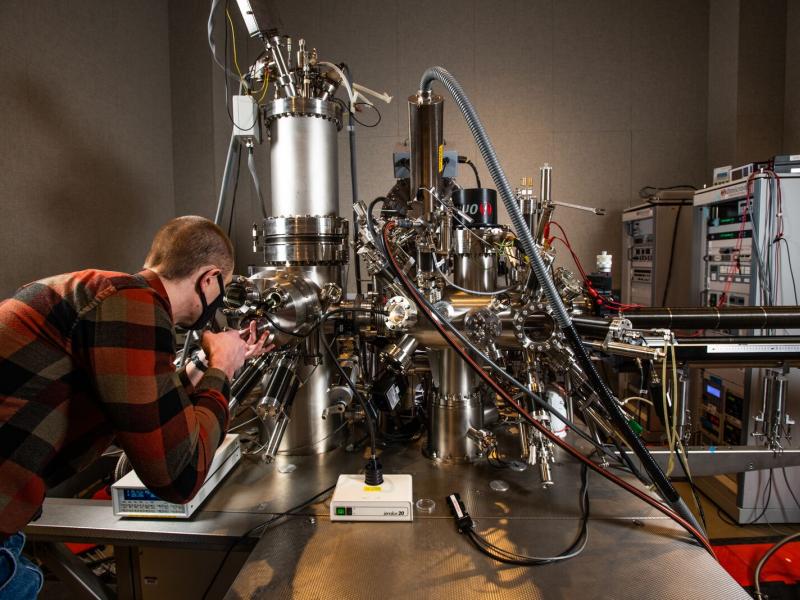
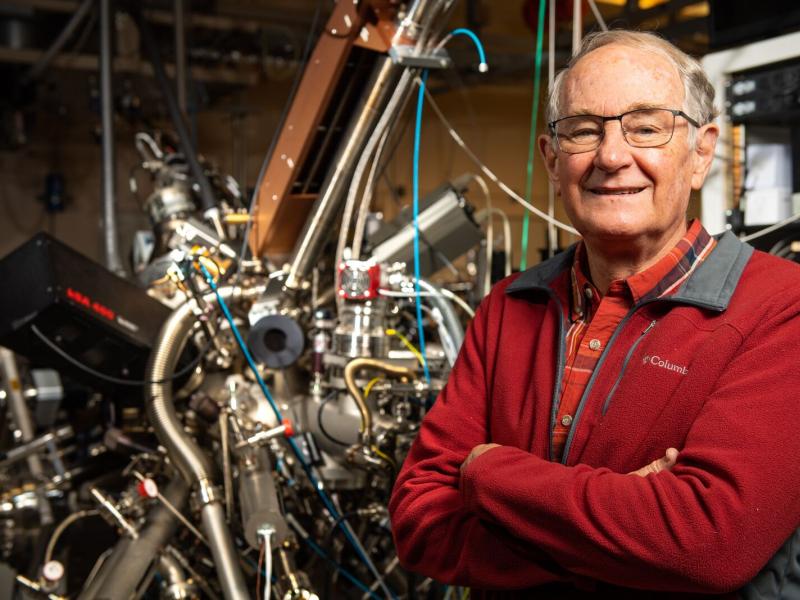
Scott Chambers creates layered structures of thin metal oxide films and studies their properties, creating materials not found in nature. He will soon move his instrumentation and research to the new Energy Sciences Center.