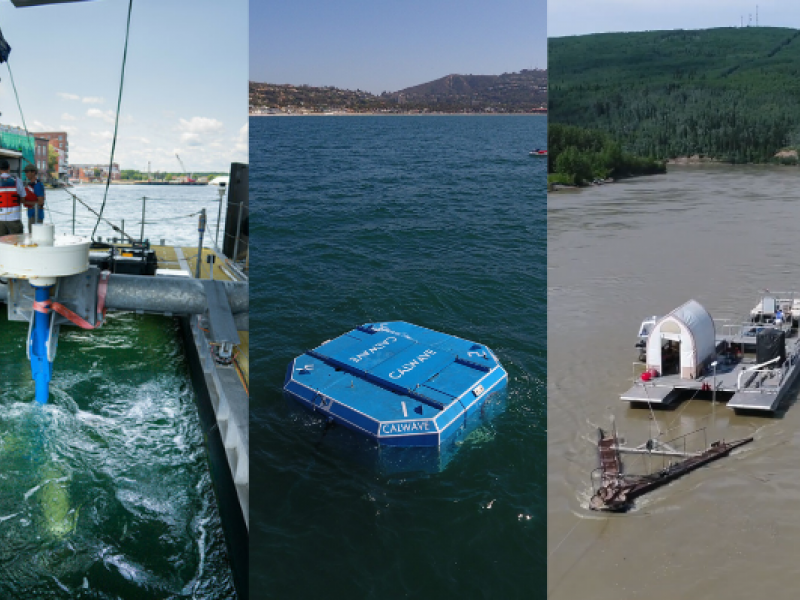
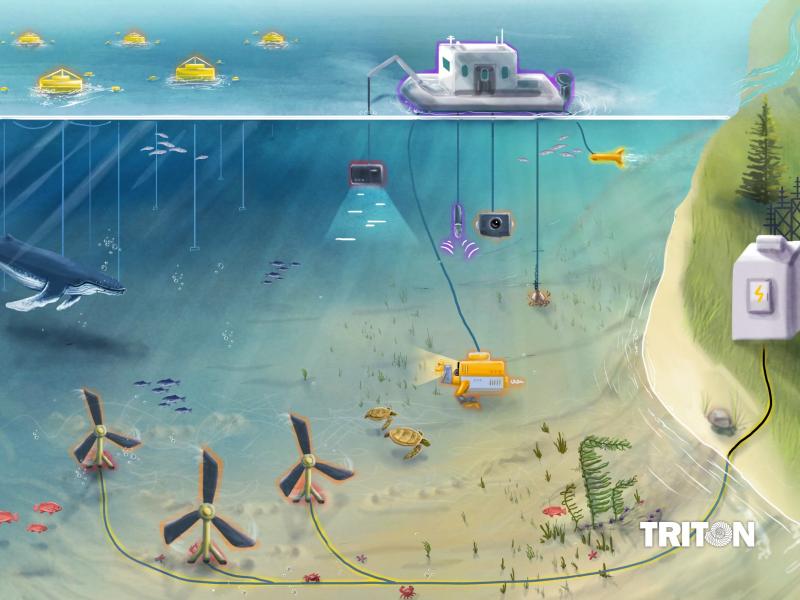
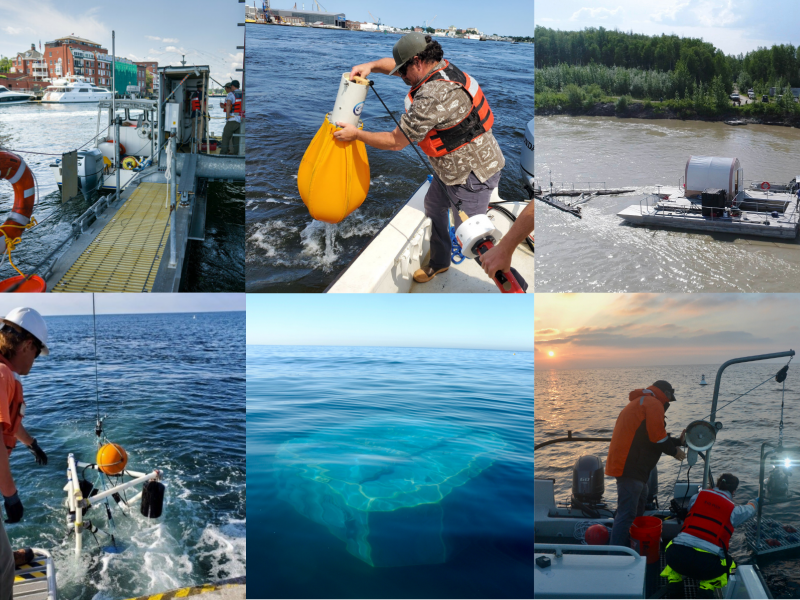
This Triton Story discusses the many types of marine energy devices and the Triton Field Trials environmental monitoring research around wave, tidal, and riverine energy devices.
Recognizing how innovation and clean technologies at the very edge of the grid can work together to transition the electricity system, PNNL takes a multidisciplinary approach to advancing and integrating renewable energy solutions.
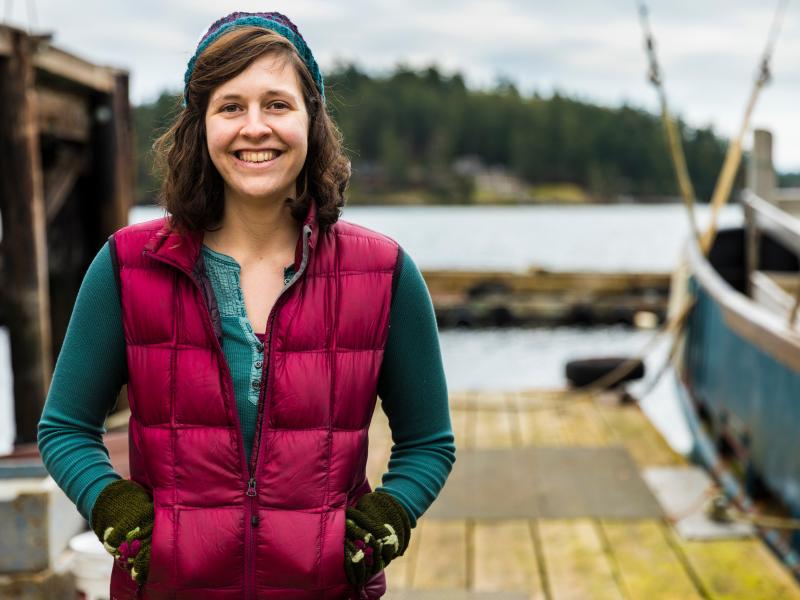
The Triton Initiative highlights different creative science communications, including photography, writing, and science art, and the impact they have on the project's marine energy research.
Molly Grear, an ocean engineer in the Coastal Sciences Division at PNNL, recently helped middle school summer science camp students from Blatchley Middle School in Sitka, Alaska, design their own energy wave converters.
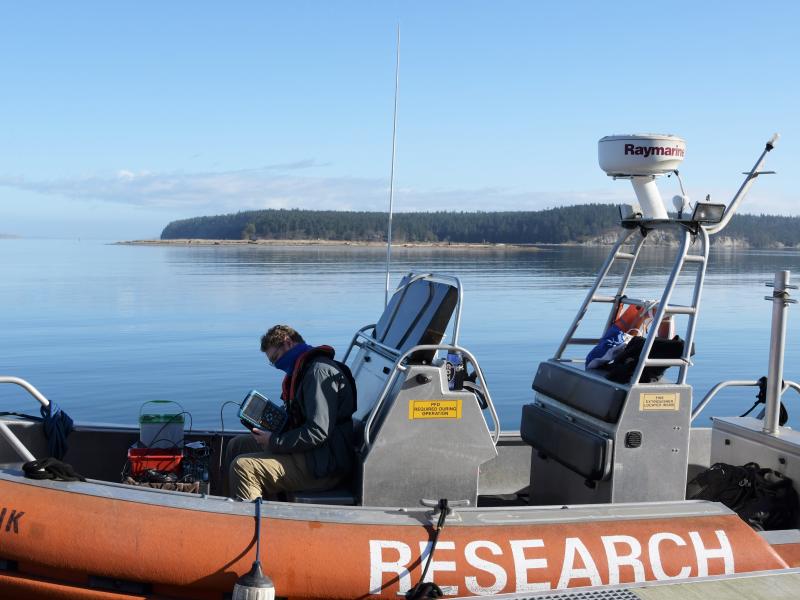
The Triton Initiative supports projects funded through U.S. Department of Energy funding opportunity announcements developing environmental monitoring technologies for marine energy.
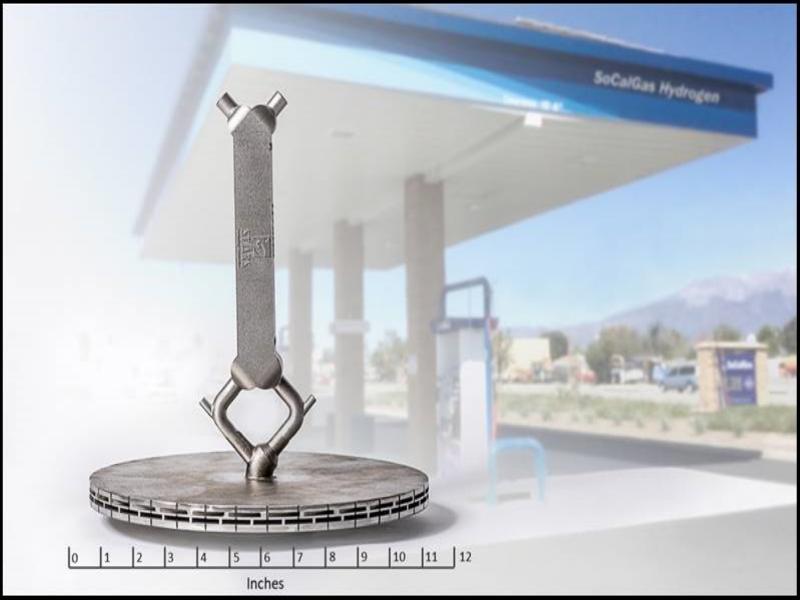
PNNL licensed two technologies to generate hydrogen. One, a reactor design, generates hydrogen from natural gas. The second innovation uses a 3D printing method to economically manufacture the generator.
Samantha Eaves discusses the future of marine energy and her role with Triton from the Department of Energy Water Power Technologies Office perspective.
Study says planners need to account for climate impacts on renewable energy during capacity development planning to fully understand investment implications to the power sector.
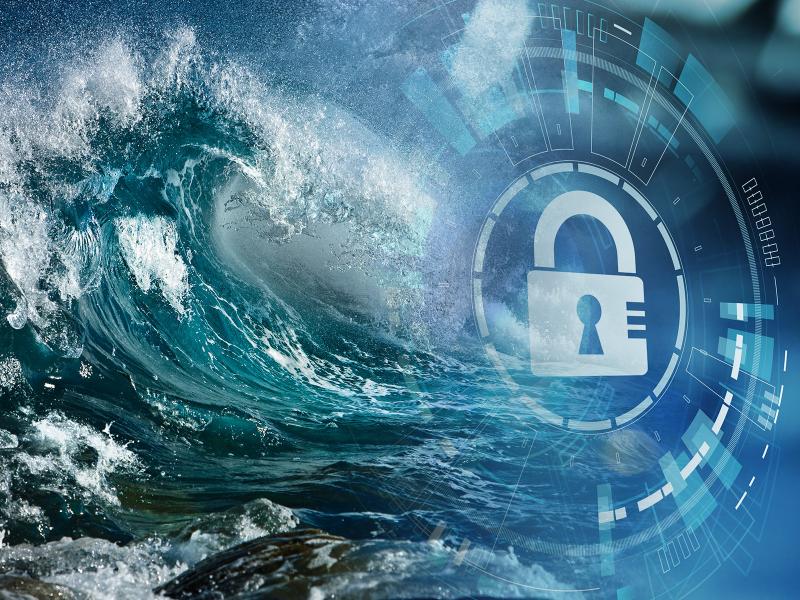
PNNL has published a cybersecurity guidance report for marine renewable energy devices to prepare the blue economy for harnessing ocean power from waves, tides, and currents.
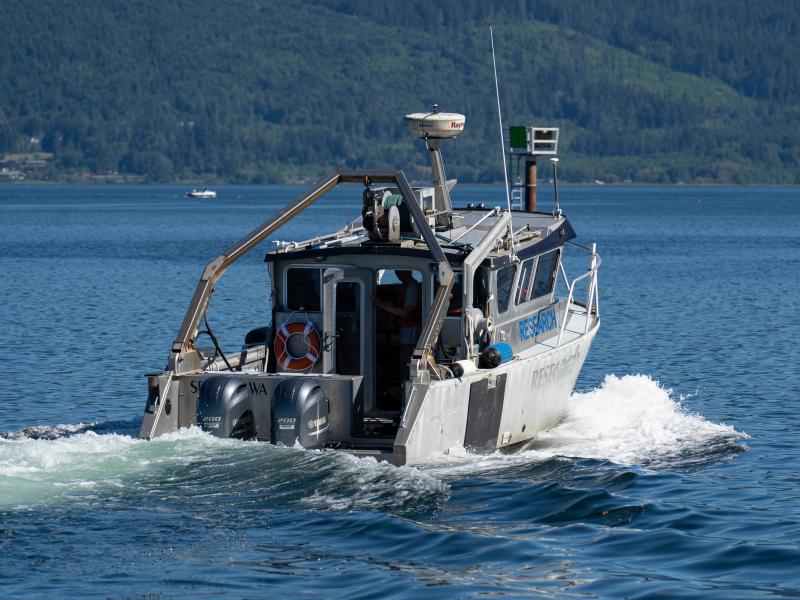
The U.S. Department of Energy has awarded funding to PNNL for the design and construction of a hybrid research vessel and an underwater testbed to be located at PNNL-Sequim.
The Marine and Coastal Research Laboratory (MCRL), part of PNNL, in Sequim, Washington, is the U.S. Department of Energy’s only marine research facility. It has a rich history and expanding research scope.