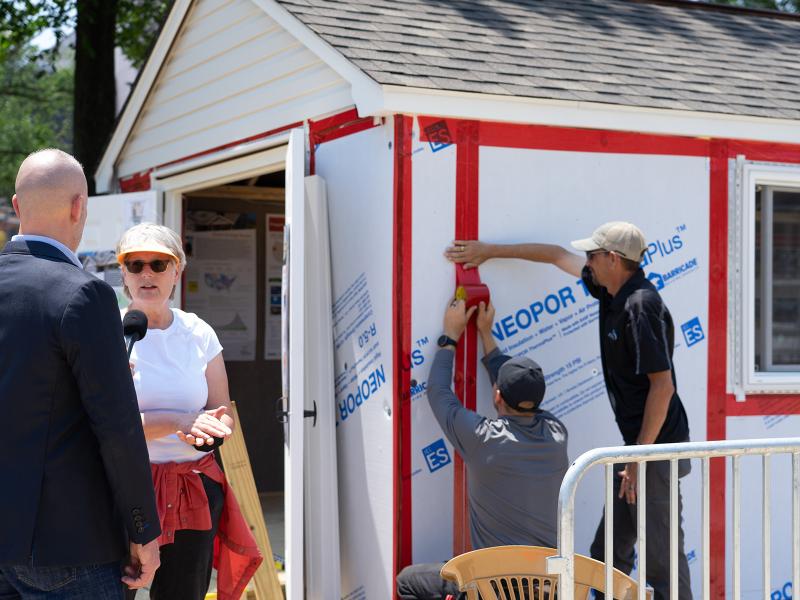
The PNNL-managed Building America Solution Center translates research into actionable considerations for homeowners and builders to provide two solutions in one: increasing energy efficiency while also enhancing disaster resistance.
A PNNL team’s analysis of new-housing data concludes that single-family homes in lower-income counties are less energy-code-compliant than in higher-income counties, a finding that could shape strategies for enhanced code adoption.
PNNL’s extensive portfolio of buildings-grid research included three projects that helped answer some of the technical questions related to leveraging energy consumption in buildings to enhance grid operations.
Research from PNNL and the University of Washington demonstrates the extension of the MBE for periodic systems and its use to decompose the lattice energies of different ice polymorphs.
To overcome high-performance computing bottlenecks, a research team at PNNL proposed using graph theory, a mathematical field that explores relationships and connections between a number, or cluster, of points in a space.
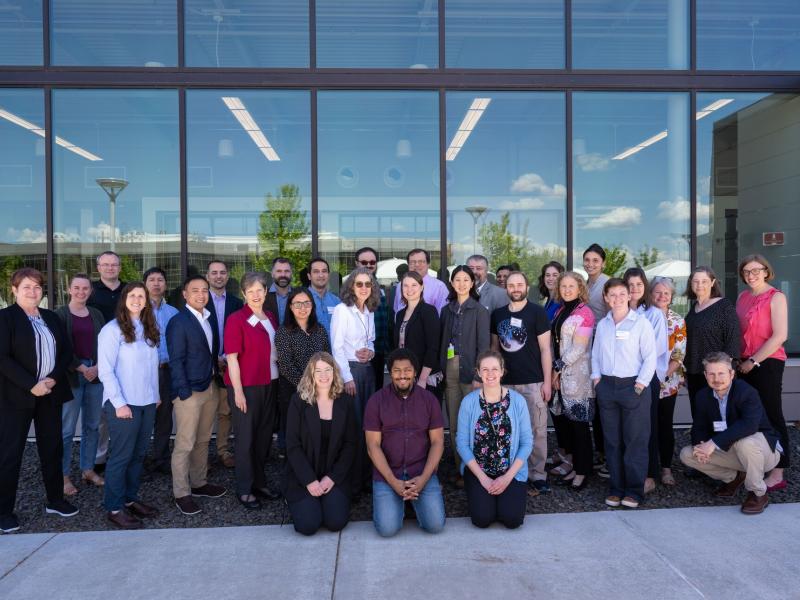
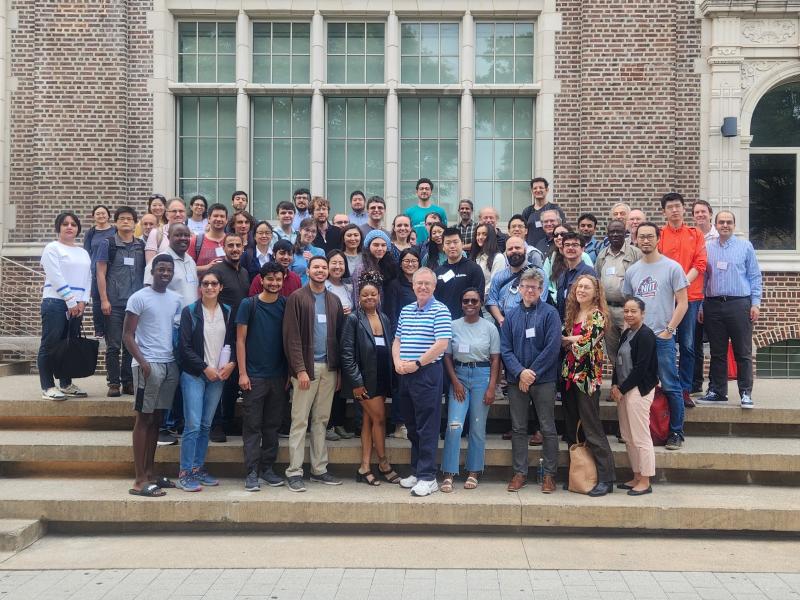
The Northwest Connected Communities Summit brought together representatives of five Department of Energy-funded Connected Communities Projects to share ideas and discuss potential collaboration opportunities.
PNNL welcomes new joint appointments to expand the research productivity and scientific impact of both PNNL and the university partners, broadening the base of expertise at each institution and helping to build interdisciplinary teams.