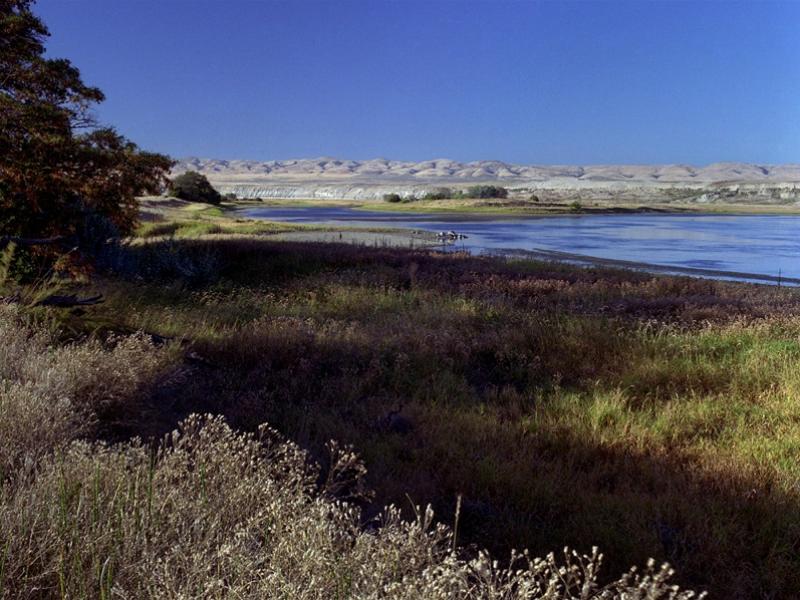
Biogeochemical activity in the hyporheic zone (HZ), sediments where the flowing waters of a river mix with shallow groundwater, supports many of the biological processes that occur within a watershed.
Co-authors of a paper in Hydrological Processes led by PNNL researchers Zhangshuan Hou, Timothy Scheibe, and Christopher Murray, produced a map that identifies different classes of sediments which compose the riverbed along the Hanford ...
A multi-institutional team of scientists developed a new sensitivity analysis framework using Bayesian Networks to quantify which parameters and processes in complex multi-physics models are least understood.
Reactive transport models (RTMs) are used to describe and predict the distribution of chemicals in time and space, in both marine and terrestrial (surface and near-surface) environments where microbially-mediated processes govern...
Hydrologic exchange flows (HEFs) increase the contact between river water and subsurface sediments thereby playing a critical role in biogeochemical and ecological functions along river corridors.
Hydrologic exchange fluxes (HEFs) between rivers and surrounding subsurface environments strongly influence water temperatures and biogeochemical processes. Yet, quantitative measures of their effects on the strength and direction of such e
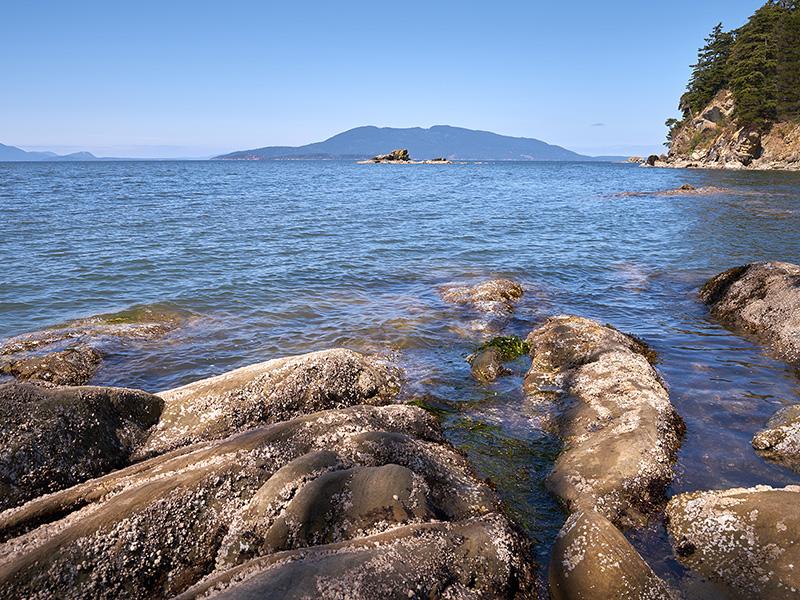
The inner Salish Sea’s future response to climate change, while significant, is predicted to be less severe than that of the open ocean based on parameters like algal blooms, ocean acidification, and annual occurrences of hypoxia.
The ANS award will be presented at the Global Top Fuel 2019 Conference this September in Seattle, and comes amid several recent recognitions for Paviet.
Alicia Gorton, marine scientist and project manager in the PNNL’s Coastal Sciences Division, has joined the editorial board of the Marine Technology Society Journal.
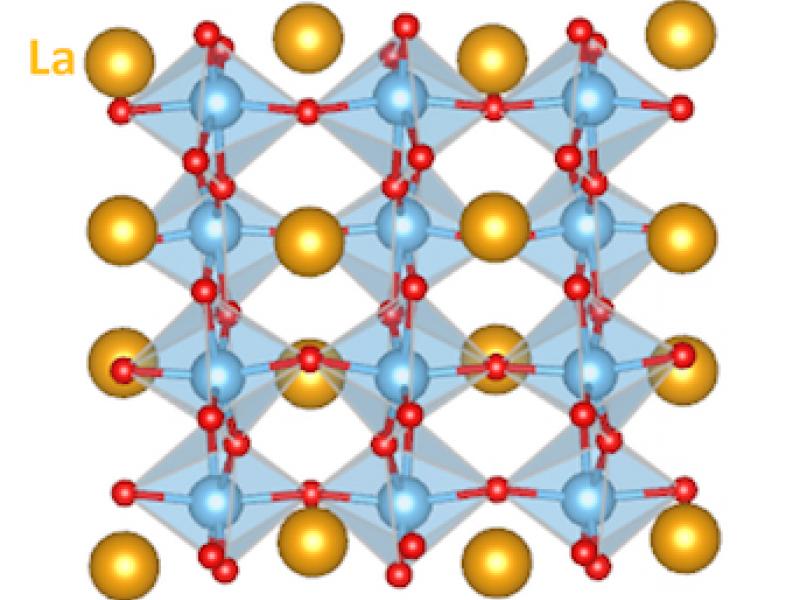
Researchers apply numerical simulations to understand more about a sturdy material and how its basic structure responds to and resists radiation. The outcomes could help guide development of the resilient materials of the future.
The Soil Science Society of America presents Nik Qafoku with the 2019 Jackson Award for contributions in soil chemistry and mineralogy—ranging from agricultural fertilizer efficiency in Albania to soil contaminant transport at Hanford.
A radioactive chemical called pertechnetate is a bad actor when it’s in nuclear waste tanks. But researchers at PNNL and the University of South Florida have a new lead on how to selectively separate it from the nuclear waste for treatment.
Frannie Smith, a chemist specializing in nuclear waste management and disposal, was recognized as a "Notable Woman in STEM" for 2019 by the nonprofit Washington STEM program.
Josef "Pepa" Matyas, a materials scientist in PNNL’s Nuclear Sciences Division, has been elected a fellow of the American Ceramic Society (ACerS). He will be recognized at the ACerS annual meeting on September 30, 2019, in Portland, Ore.
Installing new access holes (up to 6 feet in diameter) could reduce the overall time and cost to retrieve waste from Hanford's underground storage tanks, according to a structural analysis of the tank domes by PNNL and Becht Engineering.
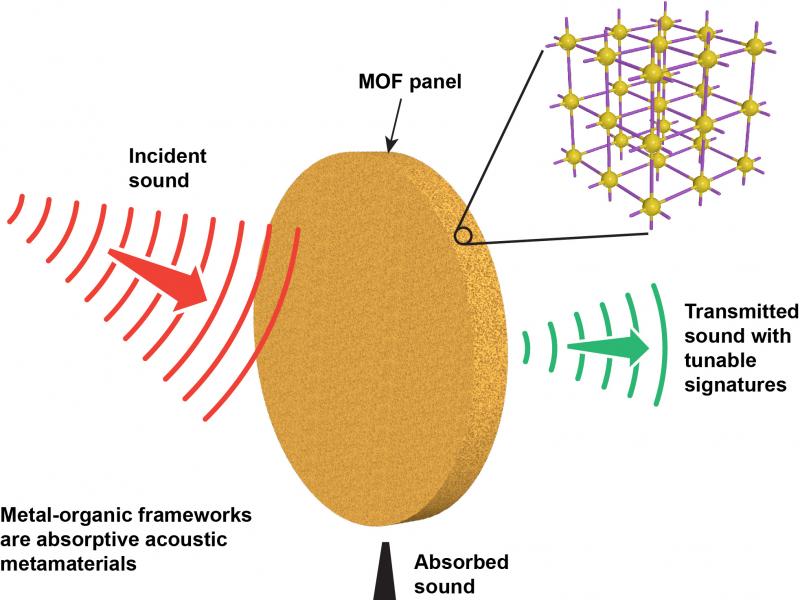
Researchers at PNNL are developing a new class of acoustically active nanomaterials designed to improve the high-resolution tracking of exploratory fluids injected into the subsurface. These could improve subsurface geophysical monitoring.
"It's sort of like using infrared goggles to see heat signatures in the dark, except this is underground." PNNL and CHPRC implemented a state-of-the-art approach to monitor the process of remediating residual uranium at Hanford's 300 Area.