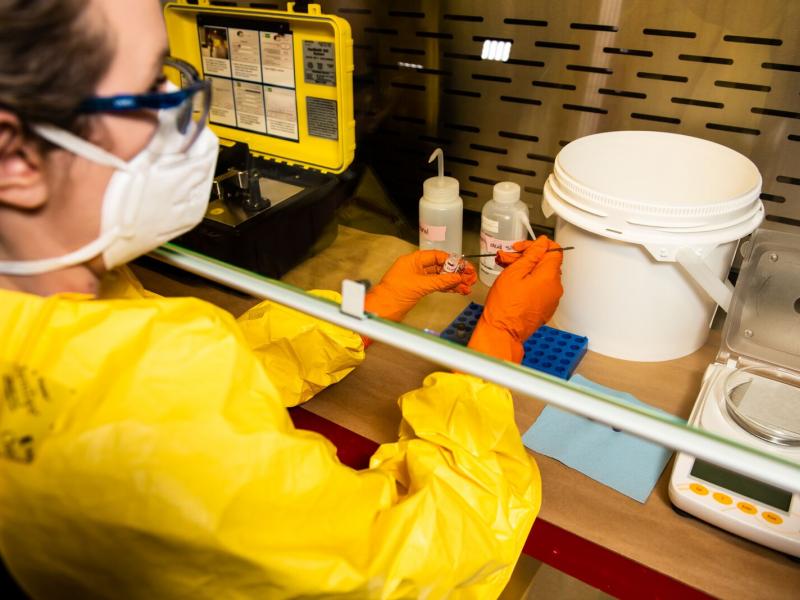
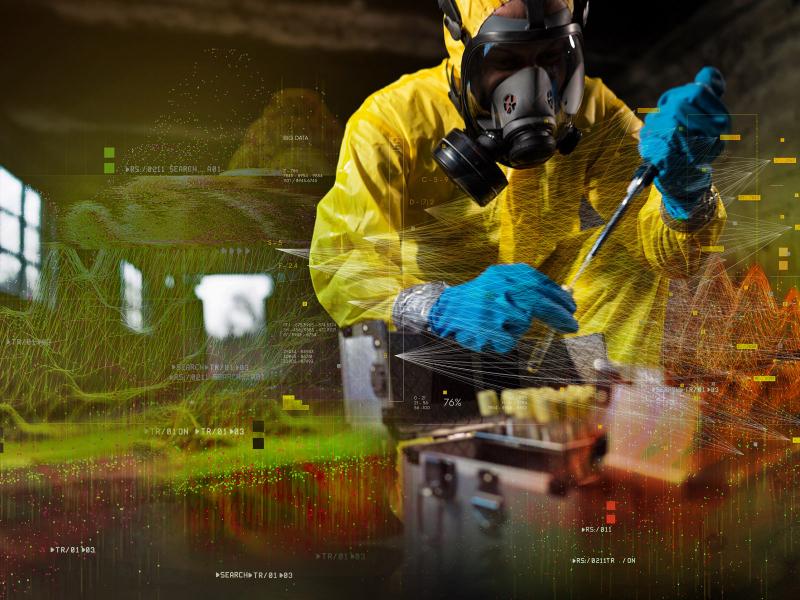
PNNL's Rich Ozanich, project manager of opioids standards and equipment testing, served on an expert panel about opioid detection as part of a Department of Homeland Security S&T research and development showcase.
A compound used in candles offers promise for a modern energy challenge—storing massive amounts of energy to be fed into the electric grid as the need arises.
Senior members of the National Academy of Inventors are recognized for their remarkable innovations that have brought, or aspire to bring, real impact on the welfare of society.
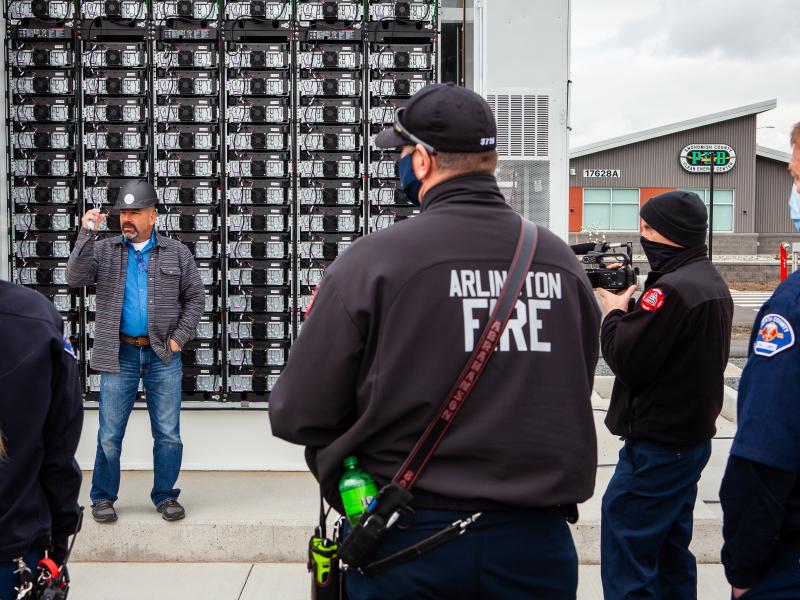
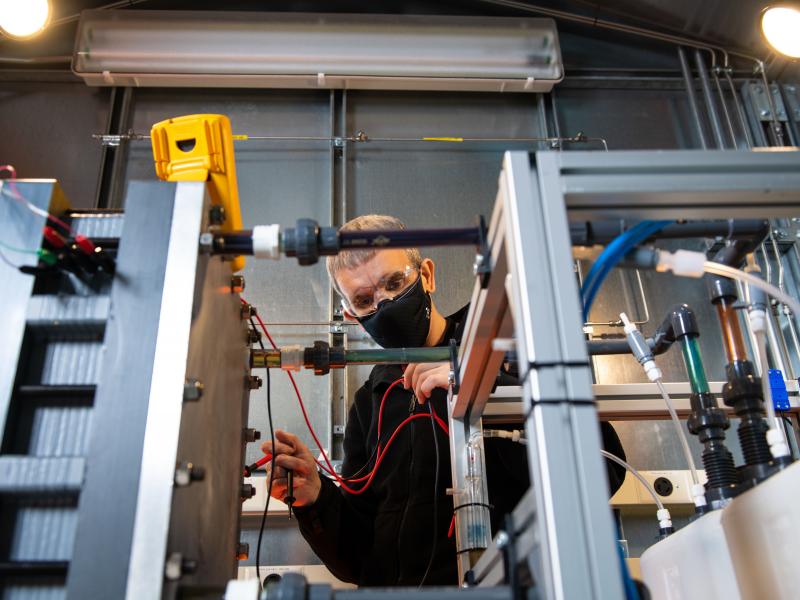
New facility that will accelerate energy storage innovation and make the nation’s power grid more resilient, secure and flexible has been given the green light to proceed by the U.S. Department of Energy.
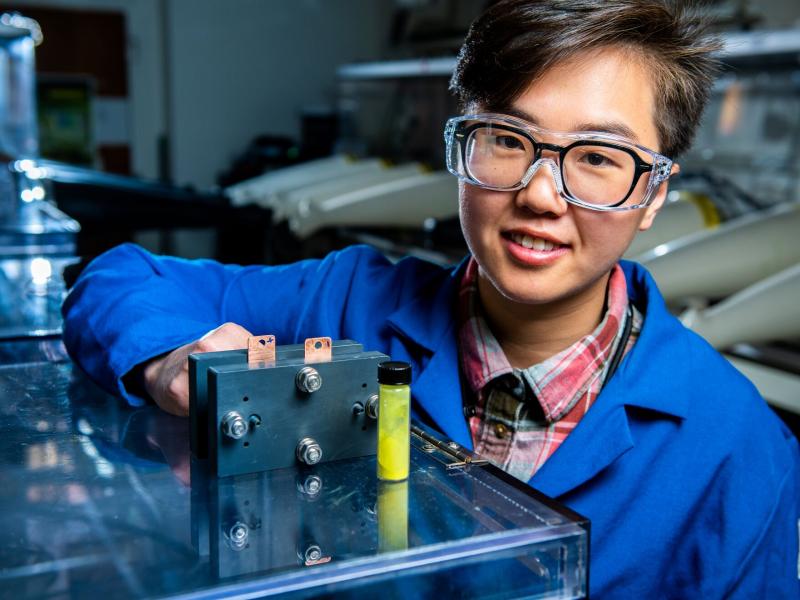
PNNL formulated a new type of dual-ion cell chemistry that uses a zinc anode and a natural graphite cathode in an aqueous—or “water-in-bisalt”—electrolyte.
In 2020, virtual Washington State University teams successfully worked together in a program sponsored by the National Nuclear Security Administration’s (NNSA) Office of International Nuclear Safeguards.
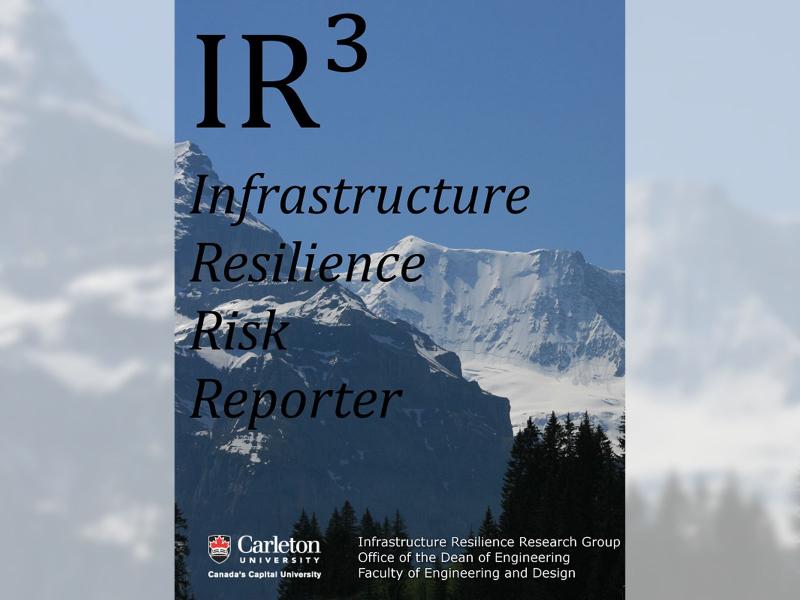
A recent edition of the Infrastructure Resilience Research Group Journal featured an article written by PNNL researchers Rob Siefken and Jake Burns about “Design Basis Threat and the Low Threat Environment.”
As a physicist at PNNL, Jon Burnett’s work is about developing instruments to detect ultra-trace radionuclide signatures, analyze samples from around the world to look for evidence of nuclear explosions, and then interpret that information.
A new review paper led by senior research scientist Chun-Long Chen and featured on the cover of Accounts of Chemical Research summarizes advances by PNNL scientists in developing sequence-defined peptoids.
Through two U.S. Department of Energy funding calls awarded in 2020, PNNL is partnering with industry and academia to advance battery materials and processes.