Reactive transport models (RTMs) are used to describe and predict the distribution of chemicals in time and space, in both marine and terrestrial (surface and near-surface) environments where microbially-mediated processes govern...
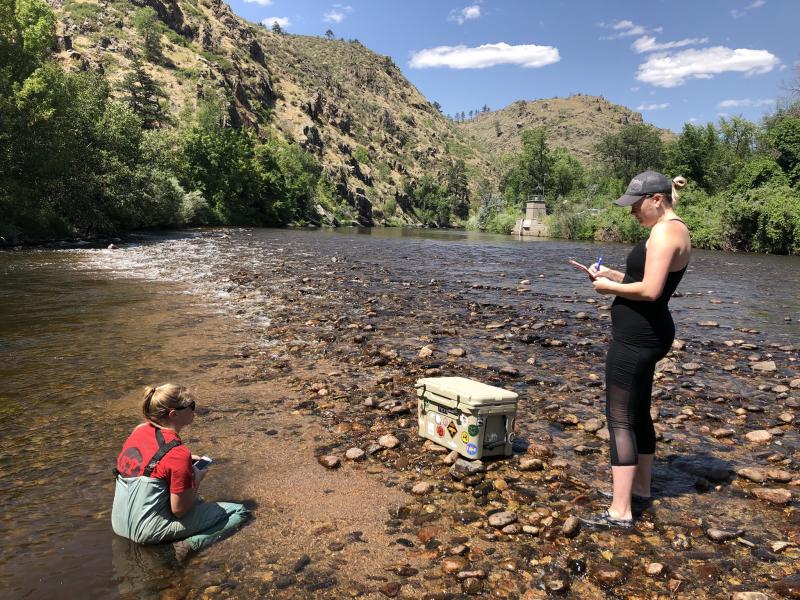
Hydrologic exchange flows (HEFs) increase the contact between river water and subsurface sediments thereby playing a critical role in biogeochemical and ecological functions along river corridors.
Hydrologic exchange fluxes (HEFs) between rivers and surrounding subsurface environments strongly influence water temperatures and biogeochemical processes. Yet, quantitative measures of their effects on the strength and direction of such e
Despite a breadth of research on carbon accrual and persistence in soils, scientist lack a strong, general understanding of the mechanisms through which soil organic carbon (SOC) is destabilized in soils. In a new review article, researcher
PNNL helped teach the next generation of principal investigators about aerosols—tiny atmospheric particles that can affect the Earth’s climate—during the 2019 Aerosol Summer School.
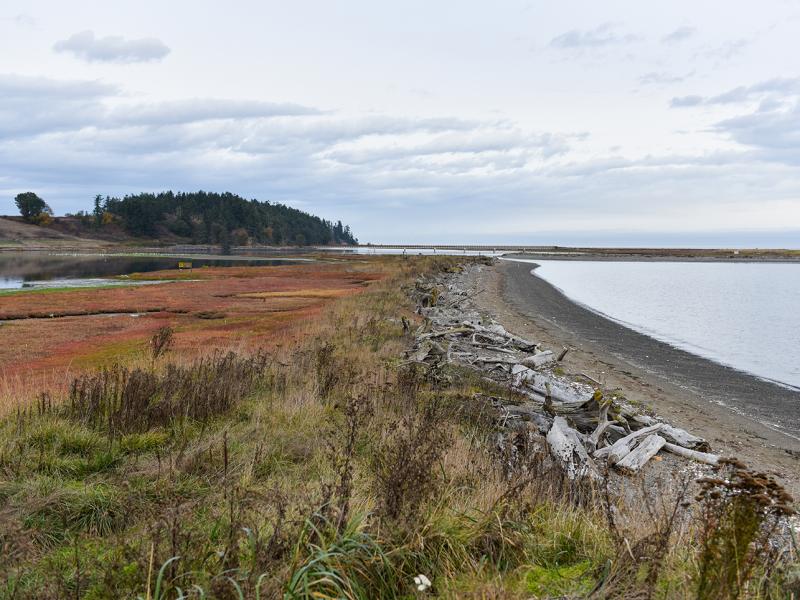
The inner Salish Sea’s future response to climate change, while significant, is predicted to be less severe than that of the open ocean based on parameters like algal blooms, ocean acidification, and annual occurrences of hypoxia.
Researchers at the Department of Energy’s Pacific Northwest National Laboratory and Sandia National Laboratories have joined forces to reduce costs and improve the reliability of hydrogen fueling stations.
PNNL researchers demonstrate how the excitation of oxygen atoms that contributes to better performance of a lithium-ion battery also triggers a process that leads to damage, explaining a phenomenon that has been a mystery to scientists.
Researchers at PNNL have developed a model that predicts outcomes from the algae hydrothermal liquefaction process in a way that mirrors commercial reality much more closely than previous analyses.
PNNL’s Dan Gaspar and John Holladay were part of the Co-Optima leadership team honored by DOE’s Vehicle Technologies Office. The award recognized groundbreaking work to synergistically improve fuels and engines to maximize fuel economy.
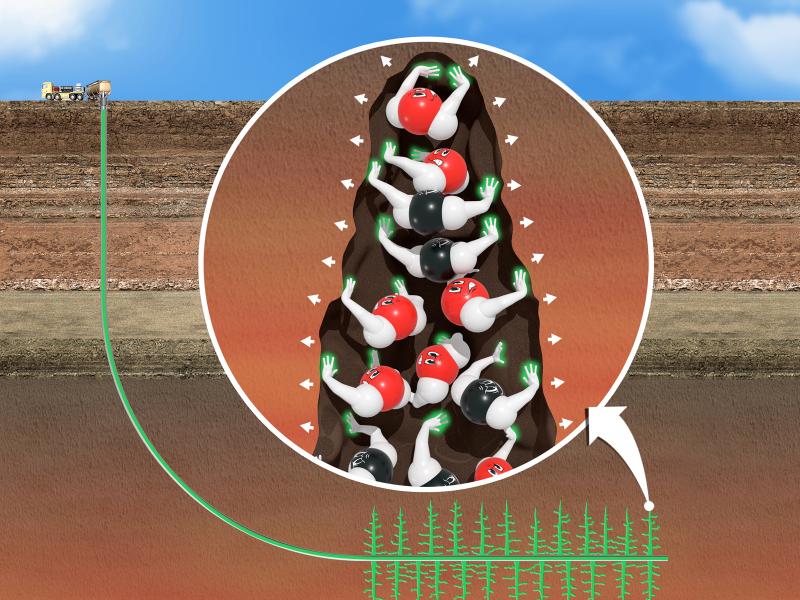
Researchers at PNNL have introduced an alternative method using a molecular-based pump that could potentially use a quarter less energy than the age-old mechanical pump.
A new data system—gcamdata—with its robust, clear, and easy-to-use application, was developed to be applied to a variety of Global Change Assessment Model scenarios.
After 10 years, a specialized research aircraft operated by PNNL for the DOE completed is final campaign. PNNL staff are leading efforts to instrument a new plane for future research.
Yong Wang, a PNNL laboratory fellow, has received the 2019 Catalysis and Reaction Engineering Practice Award from the American Institute of Chemical Engineers.