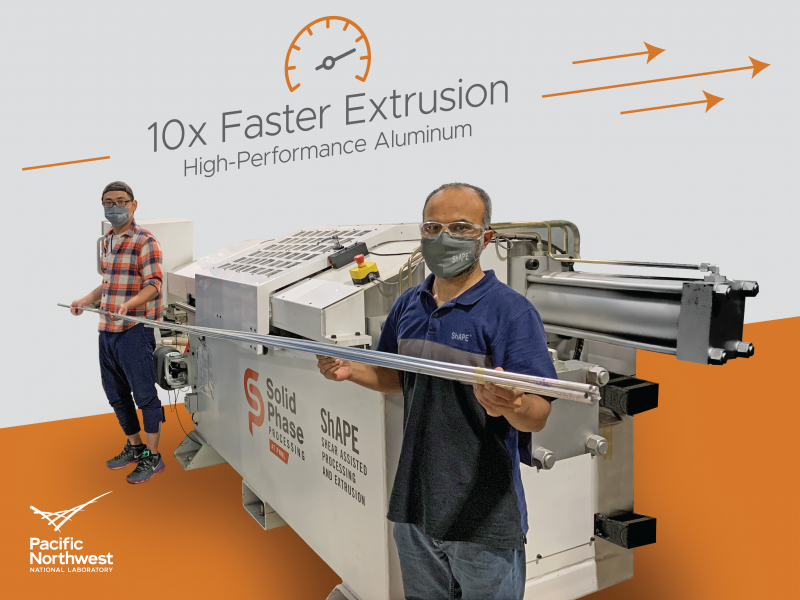
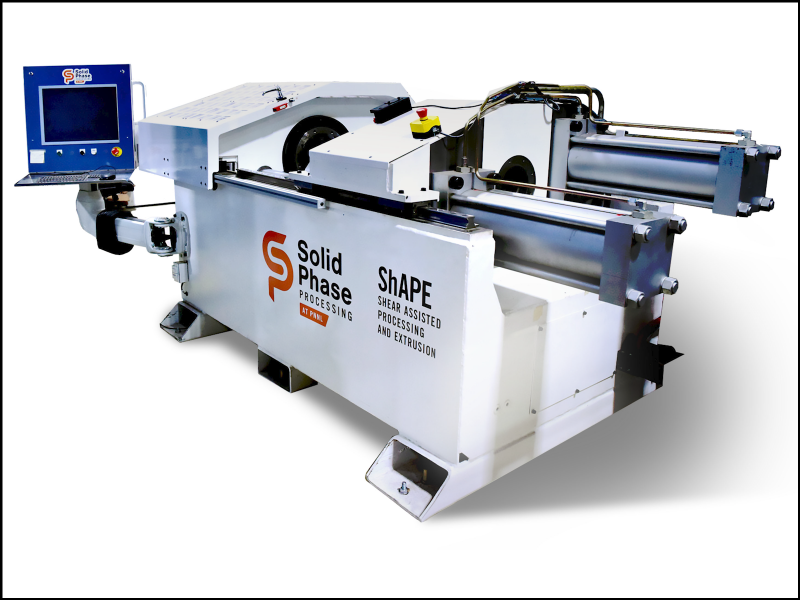
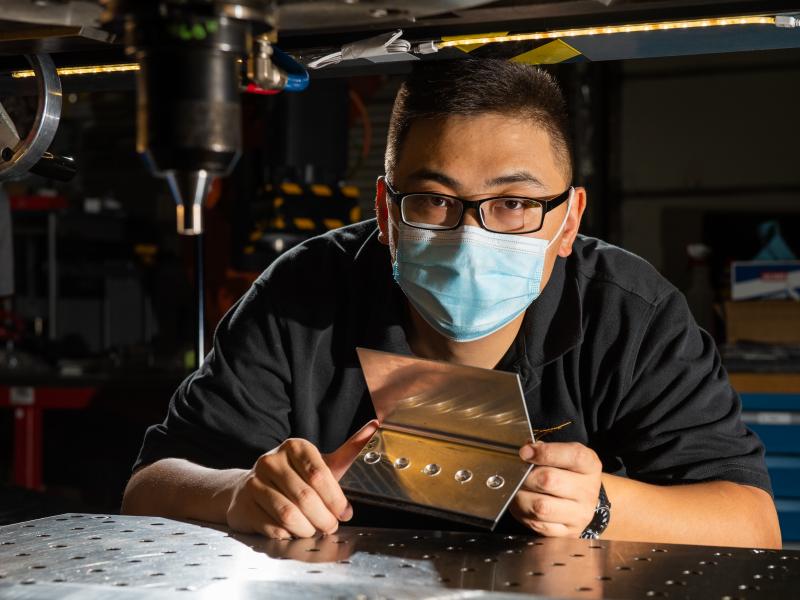
Developed at PNNL, Shear Assisted Processing and Extrusion, or ShAPE™, uses significantly less energy and can deliver components like wire, tubes and bars 10 times faster than conventional extrusion, with no sacrifice in quality.
PNNL has received 119 R&D 100 Awards since 1969, when the laboratory began submitting entries in the contest that recognizes top 100 inventions each year.
An energy-efficient method to extrude metal components wins Association of Washington Business Green Manufacturing Award. PNNL’s Shear Assisted Processing and Extrusion™ technology consumes less energy and enhances material properties.
Rotational Hammer Riveting, developed by PNNL, joins dissimilar materials quickly without preheating rivets. The friction-based riveting enables use of lightweight magnesium rivets and also works on aluminum and speeds manufacturing.
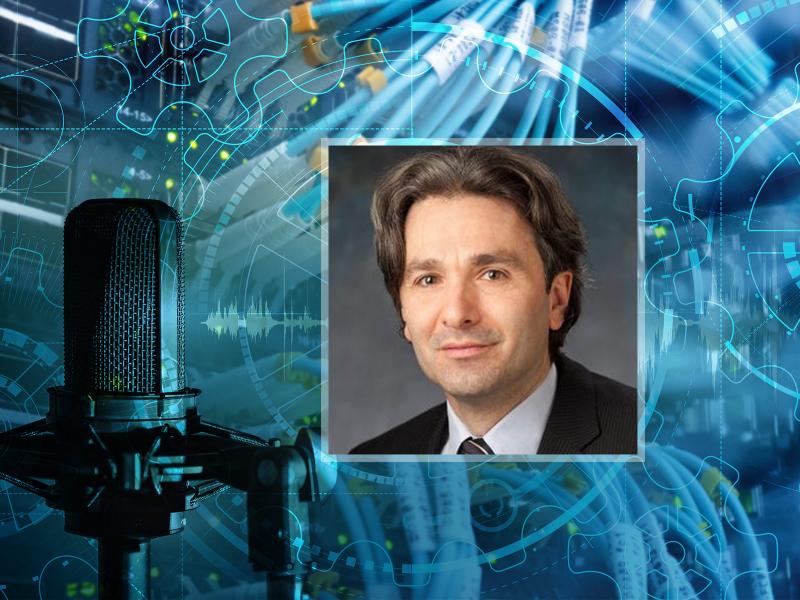
Slaven Peles, PNNL computational scientist and leader of a national high-performance computing project for power grid analysis, spoke about the project with the host of the Let’s Talk Exascale podcast.
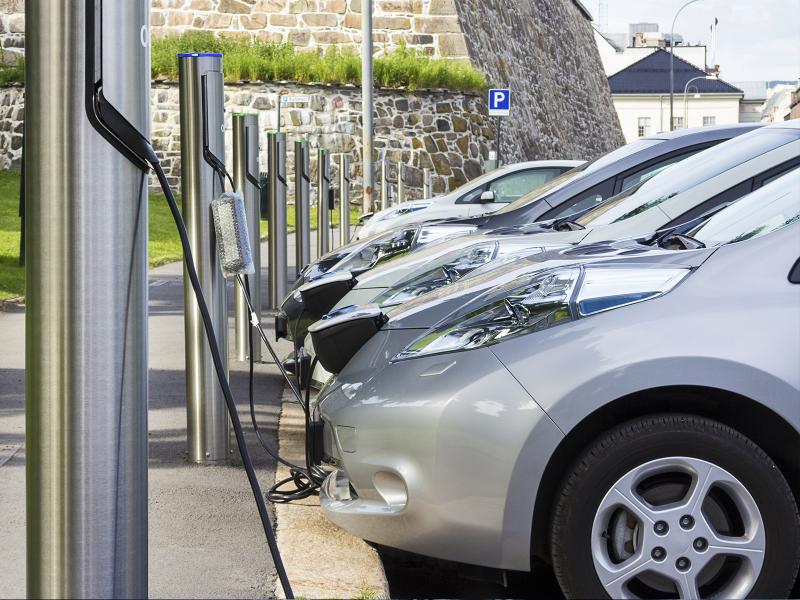
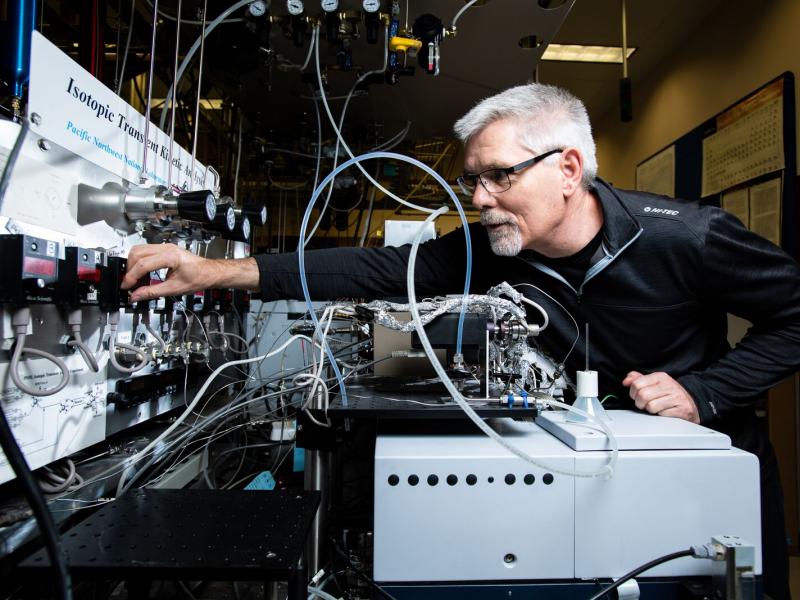
A discovery from PNNL and Washington State University could help reduce the amount of expensive material needed to treat vehicle exhaust by making the most of every precious atom.
A new report led by PNNL identifies the top 13 most promising waste- and biomass-derived diesel blendstocks for reducing greenhouse gas emissions, other pollutants, and overall system costs.
Researchers developed two solutions for air-conditioning—a novel, energy-efficient dehumidification system and a technology to detect refrigerant leaks. Both help increase energy-efficiency and reduce costs.
The Washington State Academy of Sciences consists of more than 300 elected members who are nationally recognized for their scientific and technical expertise.
Three recent doctoral graduates are beginning their research careers at Pacific Northwest National Laboratory after completing the WSU-PNNL Distinguished Graduate Research Program this spring.
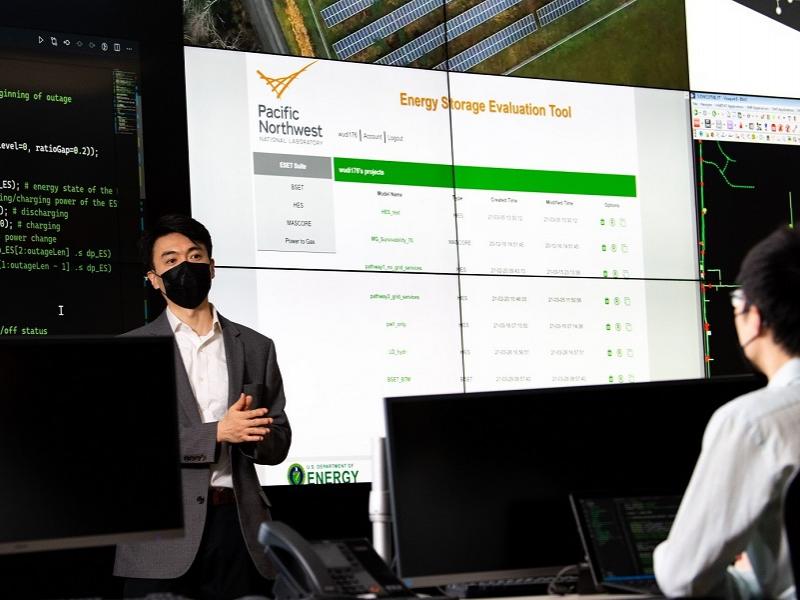
PNNL’s new Hydrogen Energy Storage Evaluation Tool allows users to examine multiple energy delivery pathways and grid applications to maximize benefits.