Brian Milbrath, a physicist in PNNL’s National Security Directorate, was named a senior member of the Institute of Electrical and Electronics Engineers (IEEE).
In a new video series this fall, PNNL is highlighting six scientific and technical experts in the national security domain. Each was promoted to Scientist and Engineer Level 5, one of PNNL’s most senior research roles.
In recognition of Nuclear Science Week on Oct. 19-23, Pacific Northwest National Laboratory reflects on more than half a century of advancing nuclear science for the nation’s energy, environment, and security frontiers.
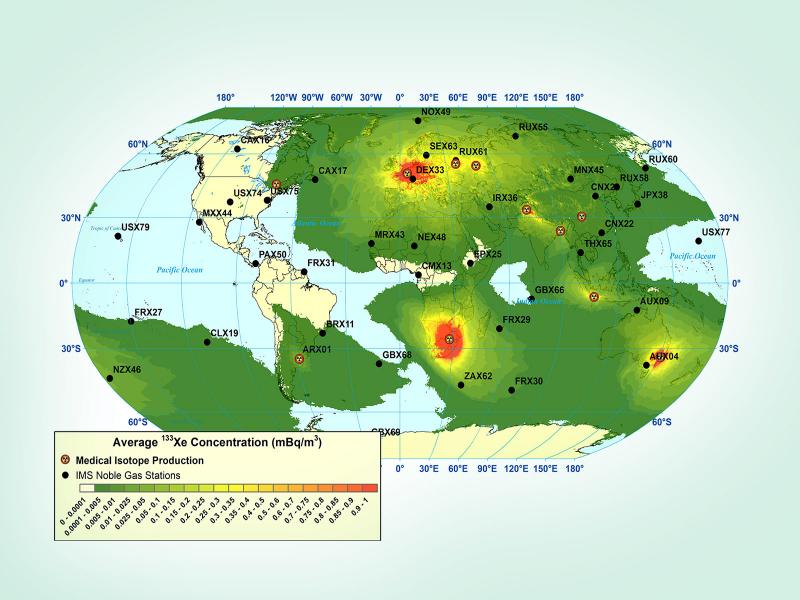
PNNL’s expertise is the foundation for monitoring technology that identifies trace amounts of radioactive materials and determines whether they are indicative of a nuclear explosion.
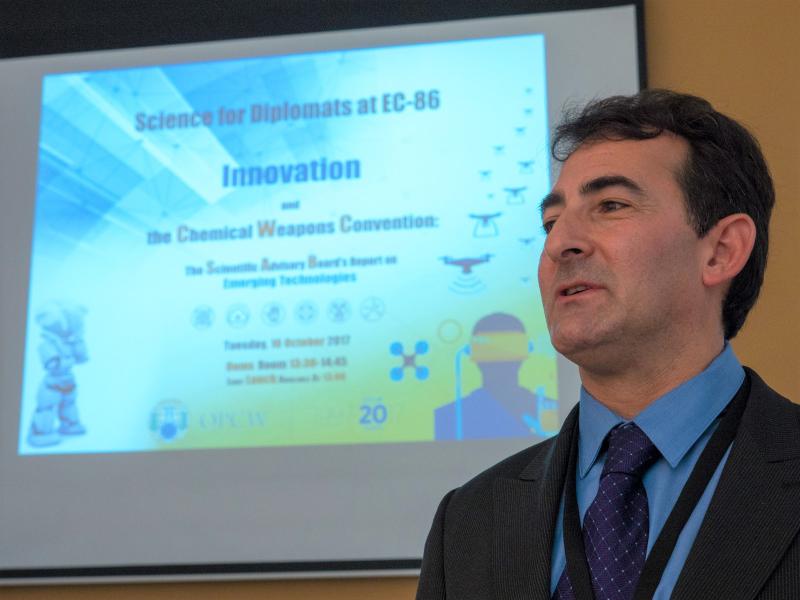
Jonathan Forman, science and technology advisor at Pacific Northwest National Laboratory, was announced as the winner of the Hall of Fame award in the innovator category by the Organisation for the Prohibition of Chemical Weapons.
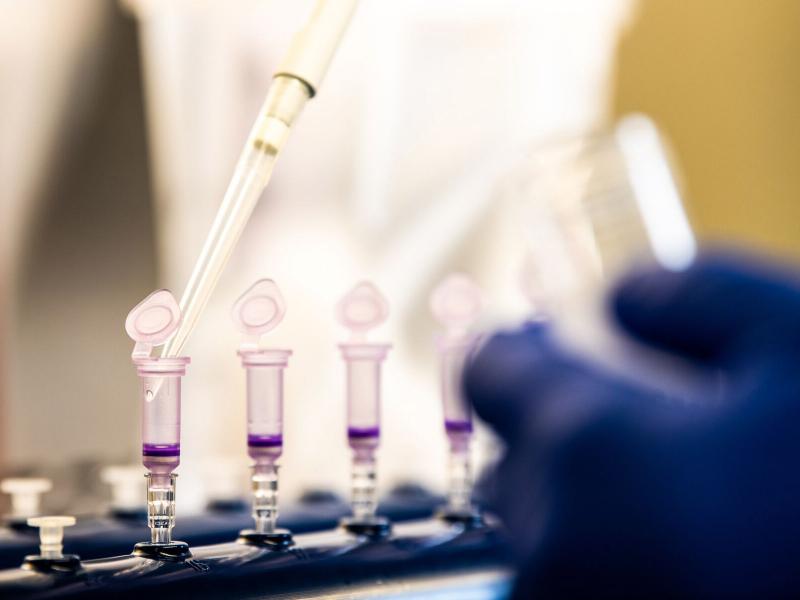
The nation’s ability to test for COVID-19 has expanded, thanks to work at Pacific Northwest National Laboratory, where scientists have established the performance of testing equipment to detect the virus.
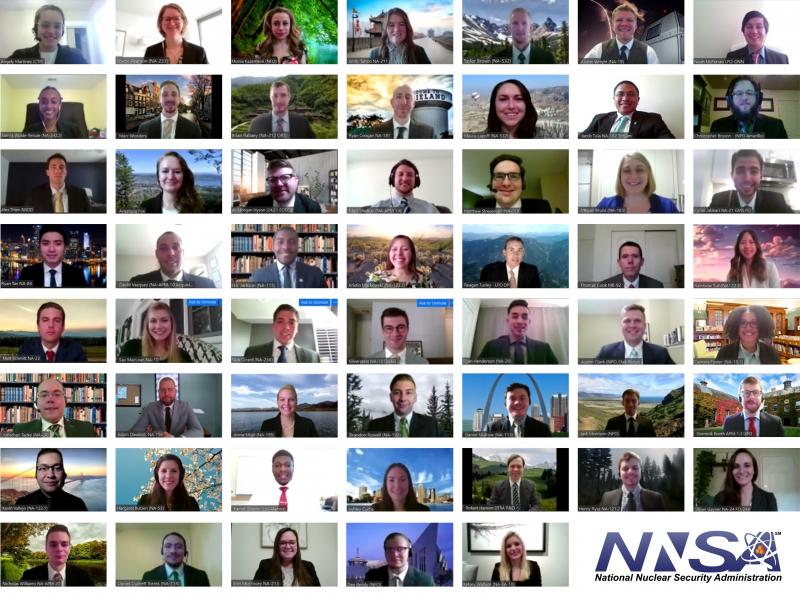
The National Nuclear Security Administration Graduate Fellowship Program has welcomed aboard the Class of 2020—53 graduate students placed (virtually for now) with offices across the nuclear security enterprise.
Contributions from researchers across Pacific Northwest National Laboratory (PNNL) were recently recognized in the preliminary findings of a Secretary of Energy Advisory Board (SEAB) report.
Scientists at PNNL have contributed much of the nuclear science that underlies an international monitoring system designed to detect nuclear explosions worldwide. The system detects radioxenon anywhere on the planet.
Researchers from PNNL have helped colleagues at OHSU identify lipid molecules required for Zika infection in human cells. The specific lipids involved could also be a clue to why the virus primarily infects brain tissue.
Biomedical scientist Brian Thrall co-edited the issue published in the journal NanoImpact. Three of the articles in the issue include multiple PNNL authors.
A strong interdisciplinary team with a high-performance track record recently received their third Award of Excellence in five years from the National Nuclear Security Administration (NNSA).
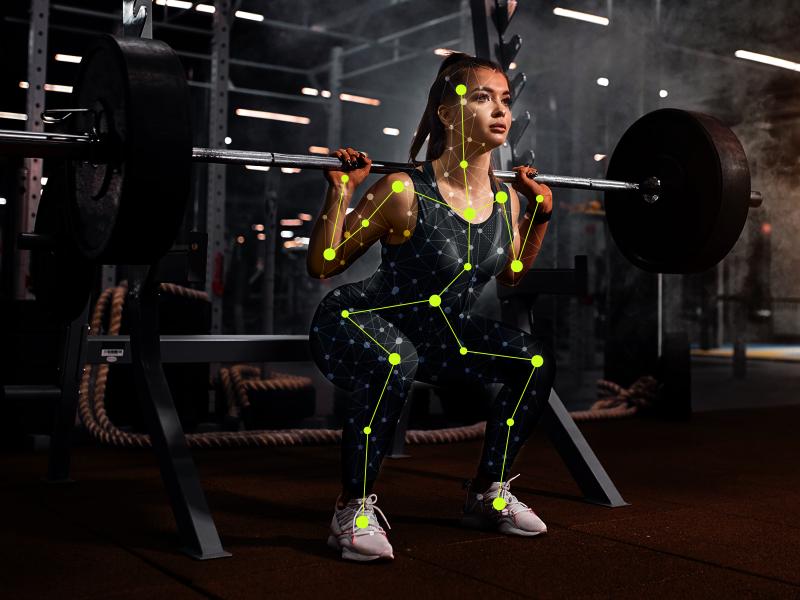
Researchers from 25 institutions around the country, including PNNL, are working to find out how exercise changes the molecular makeup of our cells to generate health benefits.
PNNL computational biologist Bobbie-Jo Webb-Robertson was recently awarded the “Spirit of nPOD award” to acknowledge her hard work in building, coordinating, and leading the Data Science Working Group.
To help spur economic development and assist in the battle against COVID-19, PNNL is making available its entire portfolio of patented technologies on a research trial basis—at no cost—through the end of 2020.