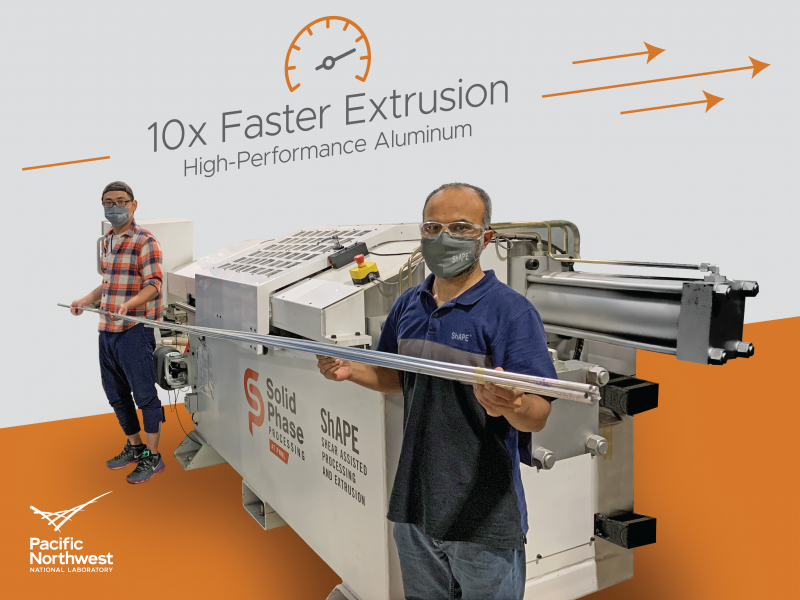
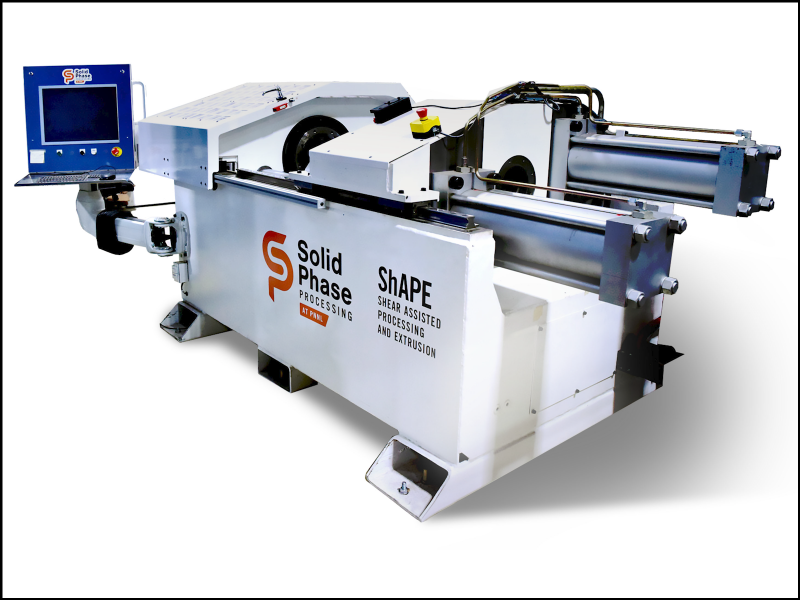
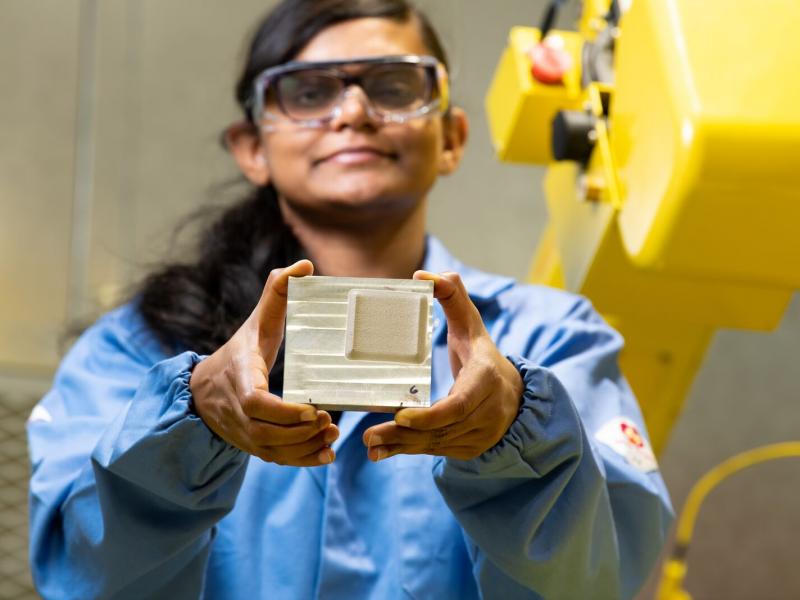
Developed at PNNL, Shear Assisted Processing and Extrusion, or ShAPE™, uses significantly less energy and can deliver components like wire, tubes and bars 10 times faster than conventional extrusion, with no sacrifice in quality.
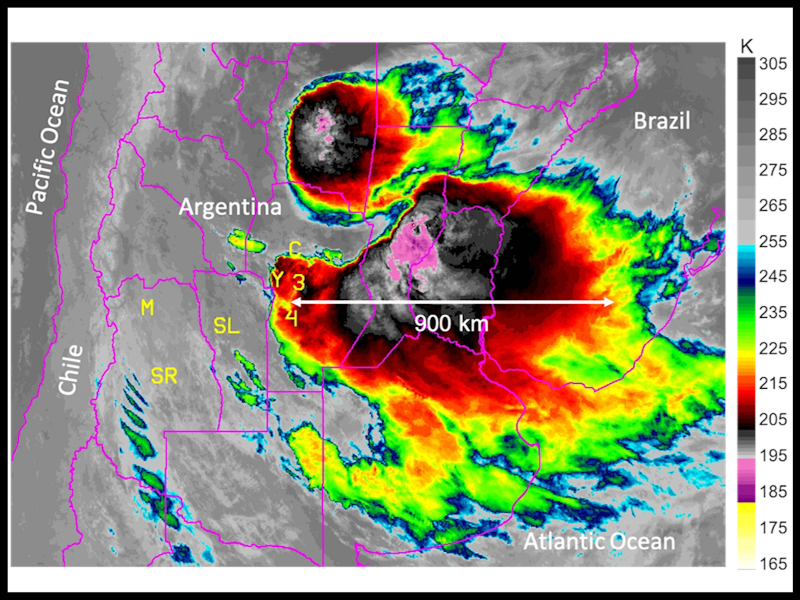
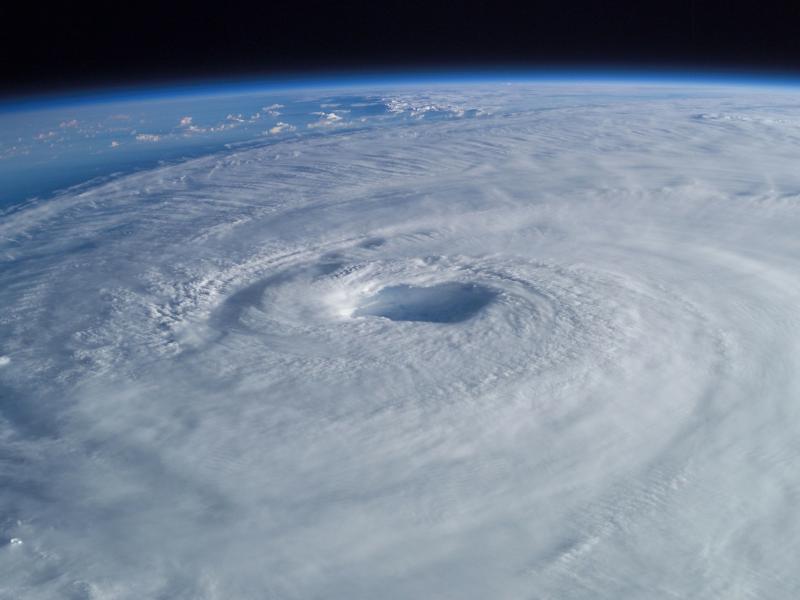
Simulations accurately predicted storm cloud shield timing and growth, but not rain intensities, for over 300 tracked storm complexes in a storm-generating hotspot in Argentina.
PNNL has received 119 R&D 100 Awards since 1969, when the laboratory began submitting entries in the contest that recognizes top 100 inventions each year.
IDREAM wins Department of Energy art contest with entry that illuminates how IDREAM scientists pivoted during pandemic to accomplish critical nuclear research.
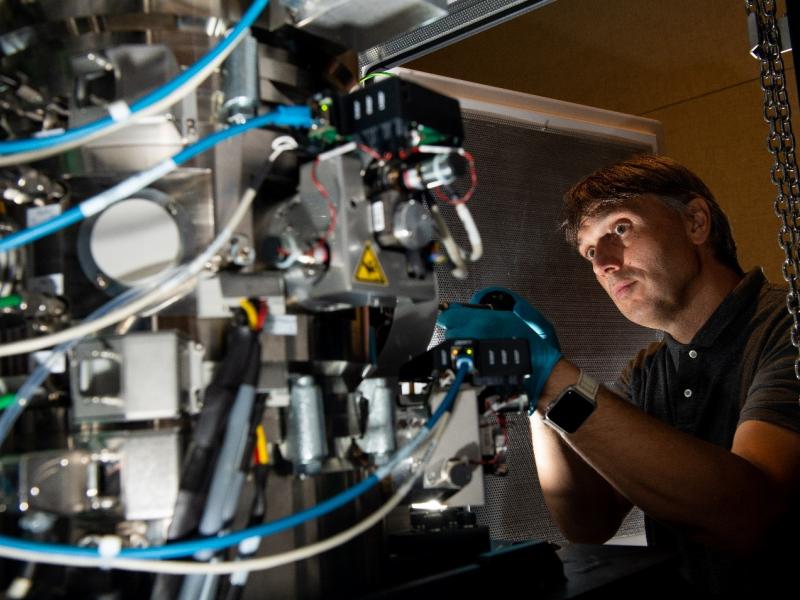
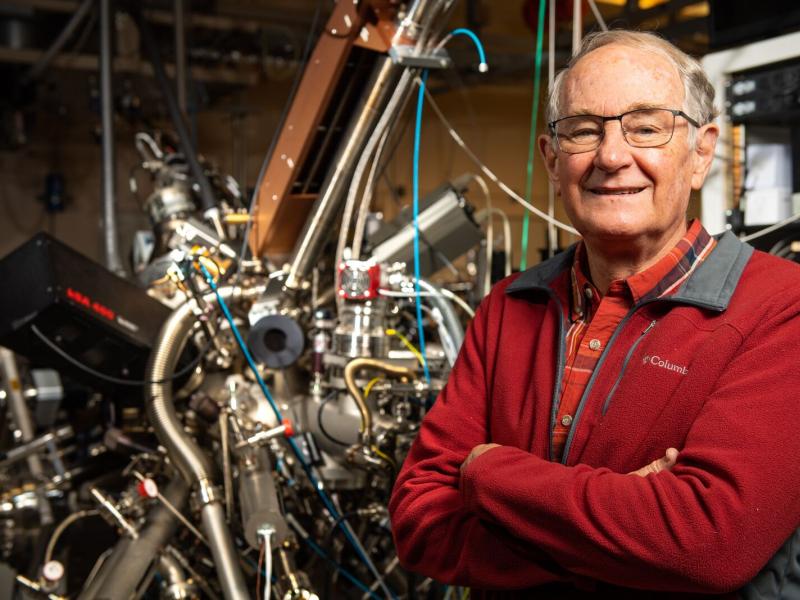
Scott Chambers creates layered structures of thin metal oxide films and studies their properties, creating materials not found in nature. He will soon move his instrumentation and research to the new Energy Sciences Center.
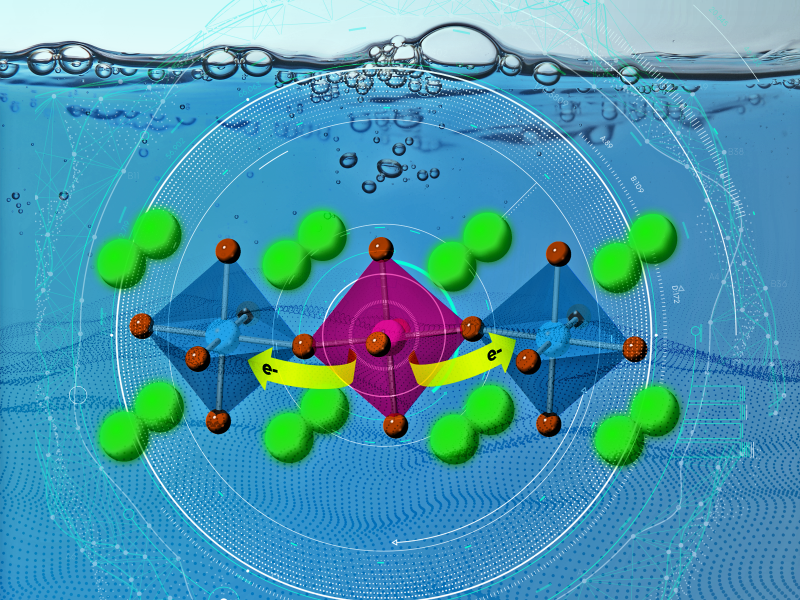
Creating films with atomic precision allows researchers moving to the Energy Sciences Center to identify small, but important changes in the materials.
An energy-efficient method to extrude metal components wins Association of Washington Business Green Manufacturing Award. PNNL’s Shear Assisted Processing and Extrusion™ technology consumes less energy and enhances material properties.
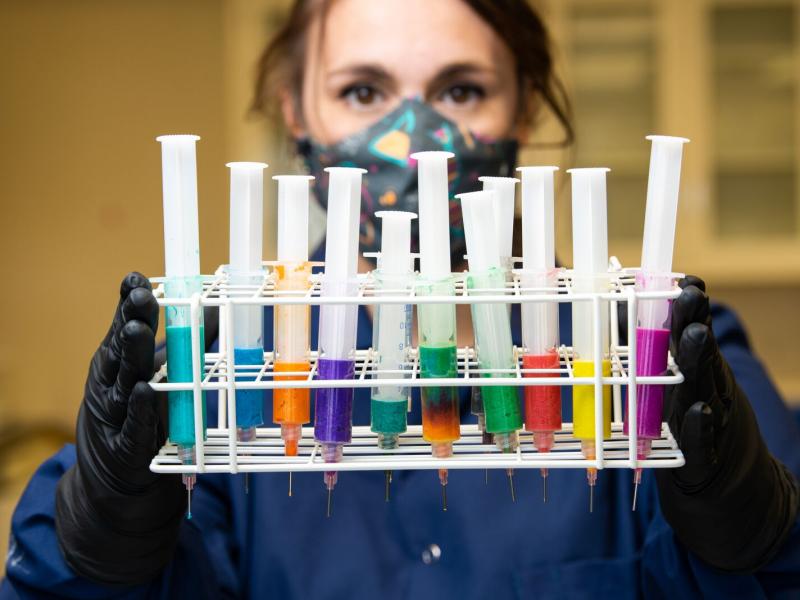
PNNL has developed seaweed-based inks and materials for 2-D and 3-D printing that can be used for a multitude of applications in the art, medical, STEM, and other fields.
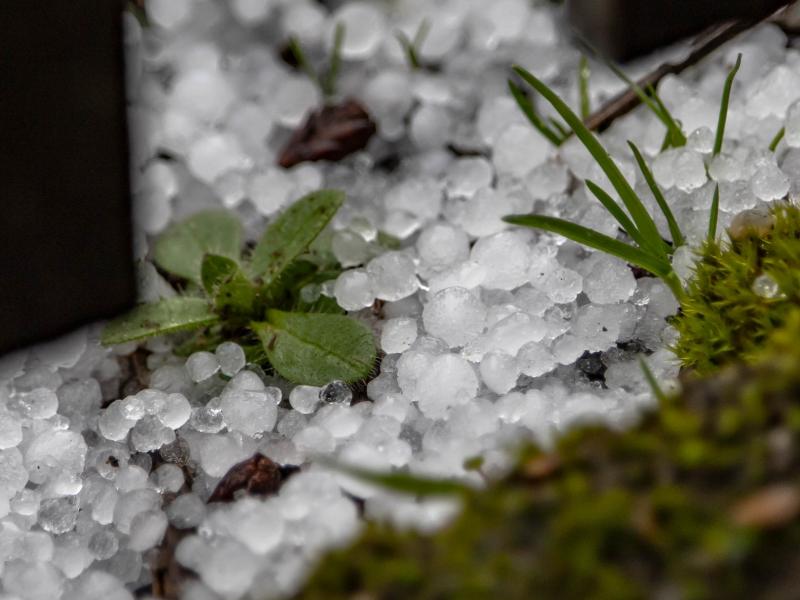
Four factors, the El Niño-Southern Oscillation, North Atlantic subtropical high, low-level jet, and water vapor transport from Gulf of Mexico, primarily influence hail occurrence in the Northern Great Plains
Leung was honored for pioneering approaches in climate modeling, discovering unexpected impacts of regional climate change, and understanding extreme weather events and their future changes.
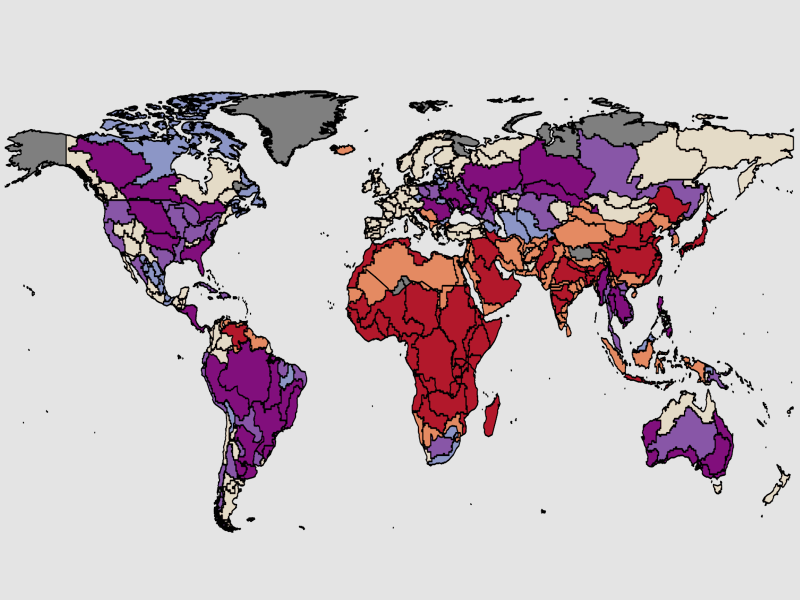
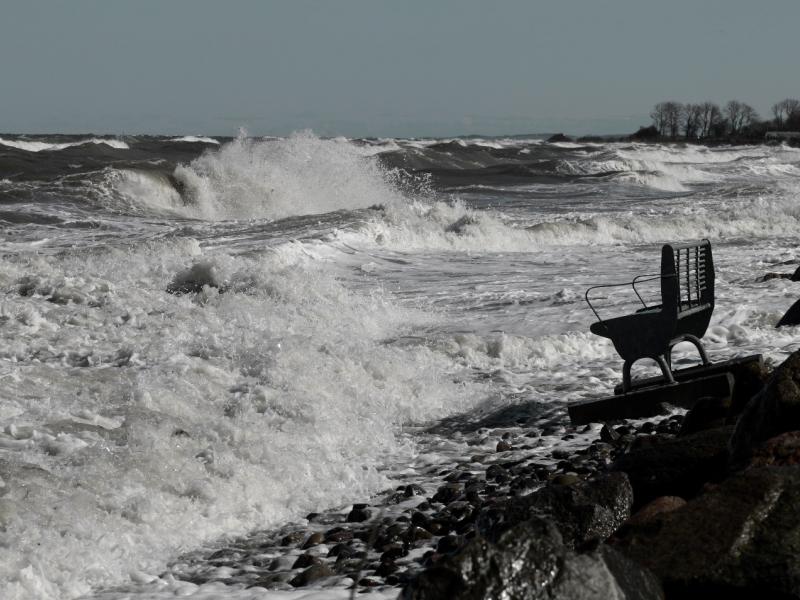
New estimates show that coastlines around the world will experience an increase in the frequency of extreme sea level events at a range of global warming levels.