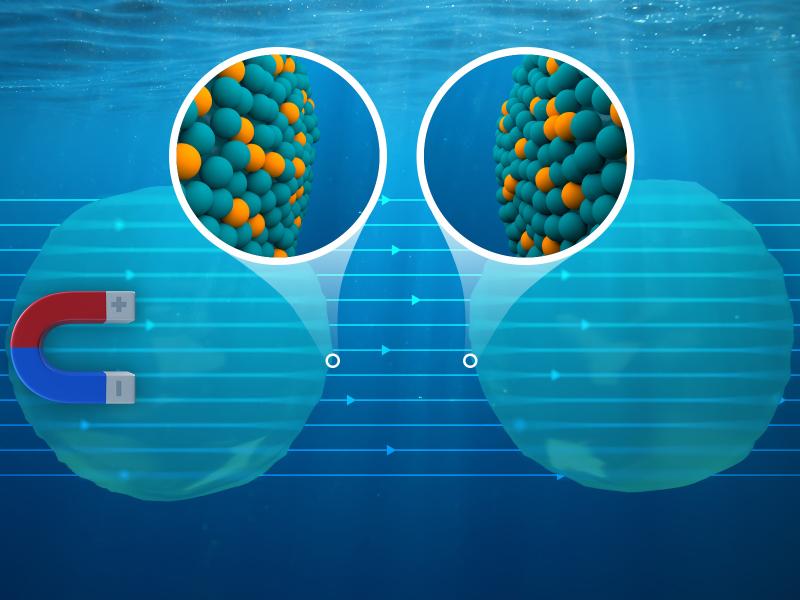
Localized gradients in magnetic fields have long-range effects on the concentration of rare earth ions in solution, facilitating field-driven extraction of critical minerals.
Nanoscale domains of magnetically susceptible critical materials encounter enhanced magnetic interactions under external magnetic fields, providing a promising new avenue for separations.
David Heldebrant was selected for the 2025 Distinguished Service Award from the American Chemical Society Division of Energy & Fuels, recognizing his impact to energy and fuels chemistry.
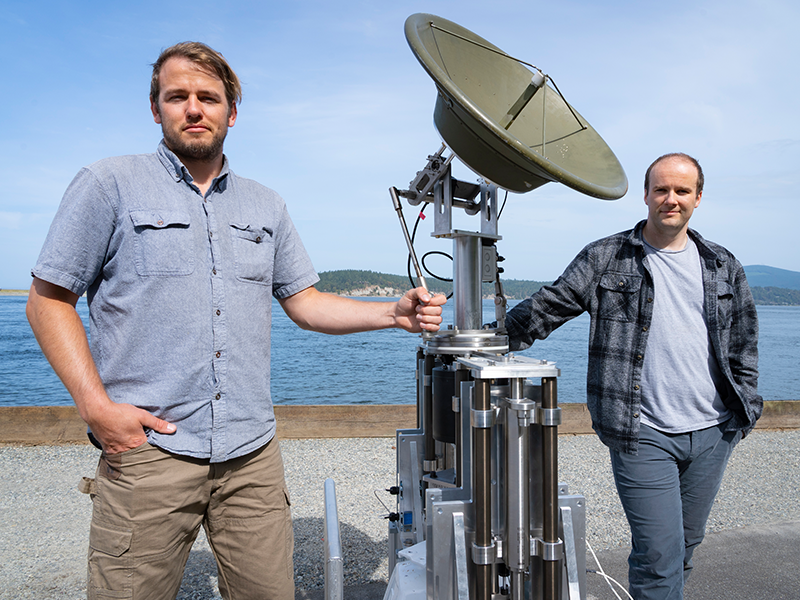
Engineers at PNNL devised a system that allows radar antennae to maintain stable orientation while mounted on platforms in open water that pitch and roll unpredictably. They were recently invited to participate in DOE's I-Corps program.
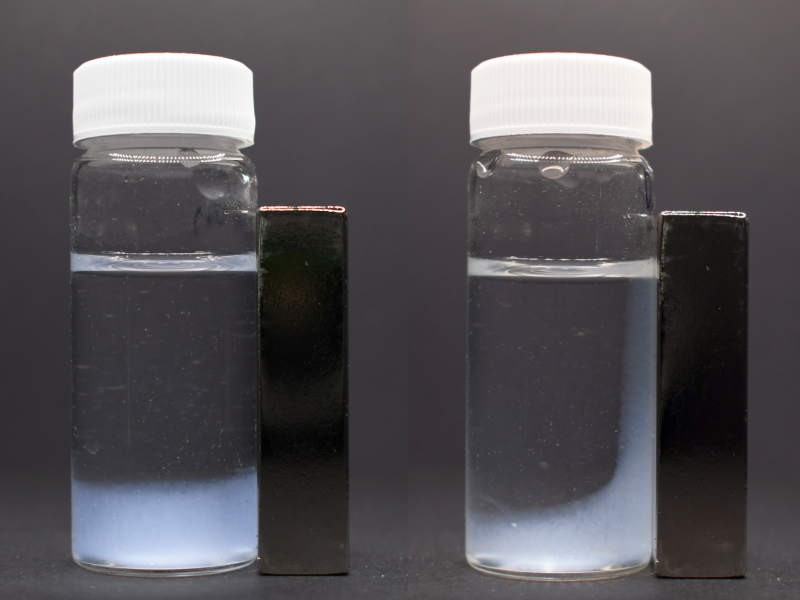
A PNNL team has developed an energy- and chemical-efficient method of separating valuable critical minerals from dissolved solutions of rare earth element magnets.
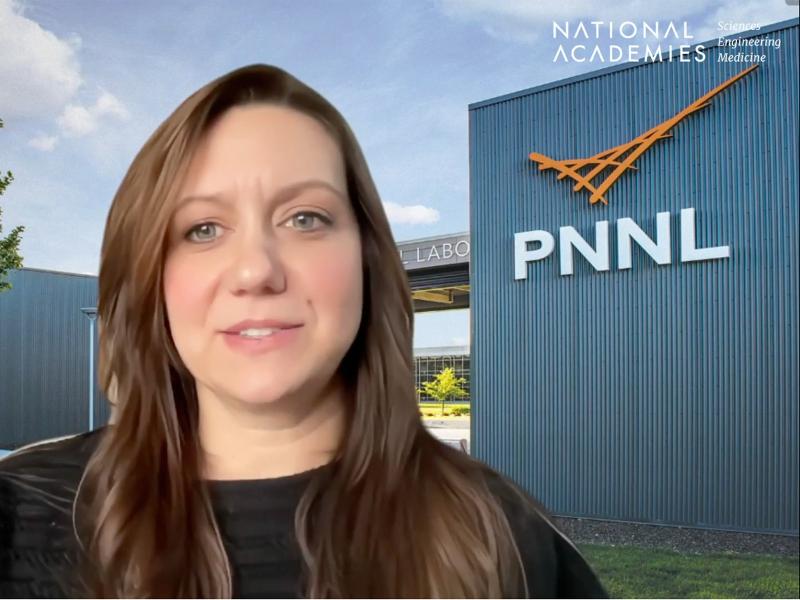
Lauren Charles, a chief data scientist at PNNL, showcased the vital research coming out of her program at The National Academies Forum workshop in Washington, D.C., January 15–16, 2025.
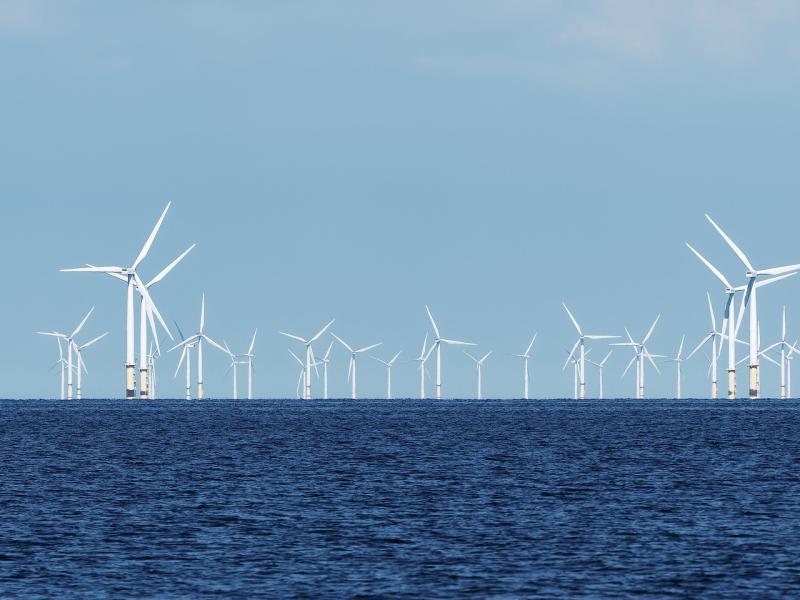
PNNL was well represented at the NAWEA/WindTech 2024 Conference with 13 PNNL experts at the conference sponsored by the North American Wind Energy Academy.
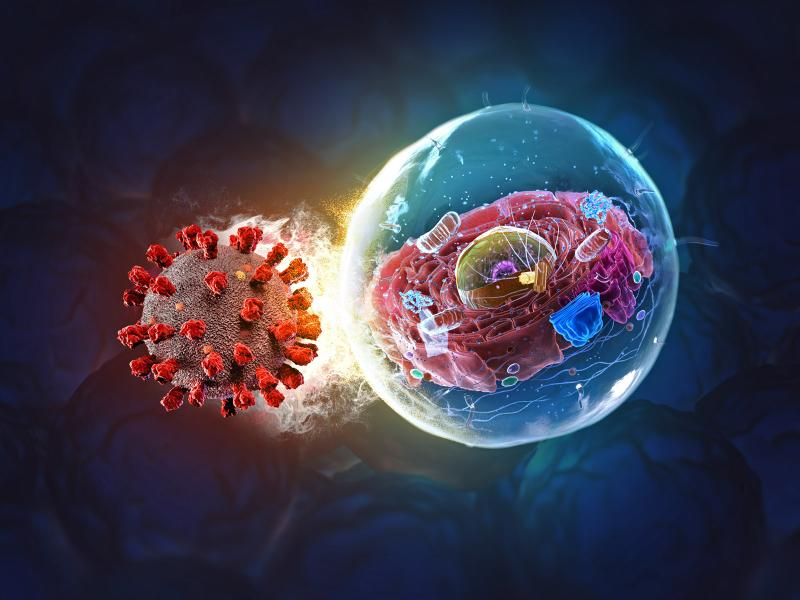
PNNL biodefense experts seek to identify, understand and mitigate the risks of biological pathogens—whether naturally occurring or intentionally created—so steps can be taken to prepare and respond.
The surface oxygen functionality of graphene oxide may be tuned using ultraviolet light, affecting how differently charged ions move through the material.
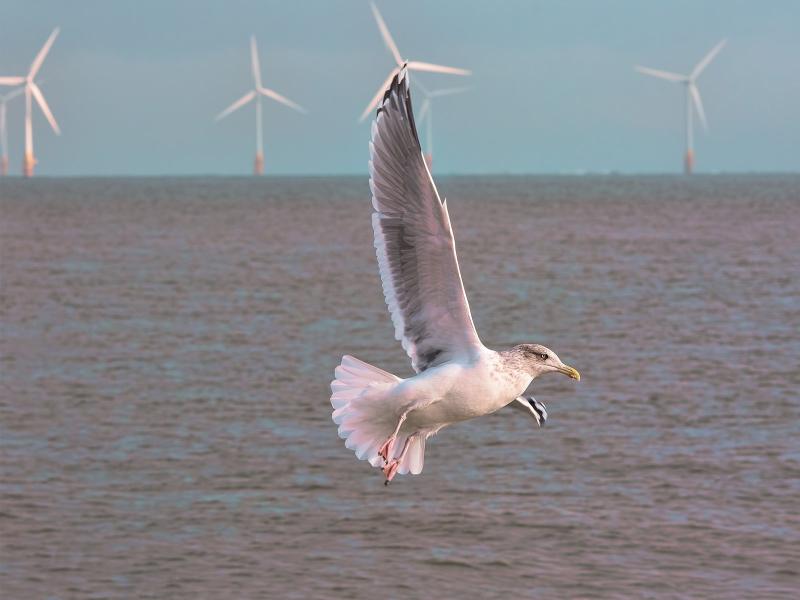
In a study off the West Coast, researchers find that although seabirds generally soar underneath the height of possible future wind turbine blades, more work is being done to fully understand seabird flight behavior.