PNNL data scientists Henry Kvinge and Ted Fujimoto presented their research on few-shot learning and reinforcement learning, respectively, at workshops during the 2021 AAAI Conference on Artificial Intelligence.
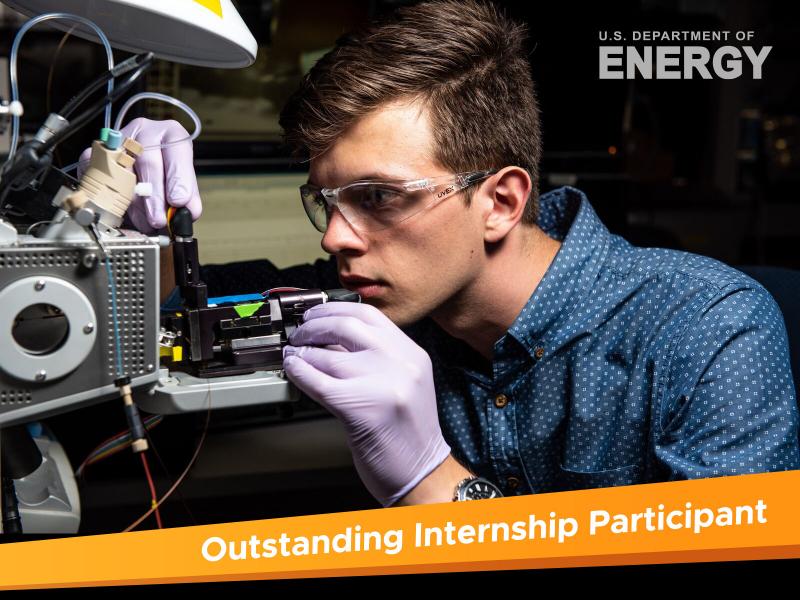
Former PNNL intern Michael Hewitt was recognized by DOE as an Outstanding Intern for the research he performed alongside PNNL physical chemist Dr. Grant Johnson.
The partnership to apply artificial intelligence to improve complex systems is part of a U.S. Department of Energy Office of Science $4.2 million, three-year grant.
PNNL scientists joined international leaders in artificial intelligence research to discuss the latest advances, opportunities, and challenges for neural information processing—the foundation for AI.
Red teaming for CPS, the process of challenging systems, involves a group of cybersecurity experts to emulate end-to-end cyberattacks following a set of realistic tactics, techniques, and procedures.
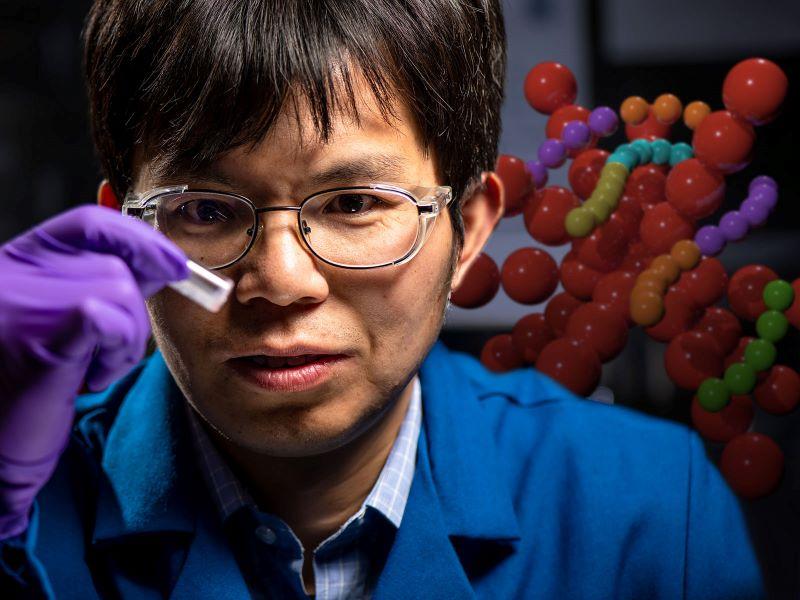
A new review paper led by senior research scientist Chun-Long Chen and featured on the cover of Accounts of Chemical Research summarizes advances by PNNL scientists in developing sequence-defined peptoids.
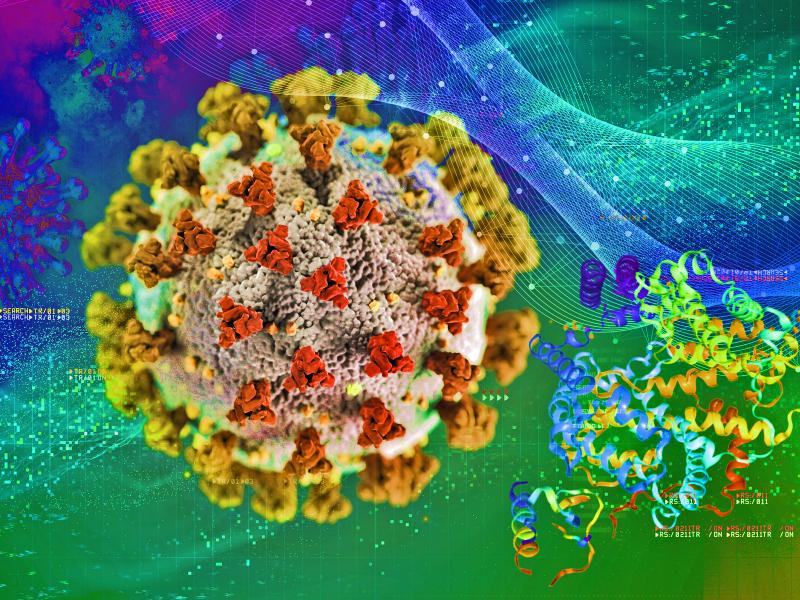
PNNL computational biologists, structural biologists, and analytical chemists are using their expertise to safely accelerate the design step of the COVID-19 drug discovery process.
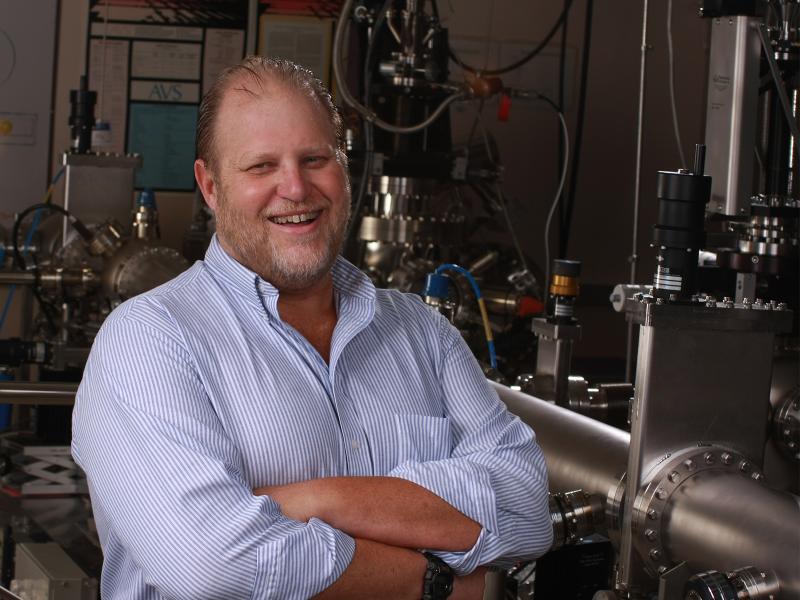
Beginning in 2021, PNNL chemical physicist Bruce Kay begins a three-year term as an AVS trustee, part of a six-member committee responsible for overseeing the administration of student scholarships and major society awards.
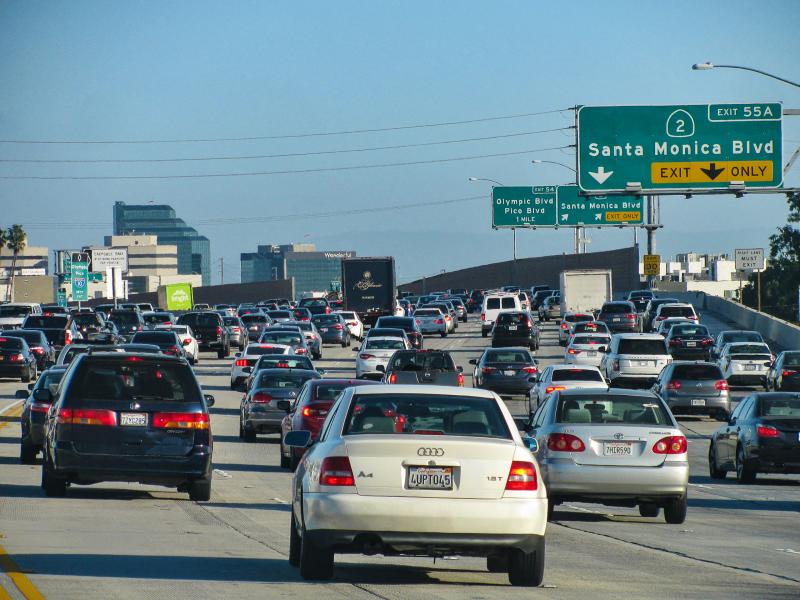
Using public data from the entire 1,500-square-mile Los Angeles metropolitan area, PNNL researchers reduced the time needed to create a traffic congestion model by an order of magnitude, from hours to minutes.
PNNL researchers have shown an improved binarized neural network can deliver a low-cost and low-energy computation to help the performance of smart devices and the power grid.
The project received an Innovative and Novel Computational Impact on Theory and Experiment (INCITE) award, a highly competitive U.S. Department of Energy Office of Science program.