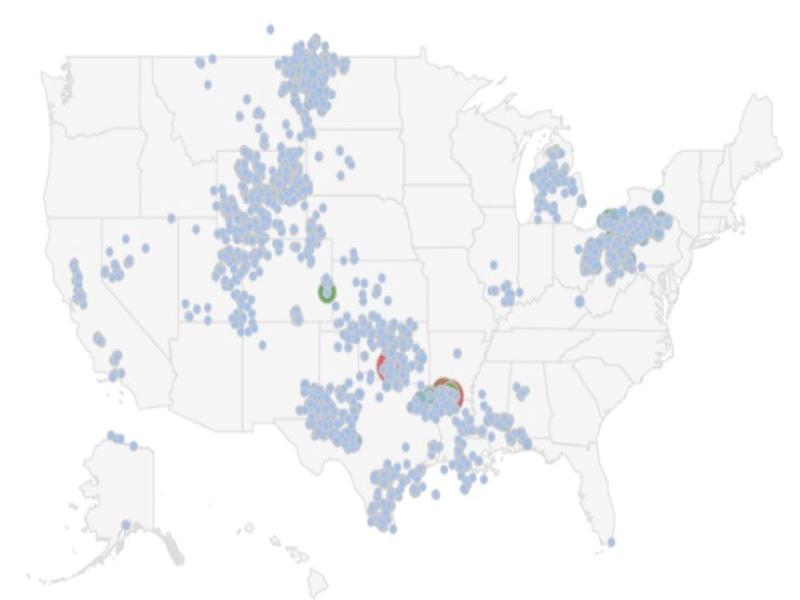
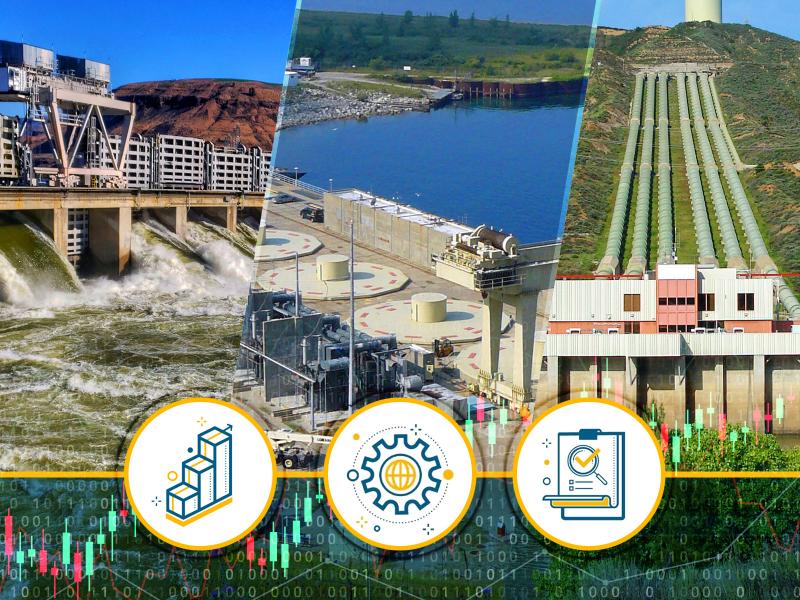
PNNL and four other national laboratories executed the Hydropower Value Study to examine hydropower operations in different regions of the United States.
Senior members of the National Academy of Inventors are recognized for their remarkable innovations that have brought, or aspire to bring, real impact on the welfare of society.
Seven teams win the U.S. Department of Energy's DESIGN Contest for wave-powered systems to monitor hurricanes—part of the Ocean Observing Prize. PNNL administers the prize with National Renewable Energy Laboratory.
PNNL has published a cybersecurity guidance report for marine renewable energy devices to prepare the blue economy for harnessing ocean power from waves, tides, and currents.
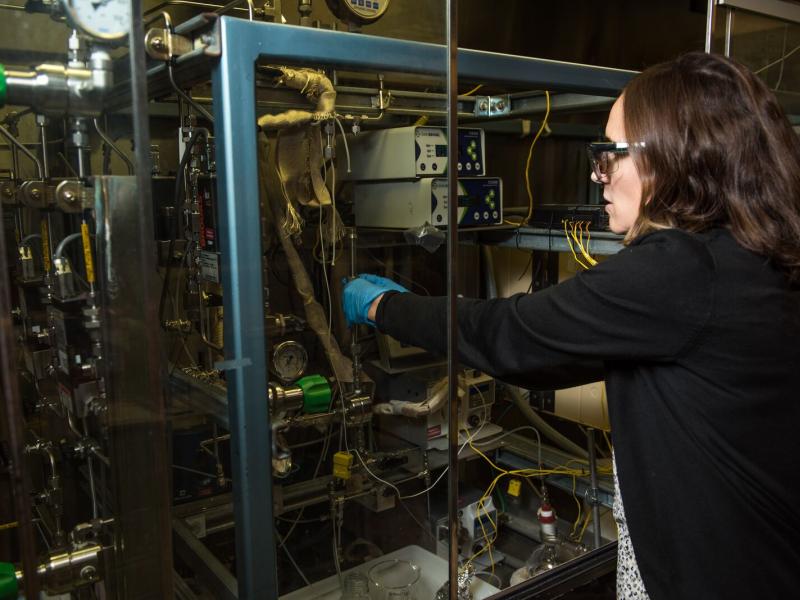
Wendy Shaw, director of the Physical Sciences Division at PNNL, was selected to guest edit a special issue on (photo)electrocatalysis featured in January 2021 edition of the scientific journal ChemComm.
PNNL highlights four researchers whose joint appointments are creating new and diverse opportunities for expanding knowledge and scientific impact across institutions.
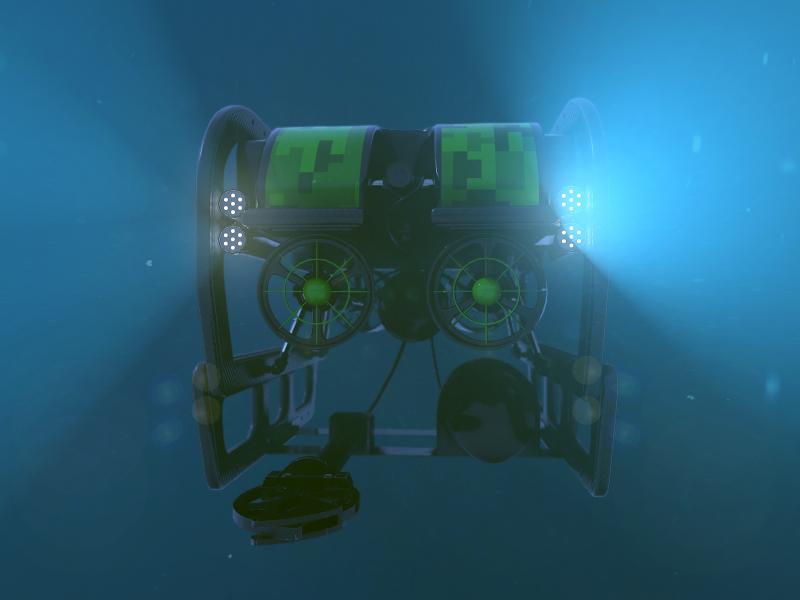
The U.S. Department of Energy has awarded funding to PNNL for the design and construction of a hybrid research vessel and an underwater testbed to be located at PNNL-Sequim.
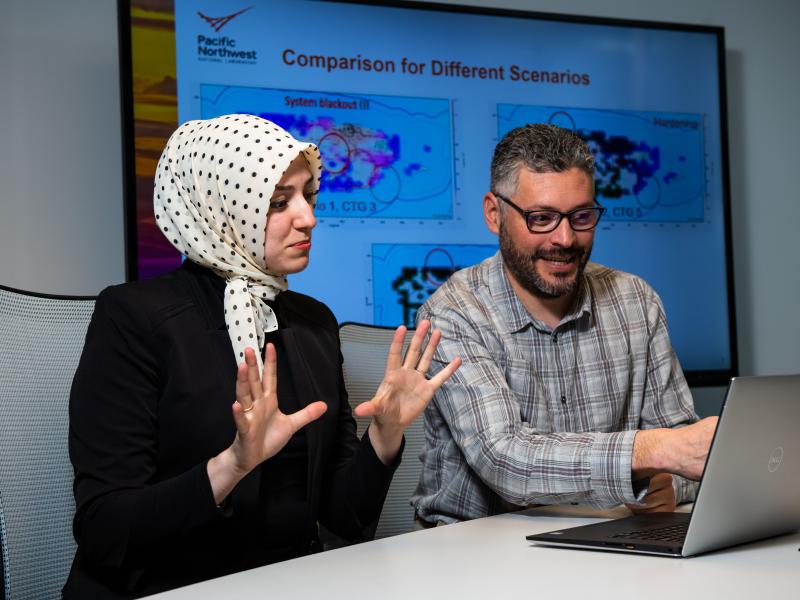
Tools being developed at PNNL are helping the nation plan for, respond to and recover from severe storms and wildfires that could threaten critical energy systems.
PNNL teamed with academia and industry to develop a novel zero-emission methane pyrolysis process that produces both hydrogen and high-value carbon solids suitable for an array of manufacturing applications.
New facility that will accelerate energy storage innovation and make the nation’s power grid more resilient, secure and flexible has been given the green light to proceed by the U.S. Department of Energy.
As he prepares to enter PNNL's Energy Sciences Center later this year, Vijayakumar 'Vijay' Murugesan is among DOE leaders exploring solutions to design and build transformative materials for batteries of the future.
New 140,000-square-foot facility will advance fundamental chemistry and materials science for higher-performing, cost-effective catalysts and batteries, and other energy efficiency technologies.
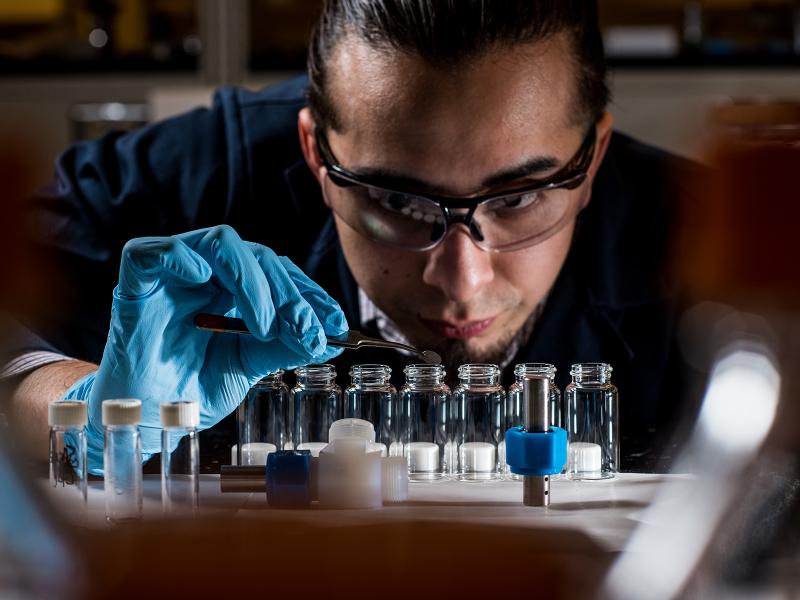
PNNL formulated a new type of dual-ion cell chemistry that uses a zinc anode and a natural graphite cathode in an aqueous—or “water-in-bisalt”—electrolyte.
The American Chemical Society's Energy & Fuels Division elected PNNL scientist Yuyan Shao as Chair-Elect for 2021 and scientist Dave Heldebrant as Director-at-Large.
Through two U.S. Department of Energy funding calls awarded in 2020, PNNL is partnering with industry and academia to advance battery materials and processes.