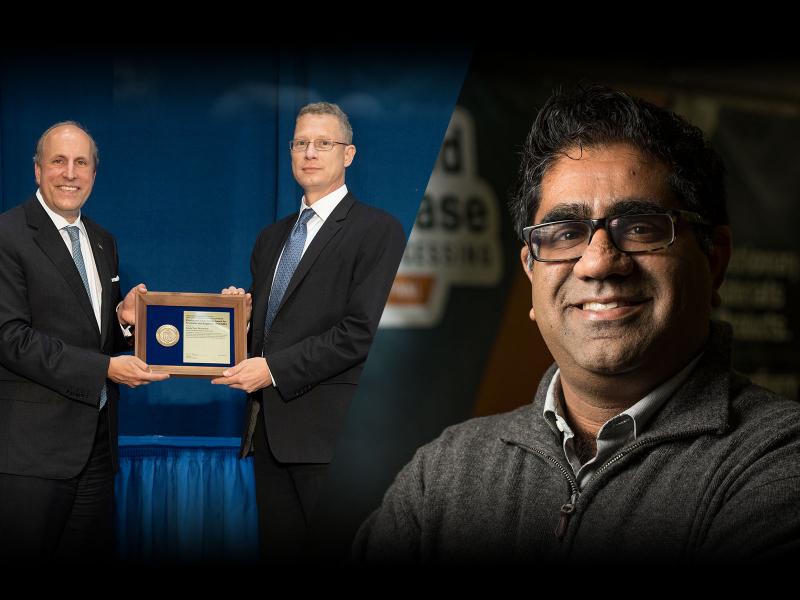
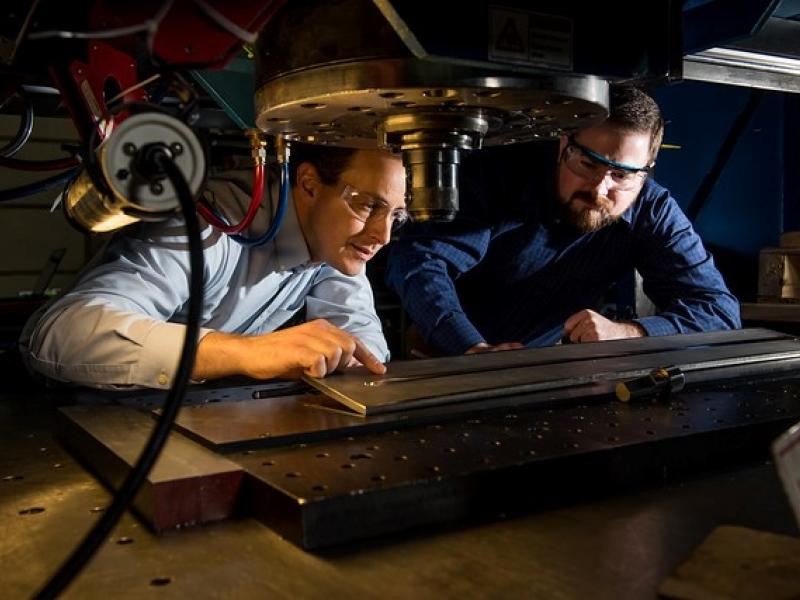
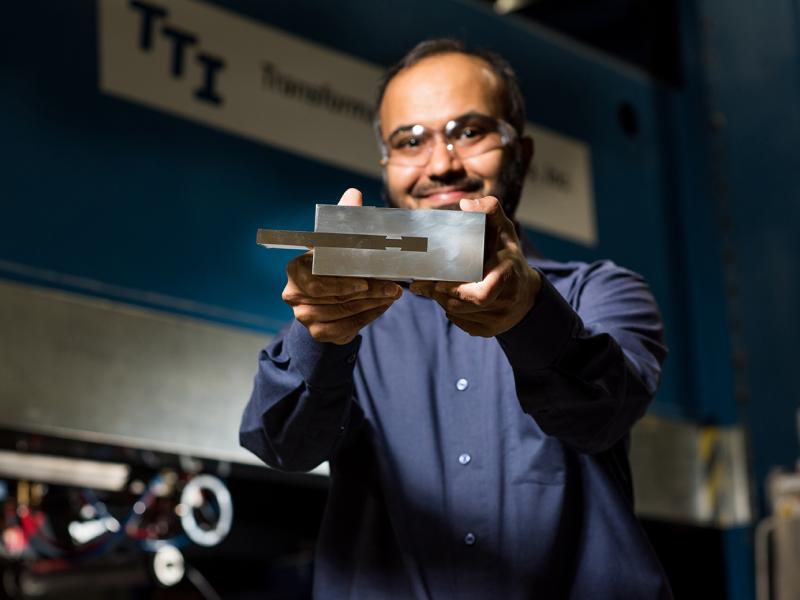
Darrell Herling and two national laboratory collaborators were recently recognized by DOE for their leadership in the Powertrain Materials Core Program.
Lenaïg Hemery, a marine energy specialist with Pacific Northwest National Laboratory, has been appointed to the position of topic editor for the Journal of Marine Science and Engineering.
Electrical engineer Nolann Williams supports technical development for DOE-funded projects building marine energy environmental monitoring technologies.
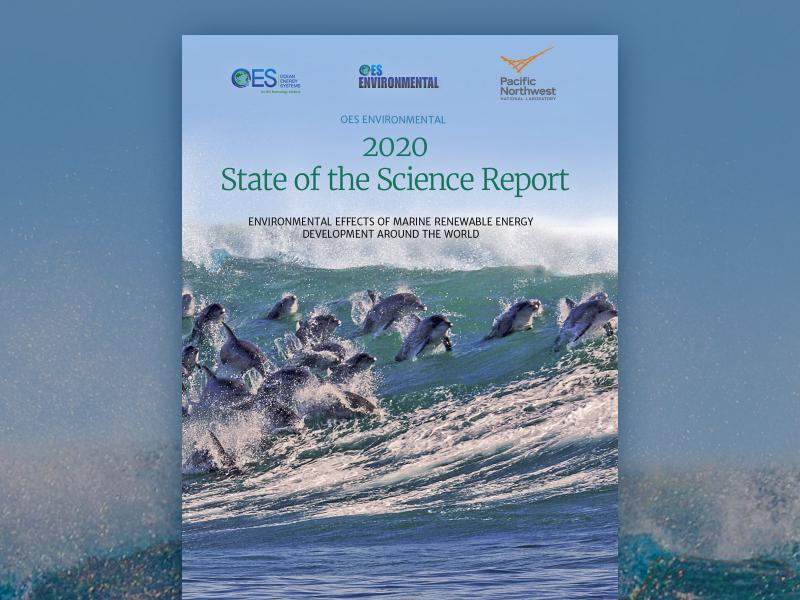
On World Oceans Day, an international team of marine scientists reports that the potential impact of marine renewable energy to marine life is likely small or undetectable, though some uncertainty remains.
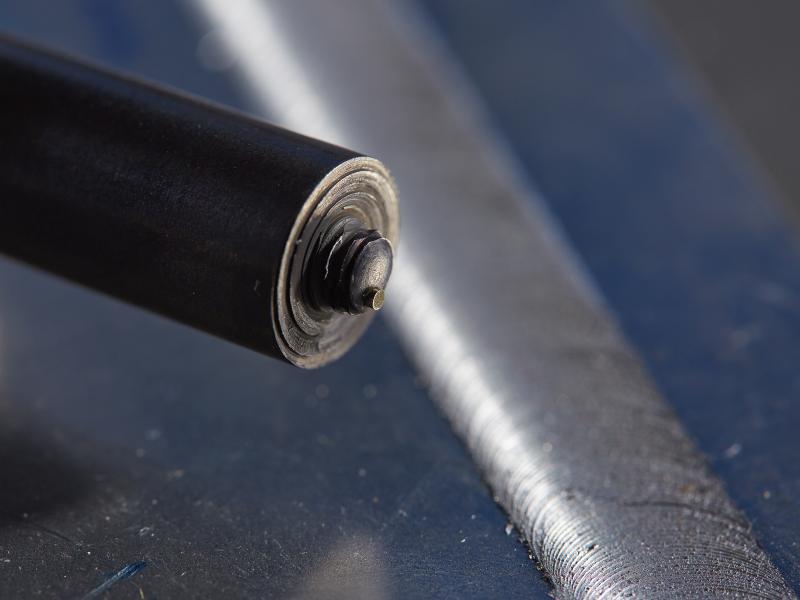
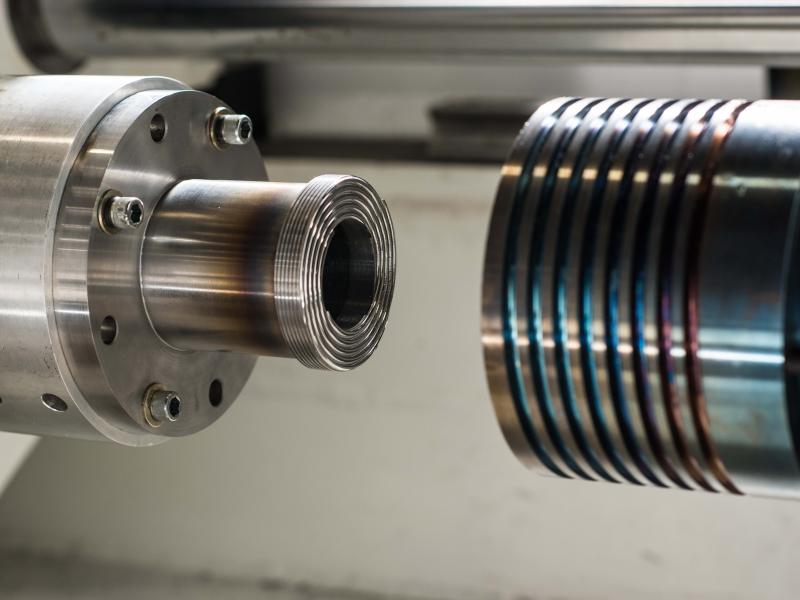
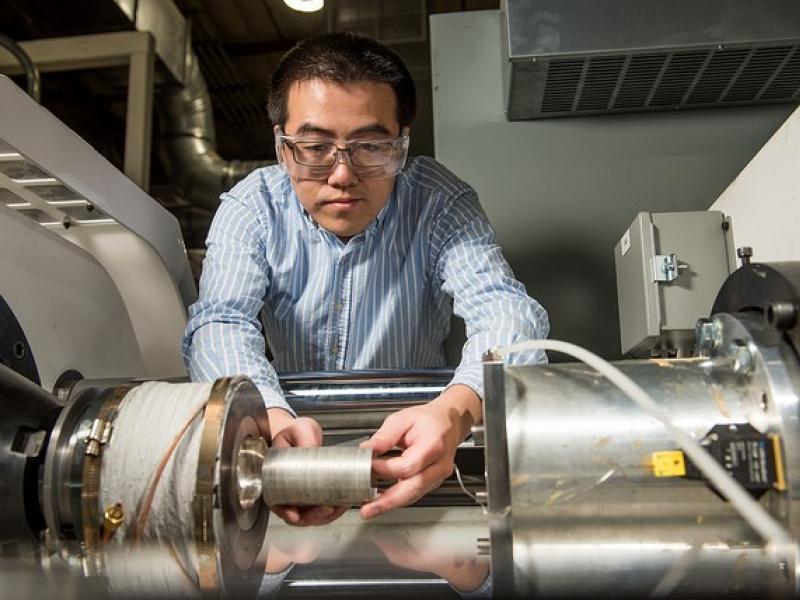
Two forms of magnesium material were processed into tubing using PNNL’s Shear Assisted Processing and Extrusion™ technology. Both materials were found to have quite similar and improved properties—even though they began vastly different.
Superman may be known as the "Man of Steel," but scientific superheroes at the Department of Energy's Pacific Northwest National Laboratory are developing a novel approach for manufacturing metals with superior strength.
A PNNL study that evaluated the use of friction stir technology on stainless steel has shown that the steel resists erosion more than three times that of its unprocessed counterpart.
Keerti S. Kappagantula, a scientist in PNNL’s Energy Processes and Materials Division, was featured in ASM International’s Women in Engineering Series.
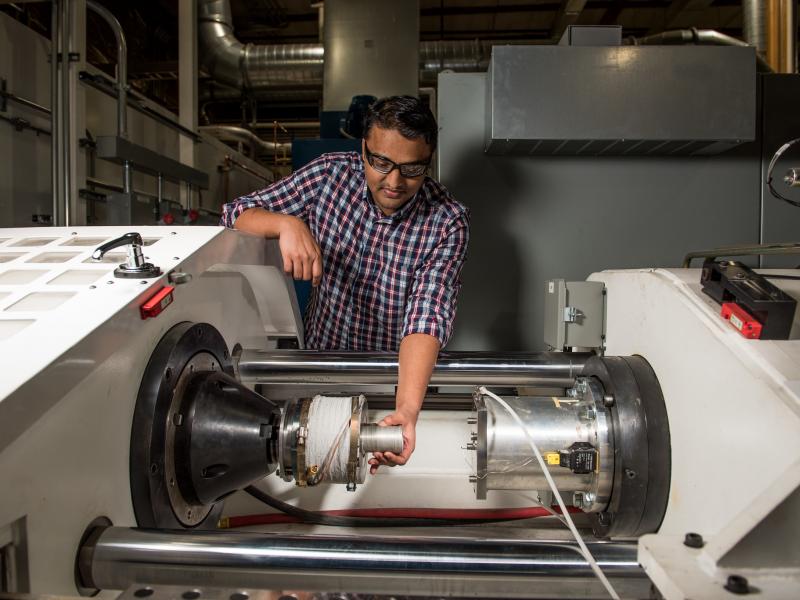
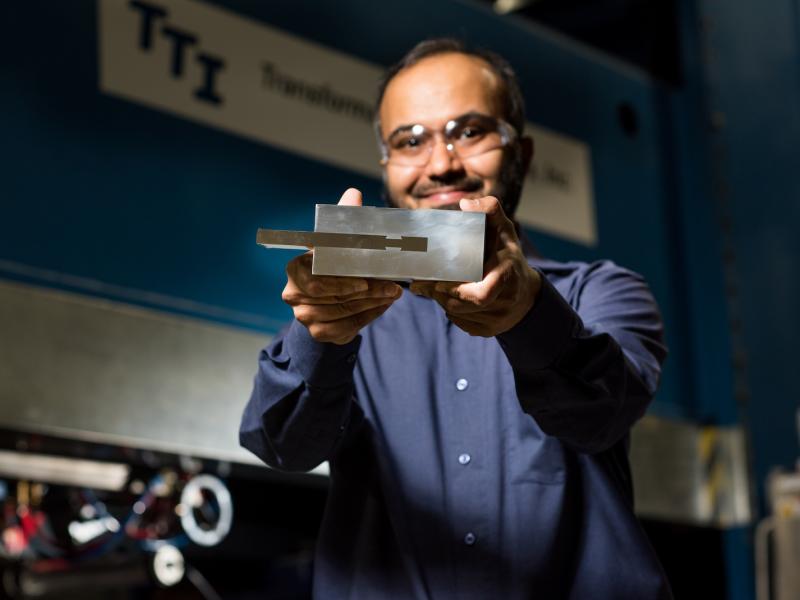
A new technology that offers a novel way to manufacture extrusions with unprecedented improvements in material properties recently received a U.S. patent.
PNNL is advancing scientific frontiers and addressing challenges in energy, the environment and national security. So, in no particular order, here are PNNL's top 10 research accomplishments of 2018
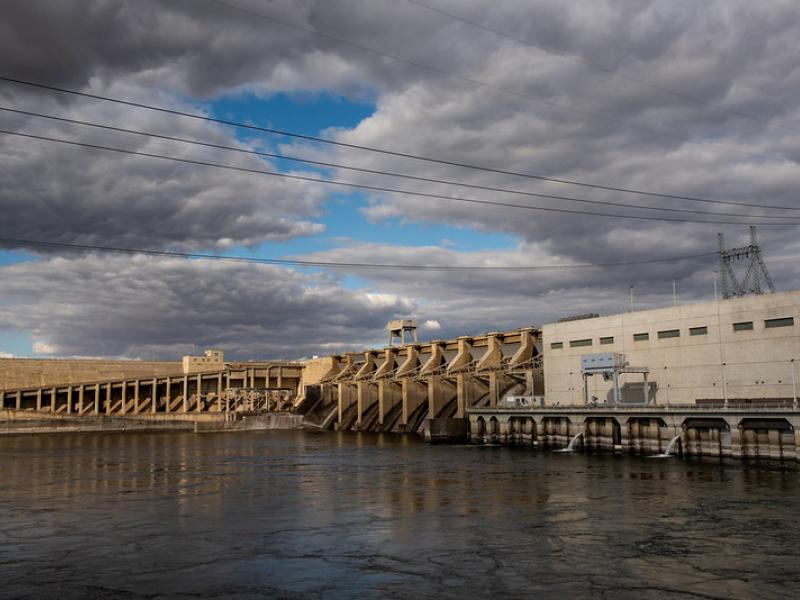
For decades, the Department of Energy's Pacific Northwest National Laboratory has played a role in establishing and maintaining sustainable hydropower for the region.
PNNL researchers have demonstrated a process for the expanded use of lightweight aluminum in cars and trucks at the speed, scale, quality and consistency required by the auto industry.