PNNL

  • About
  • News & Media
  • Careers
  • Events
  • Research
    • Scientific Discovery
      • Autonomous Science
      • Biology
        • Chemical Biology
        • Computational Biology
        • Ecosystem Science
        • Human Health
          • Cancer Biology
          • Exposure Science & Pathogen Biology
        • Integrative Omics
          • Advanced Metabolomics
          • Chemical Biology
          • Mass Spectrometry-Based Measurement Technologies
          • Spatial and Single-Cell Proteomics
          • Structural Biology
        • Microbiome Science
          • Biofuels & Bioproducts
          • Human Microbiome
          • Soil Microbiome
          • Synthetic Biology
        • Predictive Phenomics
      • Chemistry
        • Computational Chemistry
        • Chemical Separations
        • Chemical Physics
        • Catalysis
      • Earth & Coastal Sciences
        • Global Change
        • Atmospheric Science
          • Atmospheric Aerosols
          • Human-Earth System Interactions
          • Modeling Earth Systems
        • Coastal Science
        • Ecosystem Science
        • Subsurface Science
        • Terrestrial Aquatics
      • Materials Sciences
        • Materials in Extreme Environments
        • Nondestructive Examination
        • Precision Materials by Design
        • Science of Interfaces
        • Smart Advanced Manufacturing
          • Cold Spray
          • Friction Stir Welding & Processing
          • ShAPE
      • Nuclear & Particle Physics
        • Dark Matter
        • Fusion Energy Science
        • Neutrino Physics
      • Quantum Information Sciences
    • Energy Resiliency
      • Electric Grid Modernization
        • Emergency Response
        • Grid Analytics
          • AGM Program
          • Tools and Capabilities
        • Grid Architecture
        • Grid Cybersecurity
        • Grid Energy Storage
        • Transmission
        • Distribution
      • Energy Efficiency
        • Appliance and Equipment Standards
        • Building Energy Codes
        • Building Technologies
          • Advanced Building Controls
          • Advanced Lighting
          • Building-Grid Integration
        • Commercial Buildings
        • Federal Buildings
          • Federal Performance Optimization
          • Resilience and Security
        • Residential Buildings
          • Building America Solution Center
          • Energy Efficient Technology Integration
          • Home Energy Score
        • Energy Efficient Technology Integration
      • Energy Storage
        • Electrochemical Energy Storage
        • Flexible Loads and Generation
        • Grid Integration, Controls, and Architecture
        • Regulation, Policy, and Valuation
        • Science Supporting Energy Storage
        • Chemical Energy Storage
      • Environmental Management
        • Waste Processing
        • Radiation Measurement
        • Environmental Remediation
      • Fossil Energy
        • Subsurface Energy Systems
        • Advanced Hydrocarbon Conversion
      • Nuclear Energy
        • Fuel Cycle Research
        • Advanced Reactors
        • Reactor Operations
        • Reactor Licensing
        • Nondestructive Examination
      • Renewable Energy
        • Solar Energy
        • Wind Energy
          • Wind Resource Characterization
          • Wildlife and Wind
          • Wind Systems Integration
          • Wind Data Management
          • Distributed Wind
        • Marine Energy
          • Environmental Monitoring for Marine Energy
          • Marine Biofouling and Corrosion
          • Marine Energy Resource Characterization
          • Testing for Marine Energy
          • The Blue Economy
        • Hydropower
          • Environmental Performance of Hydropower
          • Hydropower Cybersecurity and Digitalization
          • Hydropower and the Electric Grid
          • Materials Science for Hydropower
          • Pumped Storage Hydropower
          • Water + Hydropower Planning
        • Grid Integration of Renewable Energy
        • Geothermal Energy
      • Transportation
        • Bioenergy Technologies
          • Algal Biofuels
          • Aviation Biofuels
          • Waste-to-Energy and Products
        • Hydrogen & Fuel Cells
        • Vehicle Technologies
          • Emission Control
          • Energy-Efficient Mobility Systems
          • Lightweight Materials
          • Vehicle Electrification
          • Vehicle Grid Integration
    • National Security
      • Chemical & Biothreat Signatures
        • Contraband Detection
        • Pathogen Science & Detection
        • Explosives Detection
        • Threat-Agnostic Biodefense
      • Cybersecurity
        • Discovery and Insight
        • Proactive Defense
        • Trusted Systems
      • Nuclear Material Science
      • Nuclear Nonproliferation
        • Radiological & Nuclear Detection
        • Nuclear Forensics
        • Ultra-Sensitive Nuclear Measurements
        • Nuclear Explosion Monitoring
        • Global Nuclear & Radiological Security
      • Stakeholder Engagement
        • Disaster Recovery
        • Global Collaborations
        • Legislative and Regulatory Analysis
        • Technical Training
      • Systems Integration & Deployment
        • Additive Manufacturing
        • Deployed Technologies
        • Rapid Prototyping
        • Systems Engineering
      • Threat Analysis
        • Advanced Wireless Security
          • 5G Security
          • RF Signal Detection & Exploitation
        • Border Security
        • Internet of Things
        • Maritime Security
        • Millimeter Wave
        • Mission Risk and Resilience
    • Data Science & Computing
      • Artificial Intelligence
      • Graph and Data Analytics
      • Software Engineering
      • Computational Mathematics & Statistics
      • Future Computing Technologies
        • Adaptive Autonomous Systems
    • Lab Objectives
    • Publications & Reports
    • Featured Research
  • People
    • Inventors
    • Lab Leadership
    • Lab Fellows
    • Staff Accomplishments
  • Partner with PNNL
    • Education
      • Undergraduate Students
      • Graduate Students
      • Post-graduate Students
      • University Faculty
      • University Partnerships
      • K-12 Educators and Students
      • STEM Education
        • STEM Workforce Development
        • STEM Outreach
      • Internships
    • Community
      • Philanthropy
      • Volunteering
    • Industry
      • Why Partner with PNNL
      • Explore Types of Engagement
      • How to Partner with Us
      • Available Technologies
      • Procurement
      • Technology Ombuds
  • Facilities & Centers
    • All Facilities
      • Atmospheric Radiation Measurement User Facility
      • Electricity Infrastructure Operations Center
      • Energy Sciences Center
      • Environmental Molecular Sciences Laboratory
      • Grid Storage Launchpad
      • Institute for Integrated Catalysis
      • Interdiction Technology and Integration Laboratory
      • PNNL Portland Research Center
      • PNNL-Seattle
      • PNNL-Sequim (Marine and Coastal Research)
      • Radiochemical Processing Laboratory
      • Shallow Underground Laboratory

Breadcrumb

  1. Home
  2. Energy Resiliency
  3. Transportation
  4. Bioenergy Technologies

Hydrothermal
Liquefaction

Turning domestic waste and
biomass into drop-in fuels,
chemical products, and more

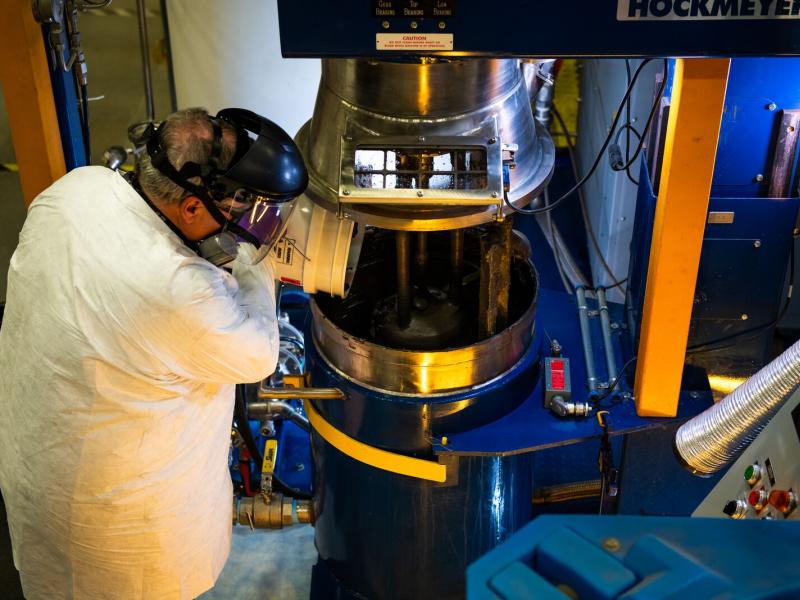
HTL can turn all sorts of feedstock materials—everything from algae and wood flour to human waste and fry crumbs—into valuable chemicals, bioproducts, and fuels.

(Photo by Andrea Starr | Pacific Northwest National Laboratory)

Pacific Northwest National Laboratory (PNNL) is a pioneer in the development of hydrothermal liquefaction (HTL)—a powerful technology that enables conversion of organic wastes and biomass into fuels and recovery of chemicals like ammonia and phosphates with potential for extraction of critical minerals from the residual solids. HTL is uniquely suited to handle wet feedstocks and needs only minutes of moderate heat and high pressure to turn waste like sewage and food scraps or biomass like algae into a valuable resource: high-energy-density “bio-crude.”

PNNL’s HTL research team possesses highly specialized expertise and equipment that enable the Lab to push the boundaries of HTL as a viable technology for a wide range of sectors. 

What can PNNL do for you?

An icon of the MHTLS

State-of-the-art HTL development site

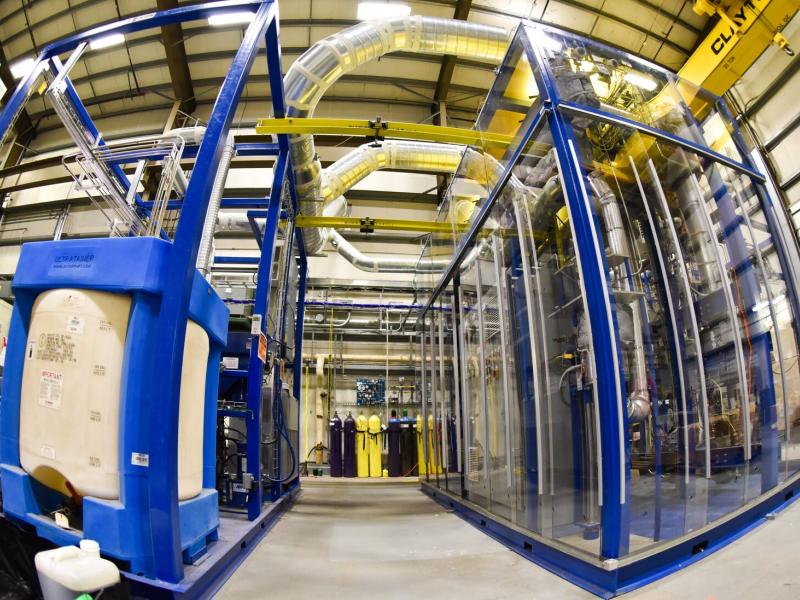
PNNL hosts and operates a state-of-the-art HTL Process Development Unit (PDU). The PDU can process a wide variety of biomass feedstocks into valuable biocrudes that can be refined in-house into drop-in fuels.

( Learn more about PNNL's PDU )
A graphic showing industrial partnerships for HTL

Experience working with industry

PNNL’s HTL team, supported by the Lab’s Office of Collaboration and Commercialization, partners with companies across a wide range of industries—from emerging start-ups to established national enterprises. 

( Contact PNNL about HTL partnerships )
An icon showing a leaf and other scientific imagery

End-to-end expertise

PNNL’s expertise in chemical conversion doesn’t stop—or start—at HTL. The Lab has extensive capabilities in upgrading advanced oils, analytical instrumentation for characterizing fuels, process intensification, developing new bioproduct processes, and more.

An icon showing the MHTLS and computing imagery

Analysis capabilities

The Lab’s HTL process development is backed by equally robust expertise in areas such as biomass resource assessment, technoeconomic analysis, life cycle assessment, and siting analysis for a variety of HTL use cases.

Interested in HTL?

PNNL works with industrial and municipal partners to develop, test, demonstrate, and deploy HTL technologies in new environments. If you or your company are interested in working with PNNL to explore the suitability of HTL for your application, email htl@pnnl.gov.

Turning trash into treasure

Unlike alternative methods, HTL is uniquely suited for converting wet biomass without an additional, energy-intensive drying step. That means HTL can easily make viable fuels and chemical products out of everything from wood flour and potato fry crumbs to algae, sewage, and other organic waste.

HTL’s ability to efficiently convert a wide range of abundant, low-value waste and biomass into valuable fuels and chemical products make it an ideal technology for industries that tend to produce large amounts of that waste and biomass—for example, agriculture, municipal waste management, lumber production, and food manufacturing.

Sewage sludge

Sewage sludge

Domestic wastewater treatment plants treat around 34 billion gallons of sewage every day. Thanks to HTL’s unique ability to handle wet feedstock, this sewage could be used to produce tens of millions of barrels of oil per year and tons of valuable chemical products.

Food waste

Food waste

From potato fry crumbs to wine pomace, food manufacturing produces an enormous range of organic wastes that are suitable for conversion into fuel using HTL—providing an additional source of revenue to domestic manufacturers.

Algae

Algae

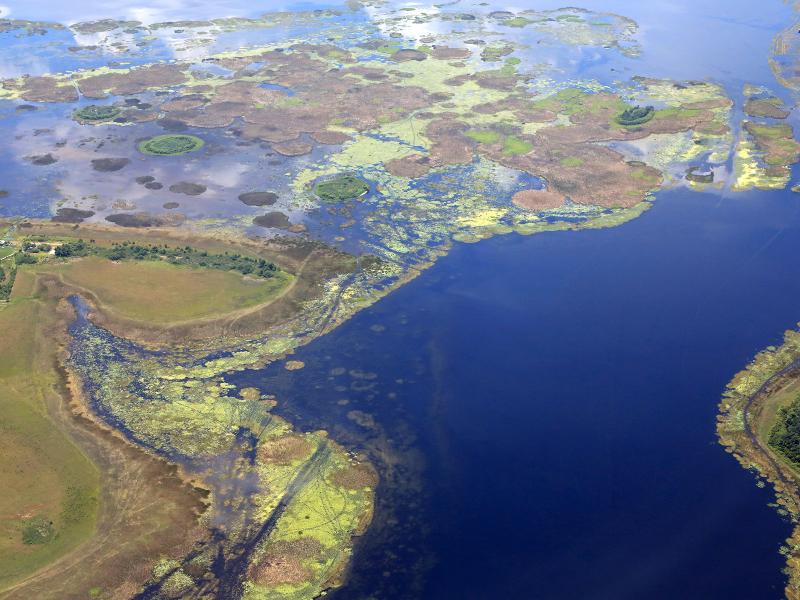
At PNNL-Sequim—the Department of Energy’s only marine facility—researchers are studying how to harness the rapid growth of algae to generate abundant feedstocks to produce critical minerals and materials from seawater.

Miscellaneous HTL feedstocks

... and more!

HTL is suitable for use with many more types of waste and biomass. To explore if your material could be suitable for HTL, email htl@pnnl.gov.

HTL @ PNNL

A researcher in a lab coat is holding a container of what appears to be sewage sludge.
HTL can turn all sorts of feedstock materials—everything from algae and wood flour to human waste and fry crumbs—into high-quality fuels and valuable chemicals. (Photo by Andrea Starr | Pacific Northwest National Laboratory)

PNNL holds a global leadership position in the development and advancement of HTL. Leveraging its modular HTL plant—a unique capability across DOE—PNNL researchers have more than doubled the carbon efficiency of HTL processes from 30% to nearly 70%. PNNL has also shown durability and stability in upgrading bio-crude into refined fuels through long-duration runs, mitigating the risks for industrial adoption. 

Throughout its HTL research, PNNL partners with a wide range of U.S. companies to demonstrate HTL’s adaptability for industry-specific applications like distillery grains, winery pomace, and dairy manure. The Lab is also working with a wide range of manufacturers and technology developers aiming to build pilot-scale HTL facilities in the United States.

If you or your company are interested in working with PNNL to explore the suitability of HTL for your application, email htl@pnnl.gov.

Contact

Uriah Kilgore
Process Chemist
uriah.kilgore@pnnl.gov
(509) 375-2334

HTL News

SEPTEMBER 5, 2025
Article

PNNL Turns Algae into Fuel and Cement

Read
A researcher holds up two samples: on the left, a cylinder of cement made with traditional supplementary materials; on the right, a cylinder of cement made with algal biochar.
NOVEMBER 18, 2021
News Release

PNNL Analysis Finds Wastewater is Not a Waste

Read
Man pouring waste into a machine
NOVEMBER 5, 2020
Feature

Okeechobee: From Blooms to Biocrude

Read
Okeechobee
MARCH 25, 2021
News Release

Biocrude Passes the 2,000-hour Catalyst Stability Test

Read
waste to fuel bioreactor

HTL Publications

JANUARY 21, 2026
Journal Article

Rheology and Engine Performance of Very Low Sulfur Fuel Oil Blended with 10% Fast Pyrolysis and Hydrothermal Liquefaction Oils in a 2-Stroke Crosshead Engine

Read
SEPTEMBER 5, 2025
Journal Article

Continuous Wet Air Oxidation of the Hydrothermal Liquefaction Aqueous Product from Various Wet Wastes

Read
AUGUST 30, 2025
Journal Article

Hydrothermal Liquefaction of Wastewater-Grown Algae to Produce Sustainable Aviation Fuel: A Combined Experimental Study and Techno-Economic Assessment

Read
AUGUST 21, 2025
Journal Article

Electrocatalytic oxidation of hydrothermal liquefaction-derived aqueous phase for on-site wastewater treatment and H2 production

Read
AUGUST 21, 2025
Journal Article

Electrocatalytic benchmarking of ruthenium-based bimetallic anodes for the electrocatalytic oxidation of biomass-derived wastewater

Read
JULY 31, 2025
Journal Article

Using a Recirculating Anaerobic Dynamic Membrane Bioreactor to treat hydrothermal liquefaction aqueous by-product

Read
View all HTL publications

PNNL

  • Get in Touch
    • Contact
    • Careers
    • Doing Business
    • Environmental Reports
    • Security & Privacy
    • Vulnerability Disclosure Policy
    • Notice to Applicants
  • Research
    • Scientific Discovery
    • Energy Resiliency
    • National Security
Subscribe to PNNL News
Department of Energy Logo Battelle Logo
Pacific Northwest National Laboratory (PNNL) is managed and operated by Battelle for the Department of Energy
  • YouTube
  • Facebook
  • X (formerly Twitter)
  • Instagram
  • LinkedIn