Researchers discovered that frustrated electric forces drive a novel precipitation pathway called microphase separation and identified a precursor intermediate state of ordered ion networks.
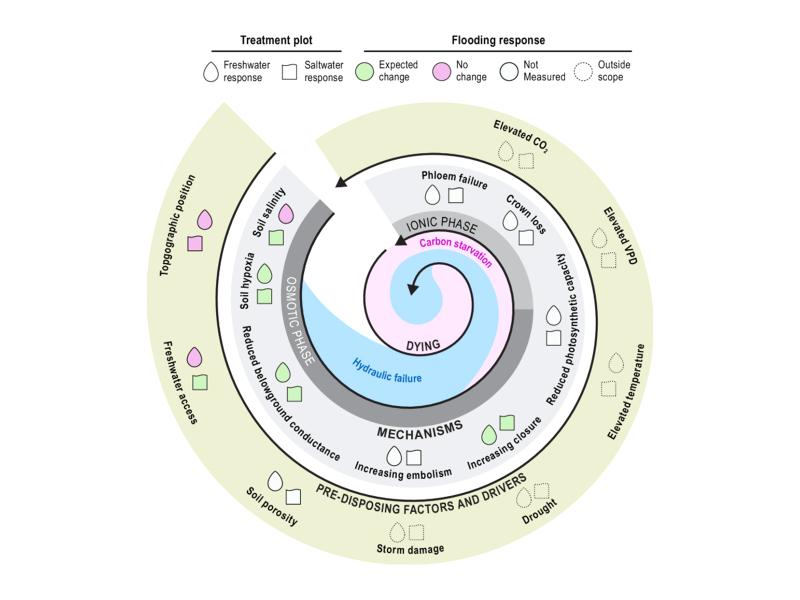
Short-term flooding of an experimental coastal forest impacted soils but not trees, with implications for understanding ecosystem disturbance responses.
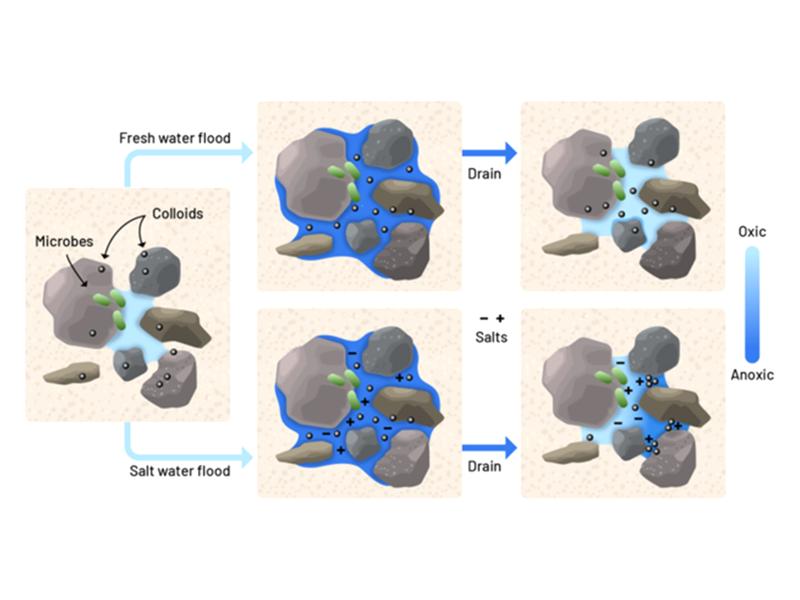
Lab experiments show that just a few saltwater pulses can rapidly alter soil pore structure and reduce oxygen flow, stressing tree roots in coastal forest soils.
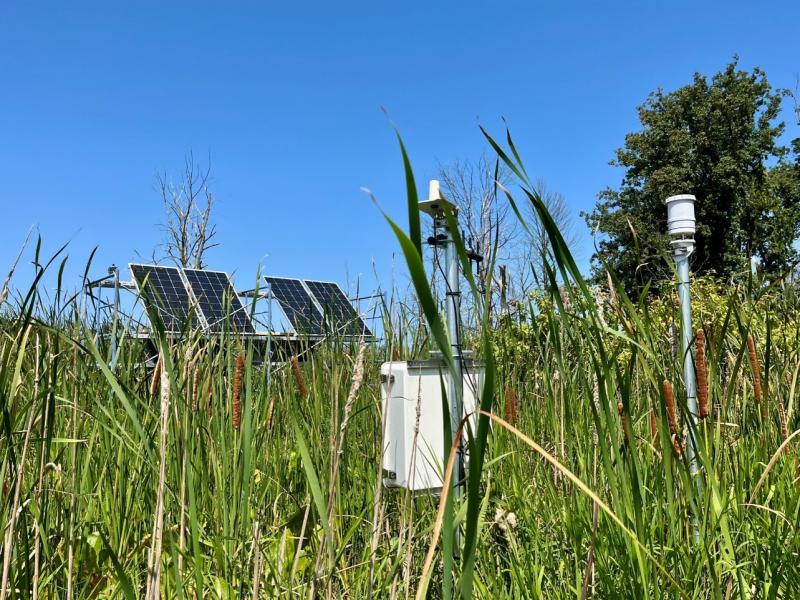
Newly designed sensor network comprehensively monitors a range of coastal landscapes to better understand nutrient and elemental dynamics that drive ecosystem function.
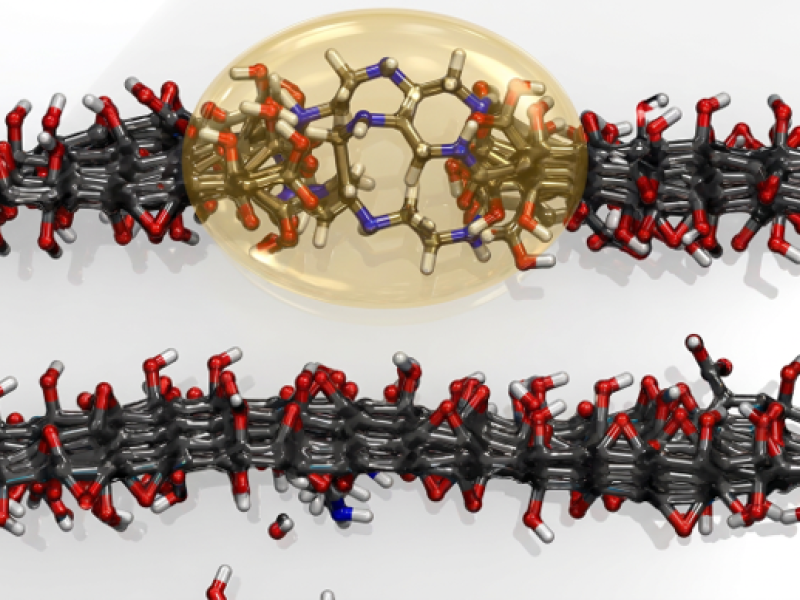
Amine functionalized graphene oxide yields laminates with an enhanced capacity to adsorb rare earth elements, improved water transport, and greater stability for effective membrane-based separation of critical minerals.
Integrating experiments and modeling show how a fungal exudate-inspired substrate mixture elicits an emergent growth phenotype and metabolic responses in Pseudomonas putida.
Research provided definitive spectroscopic characterization, reactivity, and deactivation of a reactive monomeric diphosphine-copper hydride intermediate.
Uncovered how the choice of carbon source influences the stress tolerance, redox balance, and regulatory responses of yeast, which can help provide resilience against scale-up challenges.