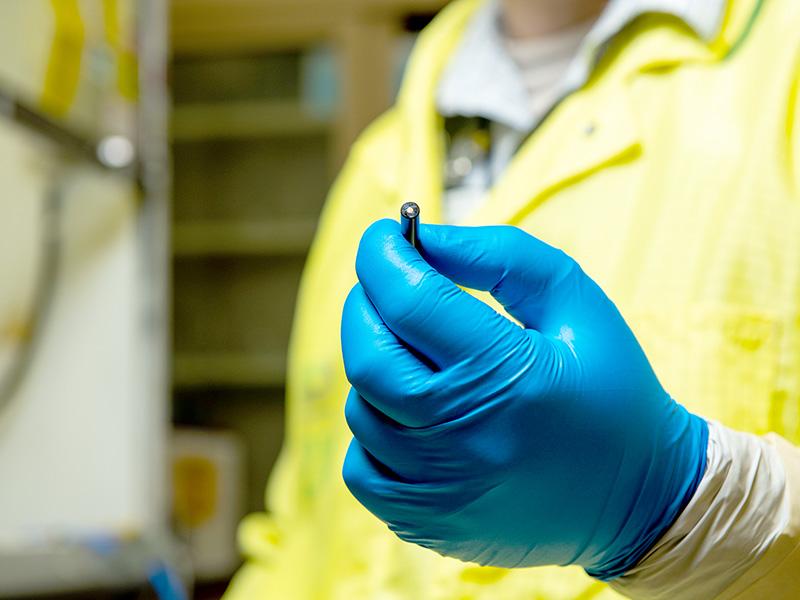
Existing techniques to detect pertechnetate in the environment have drawbacks. PNNL’s redox sensor technology uses a gold probe to accurately and efficiently measure low levels of pertechnetate—and possibly other contaminants—in groundwater
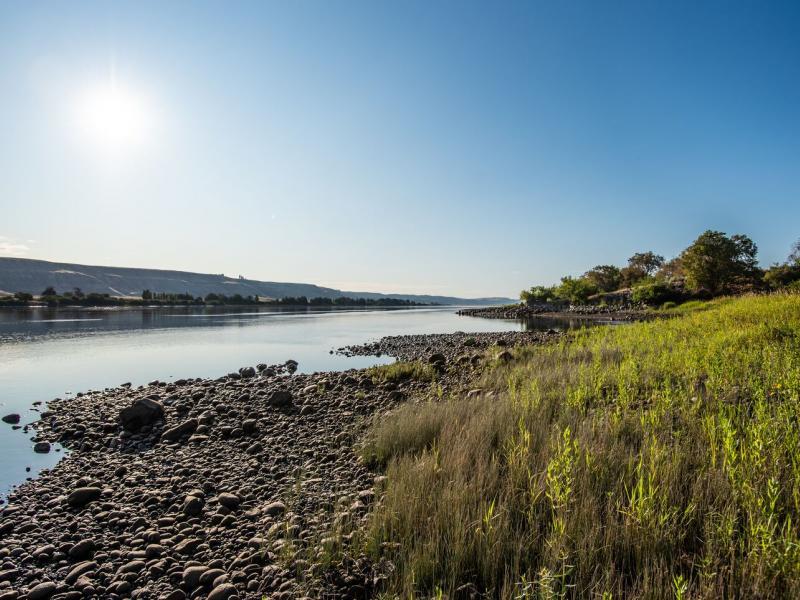
A recent paper published in Water Resources Research found that the spatial variability of subsurface sediments, and seasonal fluctuations in a river’s water level, influences the behavior of a uranium contaminant plume, particularly in ...
Researchers adding water to the surface of alumina measured some surprising results that raise important questions regarding the fundamental reactions that govern chemical transformations of aluminum oxides and hydroxides.
Scientists at the Interfacial Dynamics in Radioactive Environments and Materials (IDREAM) sort out which compounds are present and their concentrations, providing an important new tool with broad applicability.
DOE researchers investigated the role of microbial genetic diversity in two major subsurface biogeochemical processes: nitrification and denitrification.
Researchers from Pacific Northwest National Laboratory reviewed the current state of knowledge about the impacts of climate change on soil microorganisms in different climate-sensitive soil ecosystems.
Nitrogen is a critical nutrient regulating productivity in many ecosystems and influences nutrient availability by affecting organic matter decomposition rates.
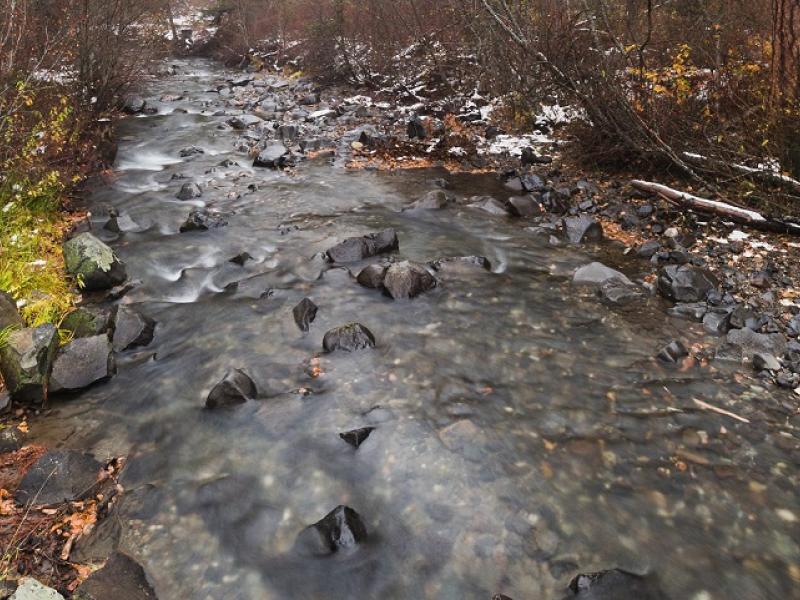
Biogeochemical activity in the hyporheic zone (HZ), sediments where the flowing waters of a river mix with shallow groundwater, supports many of the biological processes that occur within a watershed.
Co-authors of a paper in Hydrological Processes led by PNNL researchers Zhangshuan Hou, Timothy Scheibe, and Christopher Murray, produced a map that identifies different classes of sediments which compose the riverbed along the Hanford ...