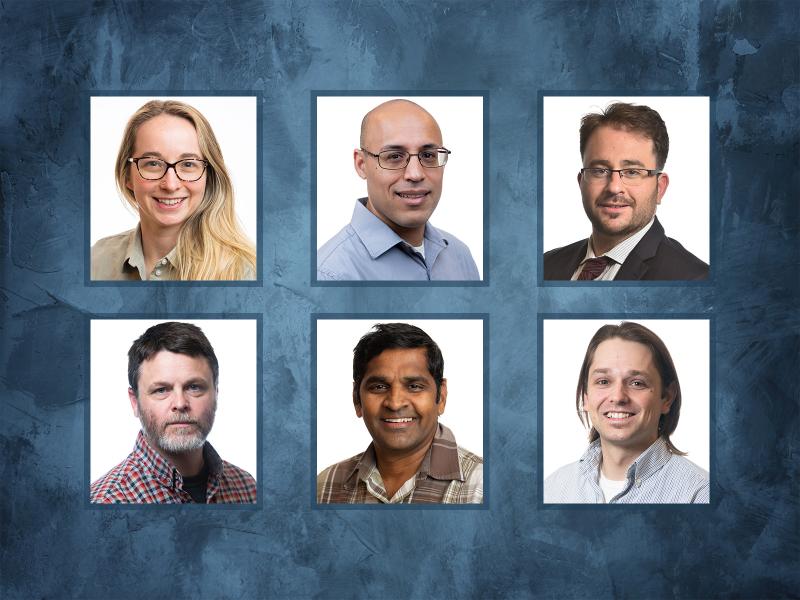
The Department of Energy’s Transportation Technologies Office has issued two 2026 Annual Merit Review Awards to researchers from PNNL. Both awards recognize PNNL researchers whose work is reducing the need for critical materials.
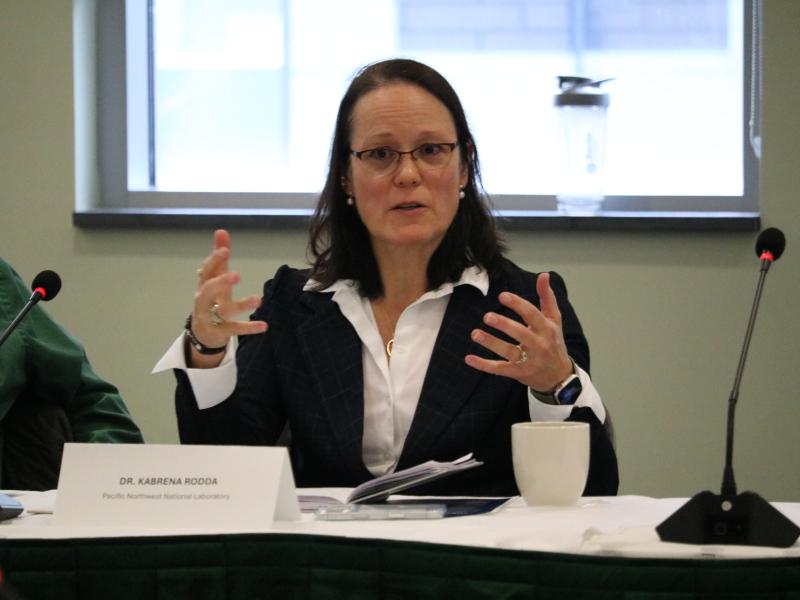
PNNL was invited to participate on an expert panel with scientists, law enforcement officials, addiction experts, public health officials, and families.
Yong Wang will lead the Institute for Integrated Catalysis, advancing the science and technology of catalysis to address global challenges in energy resilience.
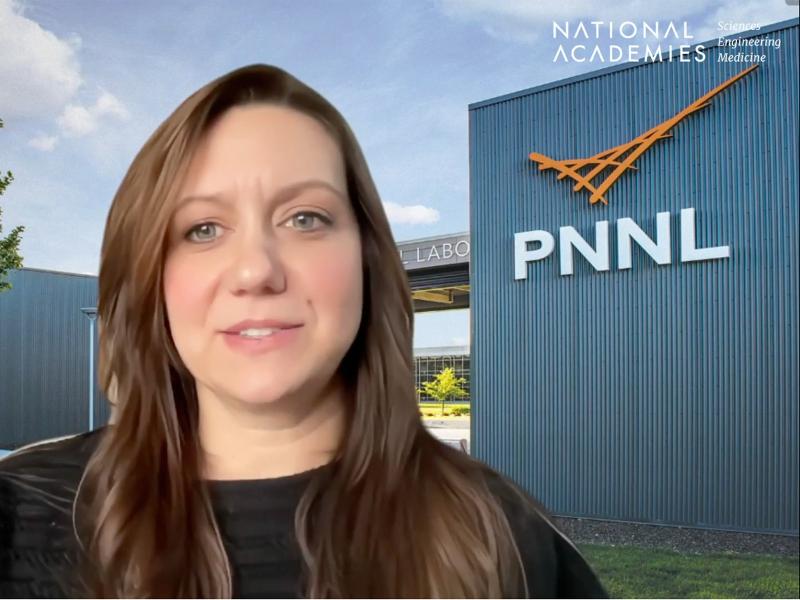
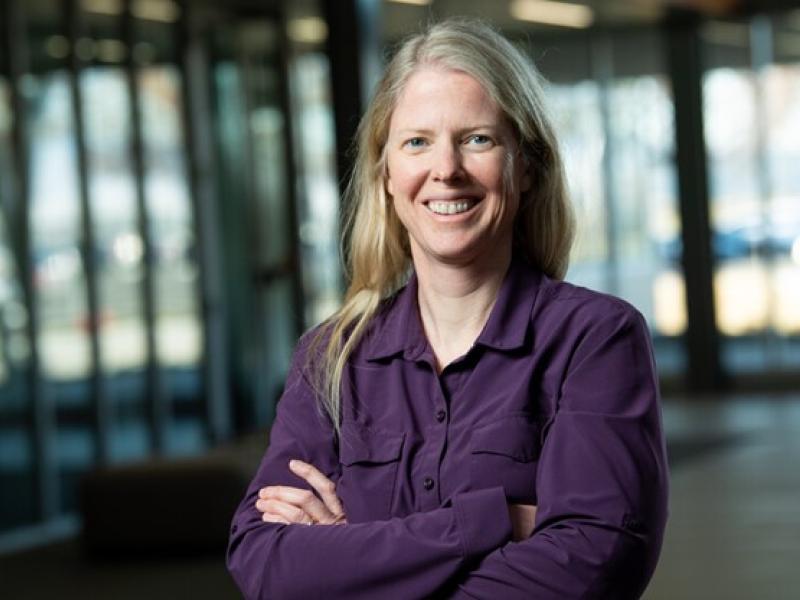
Lauren Charles, a chief data scientist at PNNL, showcased the vital research coming out of her program at The National Academies Forum workshop in Washington, D.C., January 15–16, 2025.
Battelle Fellow Johannes Lercher was elected a Foreign Academician by the Royal Academy of Exact, Physical, and Natural Sciences of Spain for his contributions to chemical science.
PNNL staff scientist selected as a guest editor for a special issue titled “Ligand-Metal Complementarity in Rare Earth and Actinide Chemistry,” in the well-known journal Inorganic Chemistry.
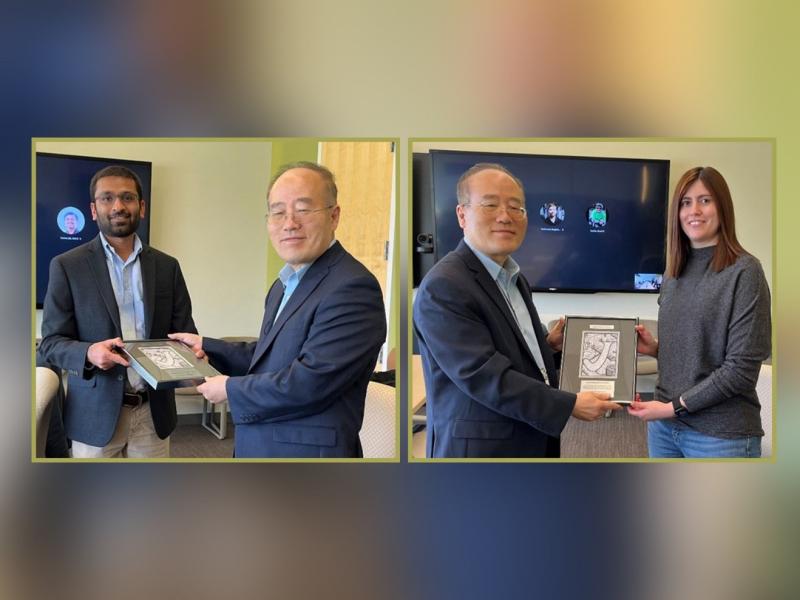
The 50th anniversary of the Finnish Institute for Verification of the Chemical Weapons Convention was recently celebrated in Helsinki, Finland. PNNL's Jonathan Forman and Raul Aranzazu attended this international event.
Robert Rallo from Pacific Northwest National Laboratory will direct a machine learning thrust for a new Department of Energy-funded project led by SLAC National Accelerator Laboratory.
Jonathan Forman was nominated to serve on the delegation of the United States of America at the second meeting of the Working Group on Strengthening the Biological Weapons Convention.
At the Nonproliferation, Counterproliferation, and Disarmament Science Gordon Research Conference, researchers from PNNL shared research and scientific approaches for countering diverse threats.
PNNL recently joined the Department of Homeland Security for two technical meetings exploring national security research spanning the threat realm, from chemical and biological attacks to adversarial artificial intelligence.