PNNL Scientist Outlines Steps to Address Fentanyl Threat
During expert panel, PNNL researcher highlights how detection and surveillance are key to combating opioid epidemic
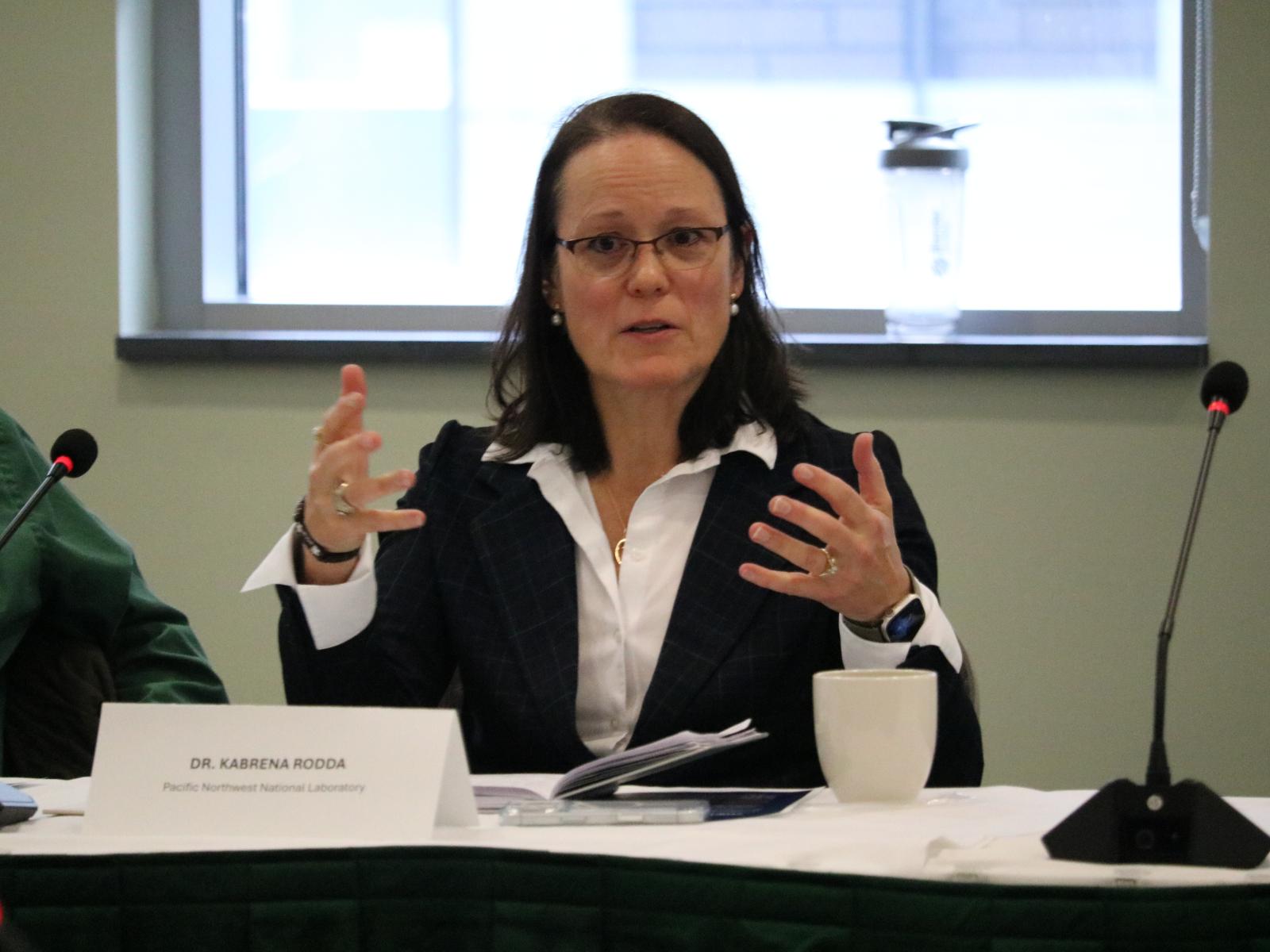
Kabrena Rodda participated on an expert panel with scientists, law enforcement officials, and public health officials.
(Photo provided by Rep. Riley's Office)
Kabrena Rodda, a forensic toxicologist at Pacific Northwest National Laboratory (PNNL), last month participated on an expert panel about fentanyl, the leading contributor of drug overdoses in the United States.
Hosted by New York Congressman Josh Riley, the “Fighting Fentanyl: Saving Lives and Keeping Our Communities Safe” roundtable event convened experts to identify strategies that can reduce the damage of fentanyl in U.S. communities. The event included scientists, law enforcement officials, addiction experts, public health officials, and families that have been tragically touched by fentanyl.
Rodda said the severity of the situation calls for experts across the country to collaborate and share data, building on the momentum of advancements already in place.
“The impact of fentanyl and other synthetic opioids touches us all,” said Rodda. “Achieving success against it will require establishing actionable, proactive drug surveillance that can detect and stop the flow of new analogs before they hit our communities. To do that, we’ll need a collaborative effort from everyone, working together to share the information we have with public health authorities, and we need to empower them with the data exploitation tools necessary to make it actionable.”
For Rodda, actionable means slowing down a threat that is evolving faster than the technologies detecting it. To do this, she envisions research solutions that can make data exploitation more predictive and operationalize successful basic research capabilities quickly to arm responders with tools and data to make decisions more quickly and accurately.
Army of experts
During the Fighting Fentanyl event, the panel titled “Working with Law Enforcement: Fentanyl Interdiction and Federal Policy Responses” included three local police departments, addiction and public health officials, Rodda, and Craig Tewell from Sandia National Laboratories.
The invitation stemmed from PNNL’s leadership in fentanyl detection and response research. Researchers at PNNL have decades of experience conducting experiments and analysis on biological threats, as well as chemical and nuclear forensics, to support responses to a variety of emerging threats. For example, PNNL scientists created a contactless system to detect fentanyl and other harmful substances, and have established new laboratory standards and assessments for field-portable detection products.
While research at PNNL continues to focus on detection and data exploitation, Rodda said there have been promising advancements in using agentic AI with data exploitation capabilities that are integrating AI markup language with computational chemistry to identify emerging compounds.
Moving target
For Rodda, listening to the firsthand stories from law enforcement and families on the front lines amplified the need for collaborations across all agencies to combat opioids, especially because it’s become more common to detect multiple drugs versus only one.
“A few years ago, we began addressing the challenge of assessing hazards posed by chemical combinations that would not exist if exposed to a single chemical,” she said. “It was repeatedly mentioned during the hearing that when drugs are seized and assayed, they often contain multiple drugs. We need to focus not only on detecting specific fentanyl analogs or other street drugs but also on identifying specific combinations that pose greater danger than any single drug.”
Published: February 16, 2026