DOE Electricity Leader Headlines NASPI Meeting
PNNL connects federal priorities, research, and utility experience

Utility professionals, researchers, and technology providers gathered November 3–4 in Charlotte, North Carolina, to explore how synchronized measurements can help the industry better understand grid conditions and inform operational decisions.
(Photo credit: Electric Power Research Institute)
Better visibility into grid conditions helps utilities make informed decisions about delivering reliable electricity. That goal brought federal leadership, utilities, researchers, and technology providers together in Charlotte, North Carolina, for the Fall 2026 Novel Applications for Synchronized Power Instrumentation (NASPI) Work Group Meeting and Vendor Show.
A highlight was the opening keynote from the Honorable Catherine (Katie) Jereza, Assistant Secretary for the U.S. Department of Energy's Office of Electricity (OE). Also, Duke Energy’s Vice President of Grid Integration Strategy Sam Holeman delivered the welcoming keynote, bringing a local utility perspective to the gathering.
NASPI is an OE initiative co-led by Pacific Northwest National Laboratory (PNNL) and the Electric Power Research Institute. It connects experts developing and applying synchronized measurements—precisely timed electrical measurements that help reveal how the grid behaves.
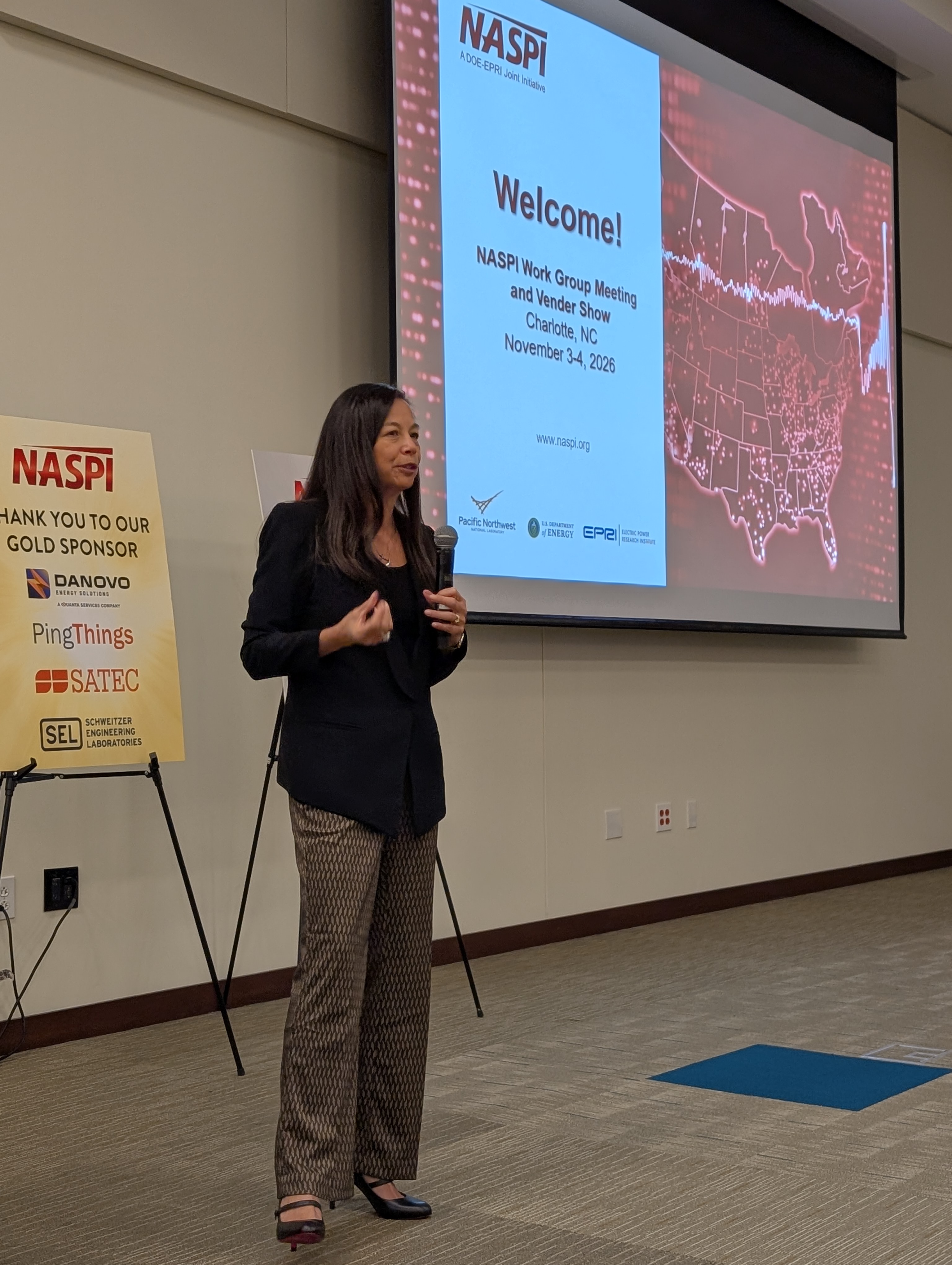
“Having Assistant Secretary Jereza join NASPI created a valuable connection between federal leadership and the people putting measurement technologies to work,” said Jim Follum, PNNL electrical engineer and NASPI principal investigator. “These conversations help connect research priorities with operational needs.”
The meeting focused on practical applications, including detecting grid disturbances, monitoring large computational loads, and translating measurements into operator decisions. PNNL contributions addressed large-load oscillation monitoring, distributed waveform analytics, and collaborative efforts on workforce training and measurement practices.
“Utilities need clear information about how technologies perform and where they can add value,” said Eric Andersen, NASPI project manager. “Sharing operational experience helps the industry evaluate options and make better-informed decisions for the systems we serve.”
Through breakout sessions and the vendor show, participants were provided opportunities to compare approaches, explore technologies, and identify shared challenges across transmission, distribution, and control room applications.
“At PNNL, we work with utilities to develop and test tools that help grid operators recognize disturbances and decide when to act,” said Jim Ogle, PNNL’s Electricity Infrastructure sector director. Through NASPI, utilities and researchers share what they’re learning about how synchronized measurements can help them make better use of the existing grid and keep it reliable as demand grows.”
Visit NASPI’s website to explore resources, connect with task teams, and learn about future meetings.
Published: November 24, 2026