The Community Earth atmospheric Data System (CEDS) provides historical surface flux data that are used for general analysis and also for model validation through comparisons with observations.
Work funded through U.S. Department of Energy’s Federal Energy Management Program (FEMP) and Building Technologies Office (BTO), supporting enhanced building cybersecurity and energy security.
The Data-Model Convergence (DMC) Initiative is a multidisciplinary effort to create the next generation of scientific computing capability through a software and hardware co-design methodology.
The Joint Global Change Research Institute conducts research to advance fundamental understanding of human and Earth systems and provide decision-relevant information for management of emerging global risks and opportunities.
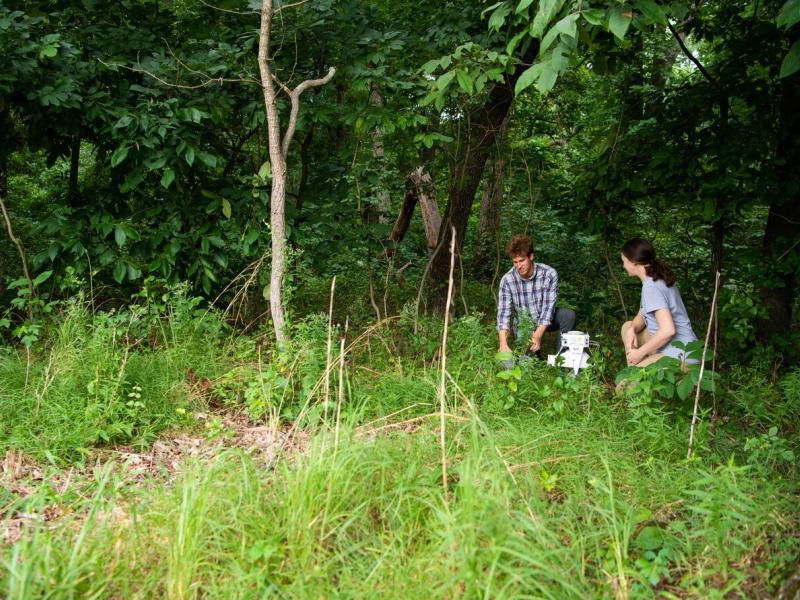
The Molecular Observation Network is a national open science network designed to produce a comprehensive database of molecular and microstructural information on soil, water, microbial communities, and biogenic emissions.
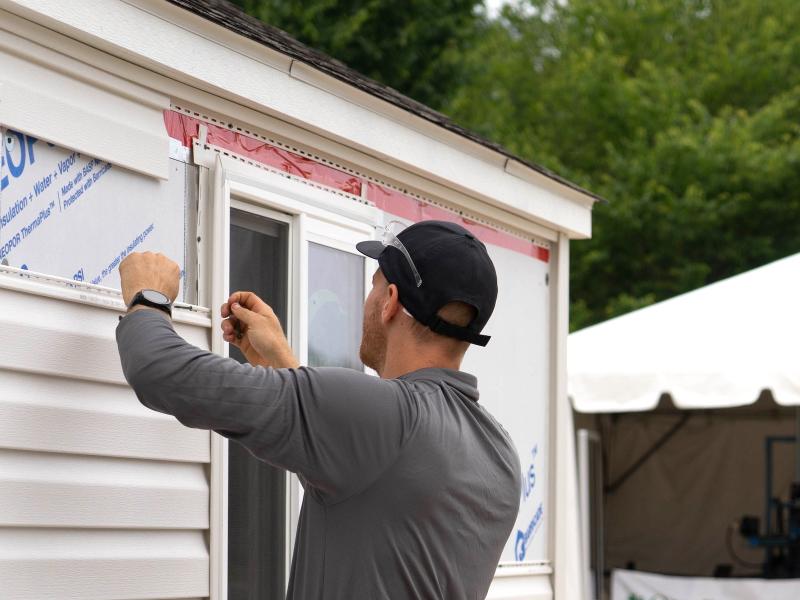
Poorly insulated walls in residential buildings waste an estimated quadrillion+ Btus of energy per year. Upgrading windows and insulation during re-siding projects is a unique, cost-effective opportunity to improve efficiency and comfort.
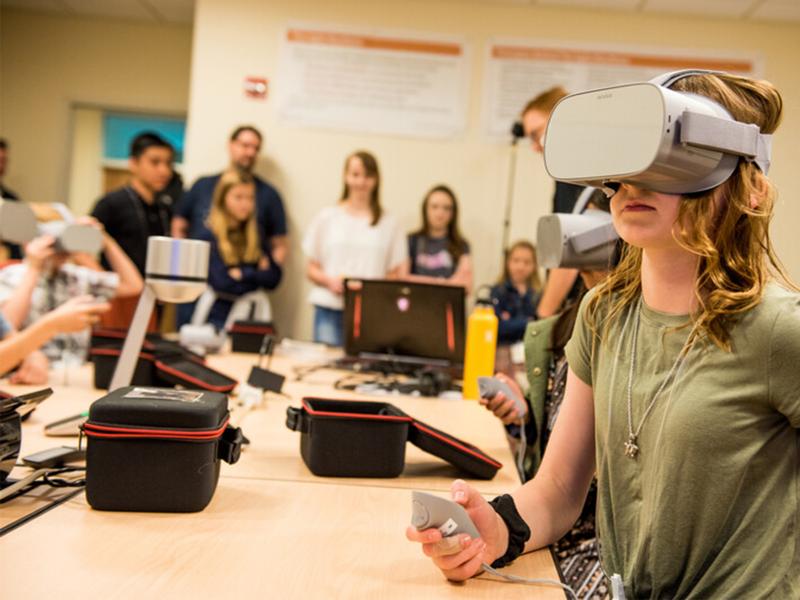
PNNL creates immersive software experiences to meet a variety of challenges. One such challenge in science, technology, engineering, and mathematics (STEM) education is providing quality computer science education for all students.
The Water cycle: Modeling of Circulation, Convection, and Earth system Mechanisms (WACCEM) Scientific Focus Area advances predictive understanding of water cycle variability and change.