Work funded through U.S. Department of Energy’s Federal Energy Management Program (FEMP) and Building Technologies Office (BTO), supporting enhanced building cybersecurity and energy security.
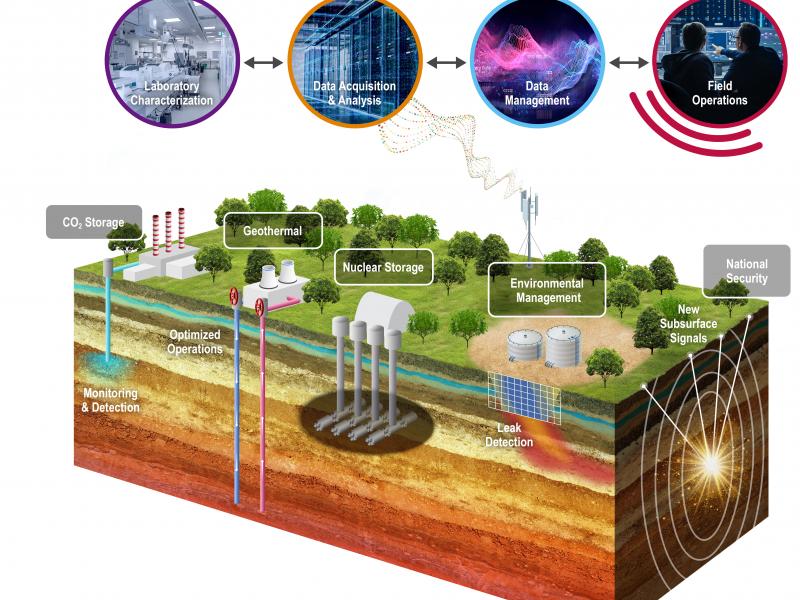
The Data-Model Convergence (DMC) Initiative is a multidisciplinary effort to create the next generation of scientific computing capability through a software and hardware co-design methodology.
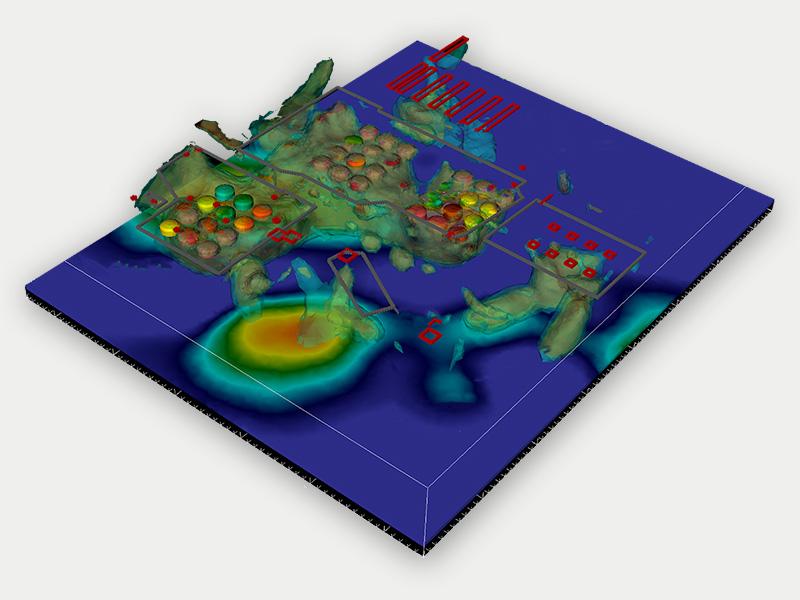
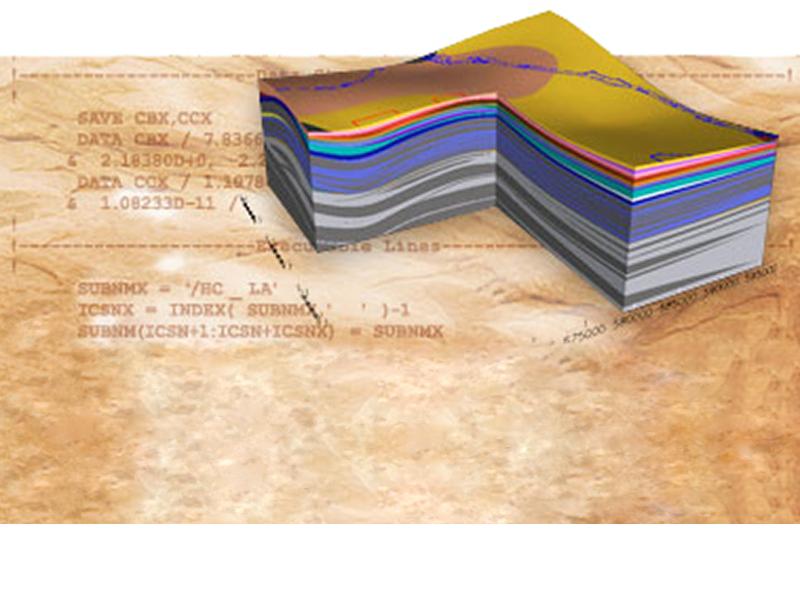
E4D is a 3D geophysical modeling and inversion program designed for subsurface imaging and monitoring using static and time-lapse electrical resistivity tomography (ERT), spectral induced polarization (SIP) and travel-time tomography data.
PNNL is a testbed for the latest research and technologies in marine carbon dioxide removal (mCDR)—leveraging the ocean’s strength as a natural carbon sink to address pressing climate concerns.
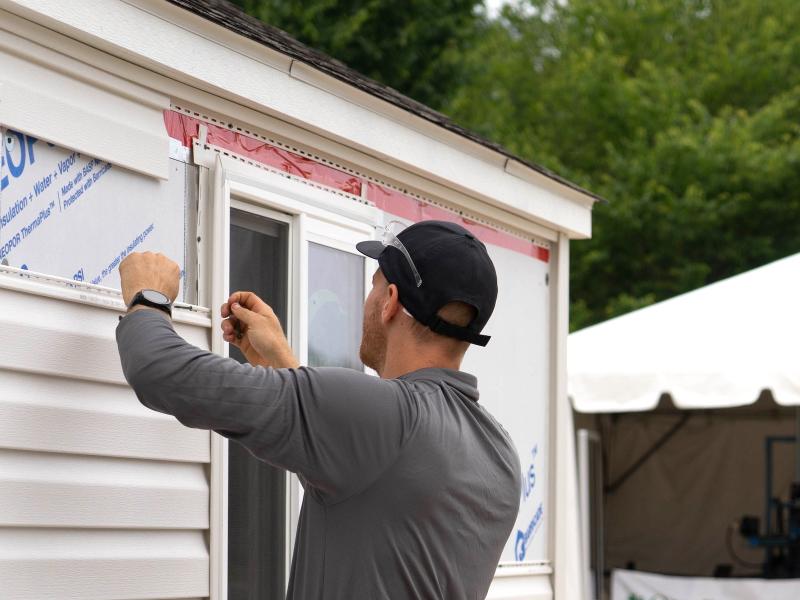
Poorly insulated walls in residential buildings waste an estimated quadrillion+ Btus of energy per year. Upgrading windows and insulation during re-siding projects is a unique, cost-effective opportunity to improve efficiency and comfort.
STOMP is a suite of numerical simulators for solving problems involving coupled flow and transport processes in the subsurface. The suite of STOMP simulators is distinguished by application areas and solved mathematical equations.
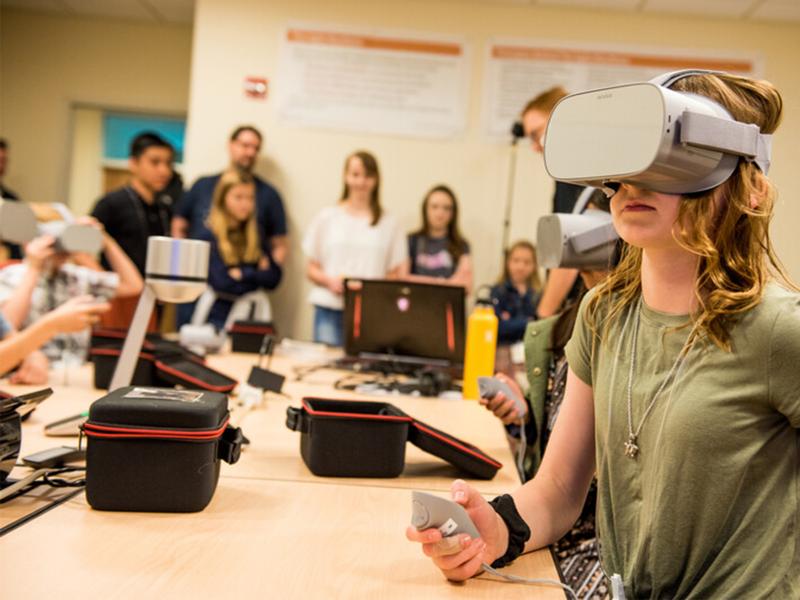
PNNL creates immersive software experiences to meet a variety of challenges. One such challenge in science, technology, engineering, and mathematics (STEM) education is providing quality computer science education for all students.