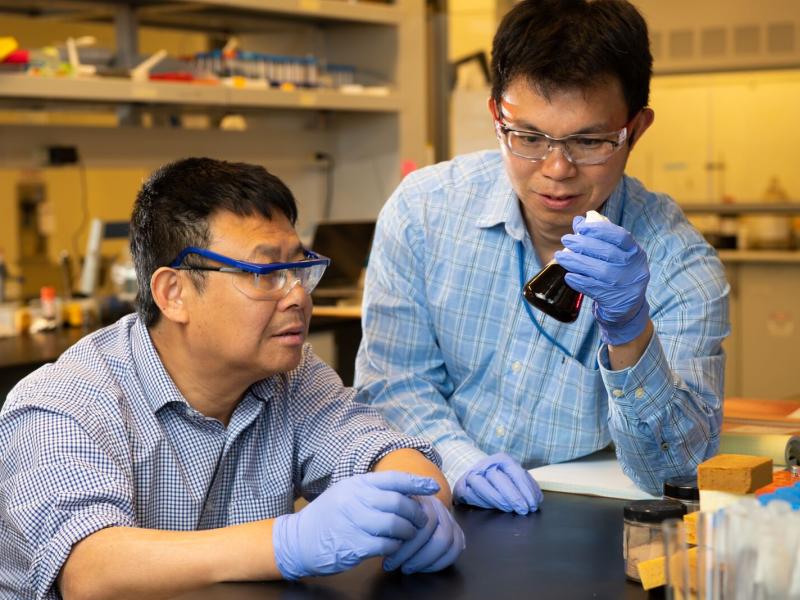
Jingshan Du was named an associate editor of the journal Frontiers for Young Minds, which publishes articles about scientific research for young readers.
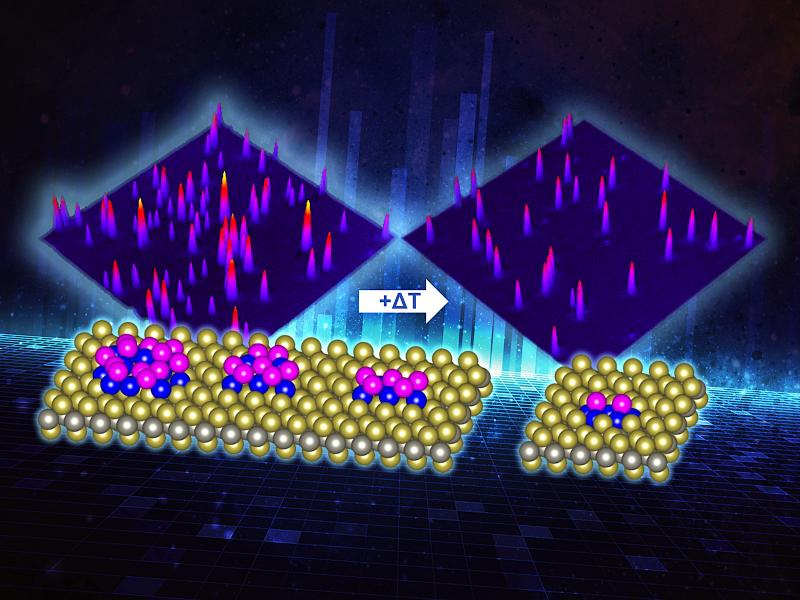
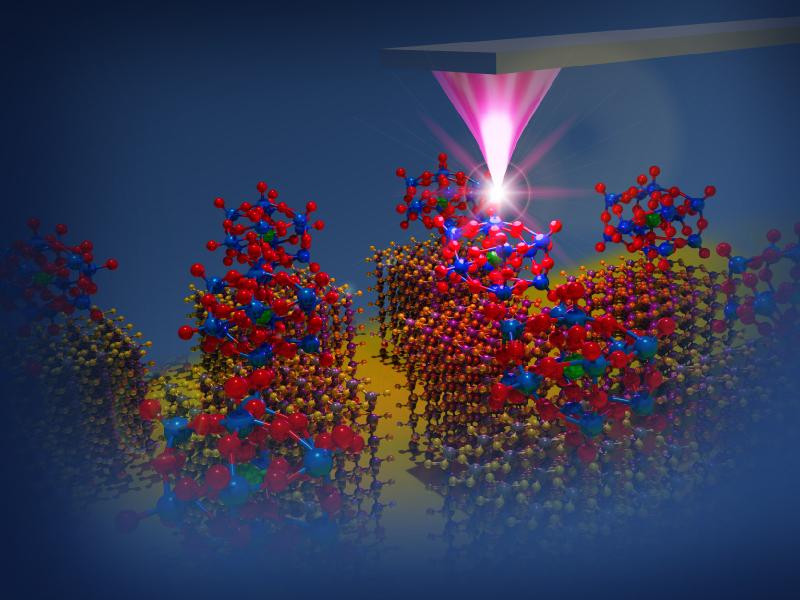
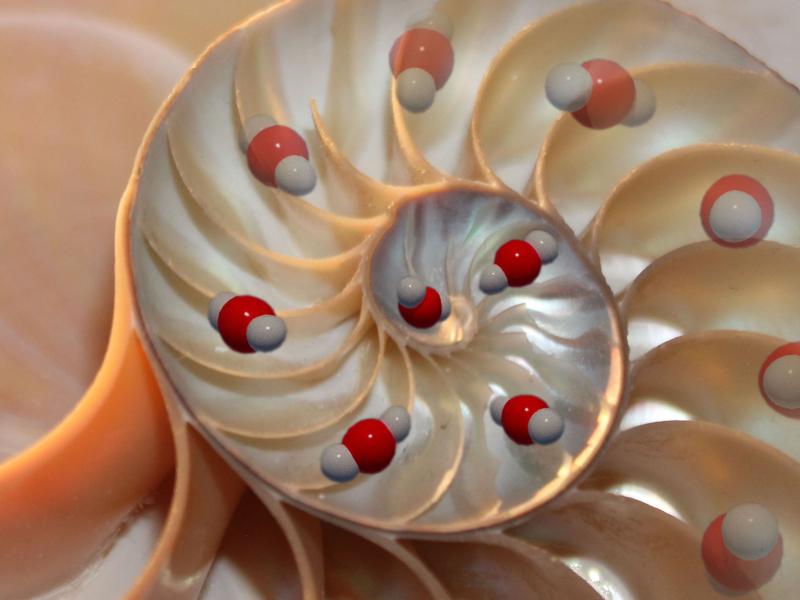
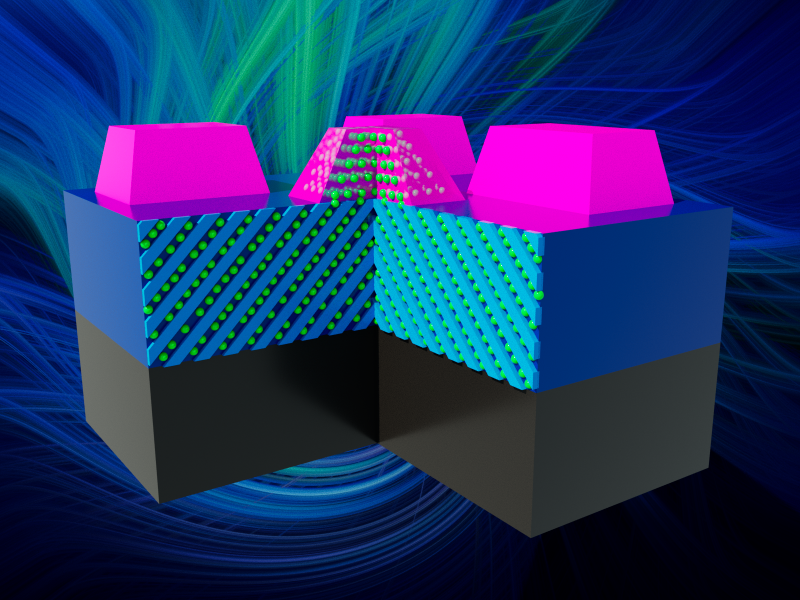
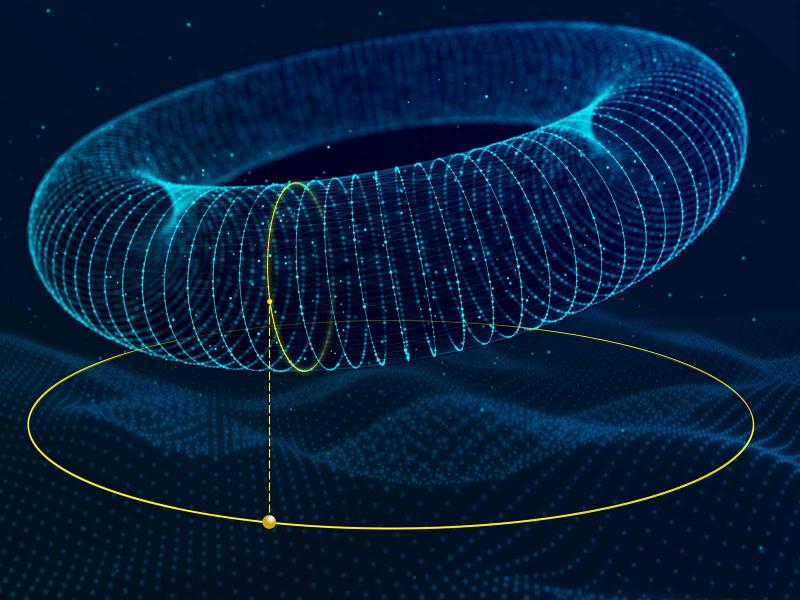
A combined experimental and theoretical study identified multiple interactions that affect the performance of redox-active metal oxides for potential electrochemical separation and quantum computing applications.
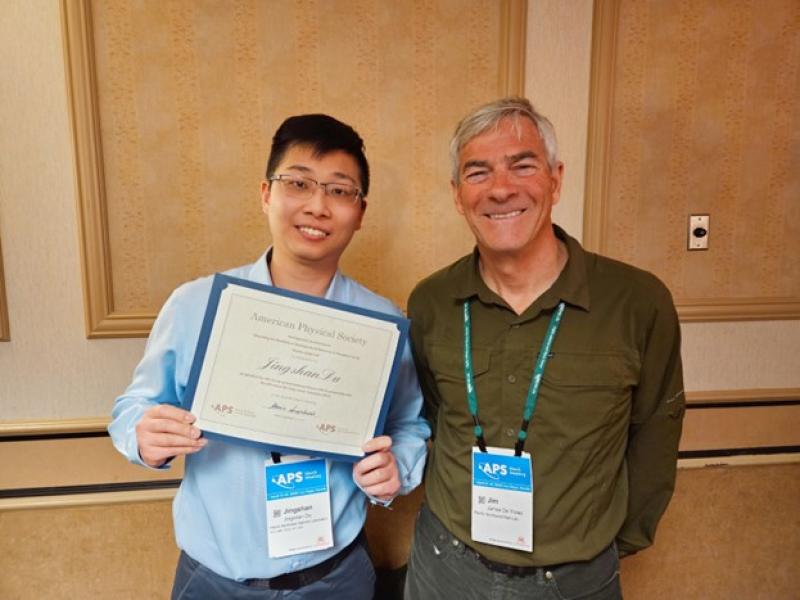
Materials science postdoctoral researcher Jingshan Du received a Distinguished Student Program award to participate in the American Physical Society meeting.
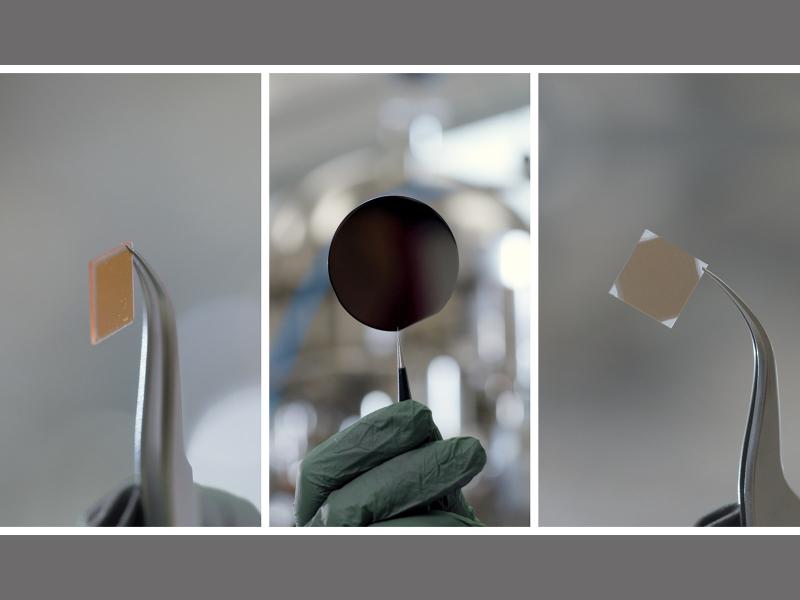
Thin oxide films play an important role in electronics and energy storage. Researchers in PNNL’s film growth laboratory create, explore, and improve new thin oxide films.
Diefenderfer, Earth scientist who focuses on coastal ecosystems at PNNL, recently published “Ten Years of Gulf Coast Ecosystem Restoration Projects Since the Deepwater Horizon Oil Spill,” a cover article.
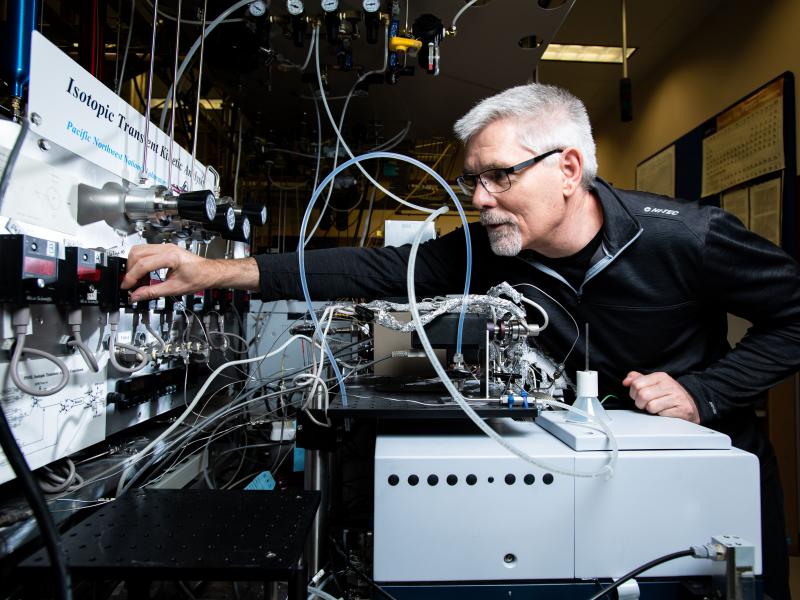
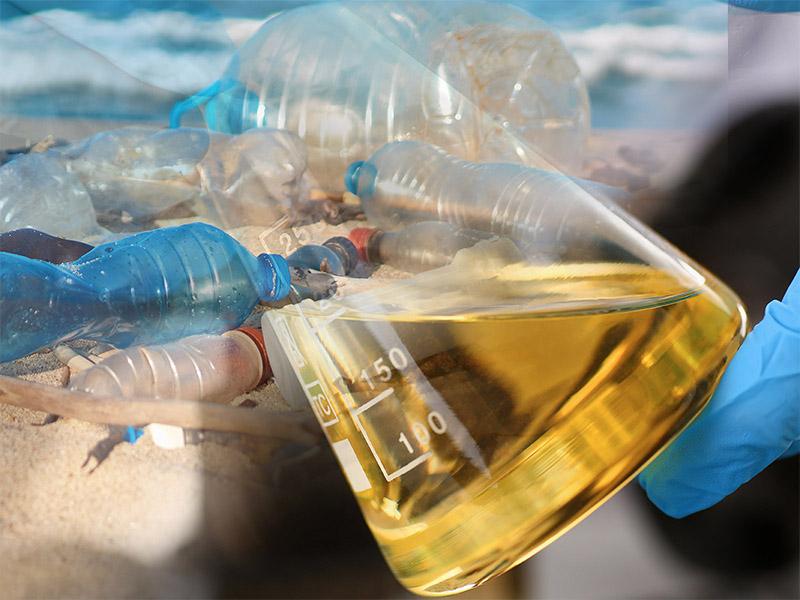
Plastic upcycling efficiently converts plastics to valuable commodity chemicals while using less of the precious metal ruthenium. The method could recycle waste plastic pollution into useful products, helping keep it out of landfills.
Tiffany Kaspar’s work has advanced the discovery and understanding of oxide materials, helping develop electronics, quantum computing, and energy production. She strives to communicate her science to the public.
An innovative artificial enzyme has shown it can chew through woody lignin, an abundant carbon-based substance that stores tremendous potential for renewable energy and materials.
ICON science is a Department of Energy-developed framework to enhance scientific outcomes via more intentional design of research efforts across all domains of science.
An analysis of land use in watersheds that supply drinking water to over a hundred United States cities identified a wide range of exposure to potential contamination.
A bioinspired molecule can direct gold atoms to form perfect five-pointed nanoscale stars. The feat is the product of a collaborative team from PNNL and the University of Washington.