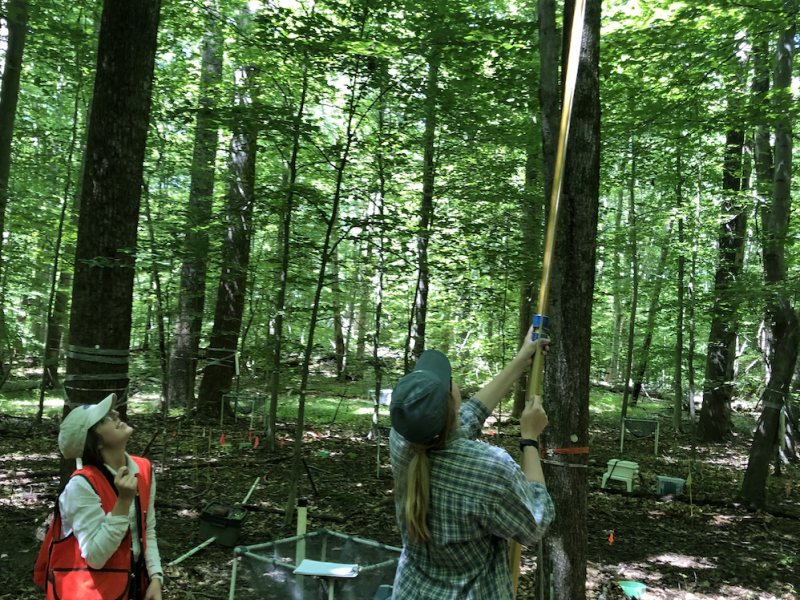
This study demonstrated that a large-scale flooding experiment in coastal Maryland, USA, aiming to understand how freshwater and saltwater floods may alter soil biogeochemical cycles and vegetation in a deciduous coastal forest.
Waste Management Symposia ‘Paper of Note’ and ‘Superior Paper’ awards recognize PNNL contributions to advancing radioactive waste and materials management.
PNNL has named Biomedical Scientist Tom Metz, an expert on metabolomics and multi-omics within the Biological Sciences Division, a 2023 Laboratory Fellow.
By adding rain, snow, and rain-on-snow precipitation data to a background model, a new scheme pinpoints local flood risks in order to improve the design of small-scale hydrological infrastructure.
Small teams in the Biological Sciences Division at PNNL and at EMSL—the Environmental and Molecular Sciences Laboratory, an Office of Science user facility at PNNL—are pros at preparation.
Using a combination of satellite data and modeling to study the temperatures and humidity people might feel in urban areas, researchers have pinpointed who in the U.S. is most vulnerable to heat stress.