Contributions from researchers across Pacific Northwest National Laboratory (PNNL) were recently recognized in the preliminary findings of a Secretary of Energy Advisory Board (SEAB) report.
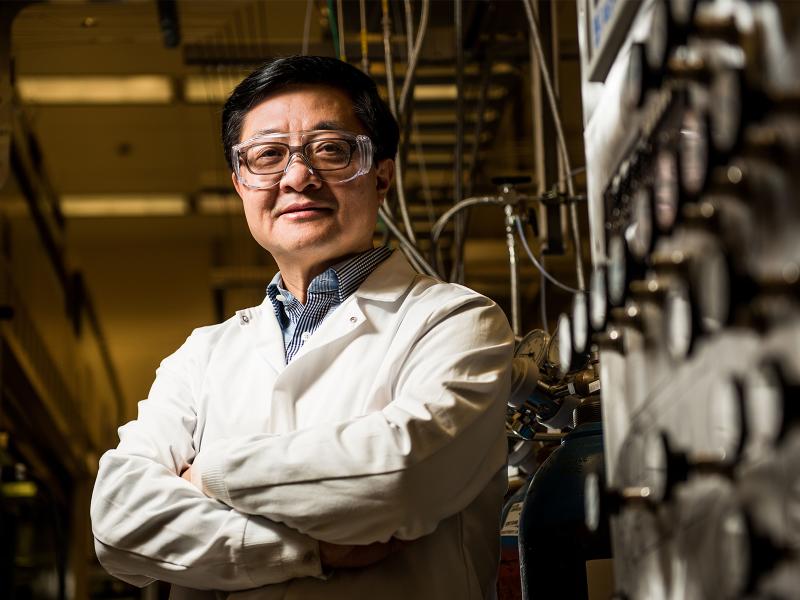
Yong Wang, associate director of PNNL’s Institute for Integrated Catalysis, has been recognized with 2021 American Chemical Society’s E.V. Murphree Award in Industrial and Engineering Chemistry.
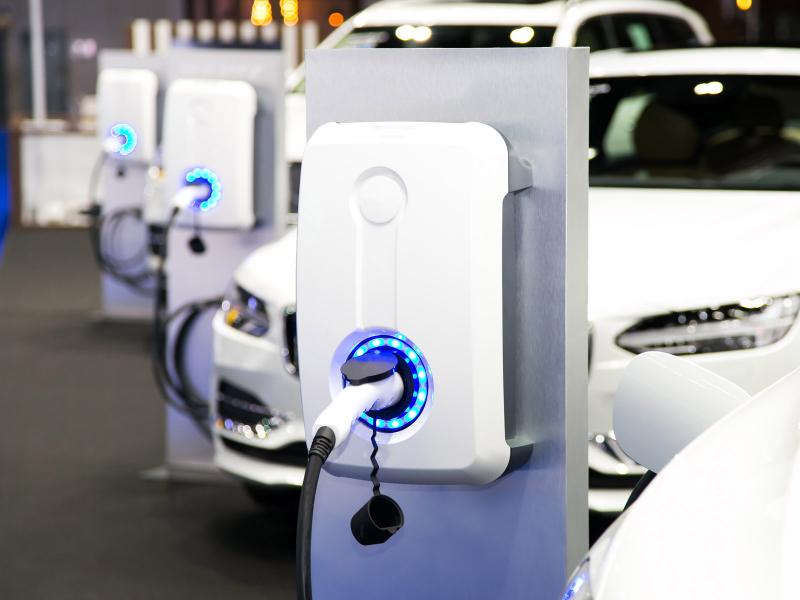
A new PNNL report says the western U.S. power system can handle large-scale vehicle electrification up to 24 million vehicles through 2028, but more than that and cities could start feeling the squeeze.
PNNL's Northwest Regional Technology Center interviews Assistant Chief of Resource Management for Seattle Fire Department Willie Barrington about how his team faced the unknown when the COVID-19 pandemic hit Seattle, Washington.
PNNL and Oklahoma State University join forces to understand the chemistry of sodium-ion and potassium-ion batteries thanks to an award from the U.S. Department of Energy's Established Program to Stimulate Competitive Research (EPSCoR).
Their consistency and predictability makes tidal energy attractive, not only as a source of electricity but, potentially, as a mechanism to provide reliability and resilience to regional or local power grids.
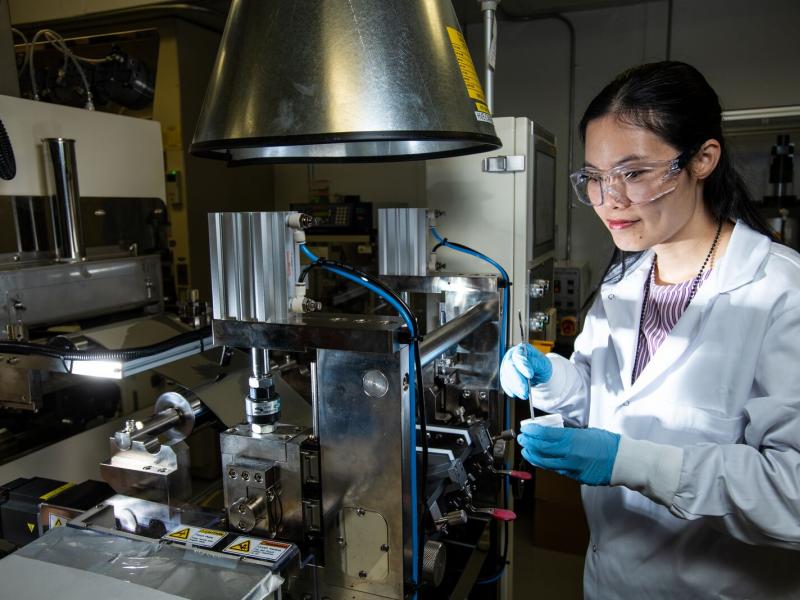
Researchers at PNNL have developed a software tool that helps universities, small business, and corporate developers to design better batteries with new materials that hold more energy.
Darrell Herling and two national laboratory collaborators were recently recognized by DOE for their leadership in the Powertrain Materials Core Program.
PNNL’s Karthikeyan Ramasamy was elected to a three-year term as a director in the American Institute of Chemical Engineers’ Fuels and Petrochemicals Division.
PNNL and WSU researchers have improved the performance and life cycle of sodium-ion battery technology to narrow the gap with some lithium-ion batteries.
To help spur economic development and assist in the battle against COVID-19, PNNL is making available its entire portfolio of patented technologies on a research trial basis—at no cost—through the end of 2020.
A technology developed by researchers at the U.S. Department of Energy’s Pacific Northwest National Laboratory could pave the way for increased fuel economy and lower greenhouse gas emissions as part of an octane on demand fuel-delivery.
PNNL’s Patrick Balducci delivered an information-packed tutorial on grid energy storage valuation at the Naval Postgraduate School in Monterey, California.
Ten staff members from PNNL were invited to attend and lead the various breakout sessions at the Department of Energy Office of Science 5G Enabled Energy Innovation Workshop (5GEEIW), which was held in early March.
Researchers at PNNL have come up with a novel way to use silicon as an energy storage ingredient, replacing the graphite in electrodes. Silicon can hold 10 times the electrical charge per gram, but it comes with problems of its own.
The Energy Storage System Safety and Reliability Forum at PNNL brought together more than 120 energy storage experts from the U.S. Department of Energy, the national laboratories, utilities, industry and academia.
Verizon recently announced a partnership that will make Pacific Northwest National Laboratory the U.S. Department of Energy’s first national laboratory with Verizon 5G ultra wideband wireless technology.
David Manz, a PNNL cybersecurity scientist working to build more resilient architectures for the nation’s critical infrastructure, was inducted to the National Science Foundation’s CyberCorps: Scholarship for Service (SFS) Hall of Fame.