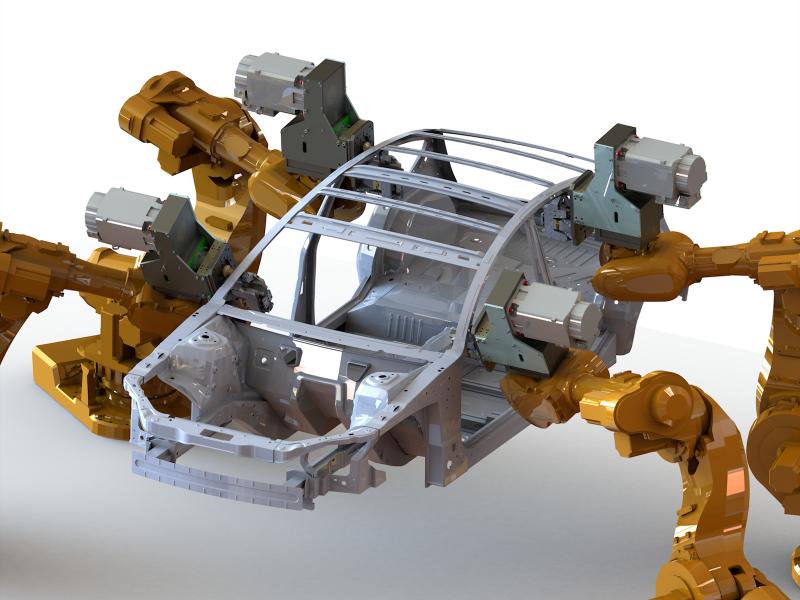
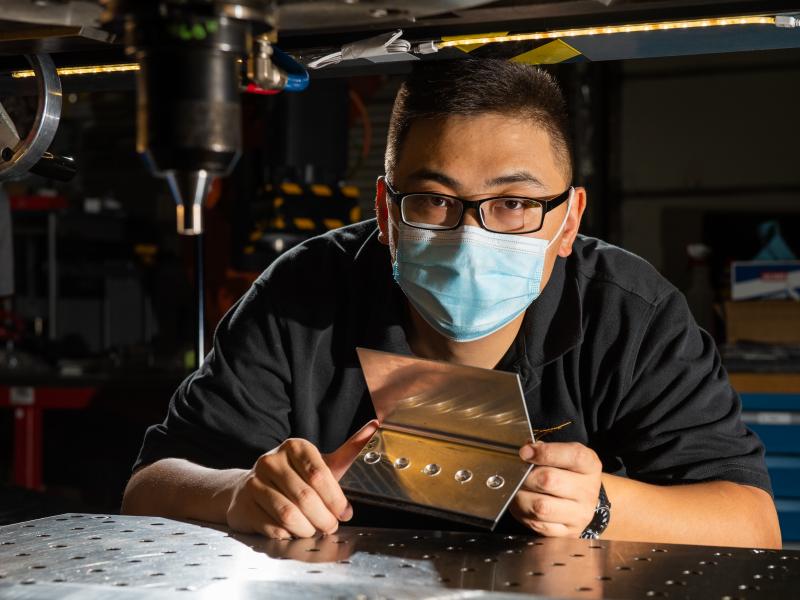
A breakthrough at PNNL could free friction stir from current constraints—and open the door for increased use of the advanced manufacturing technique on commercial assembly lines.
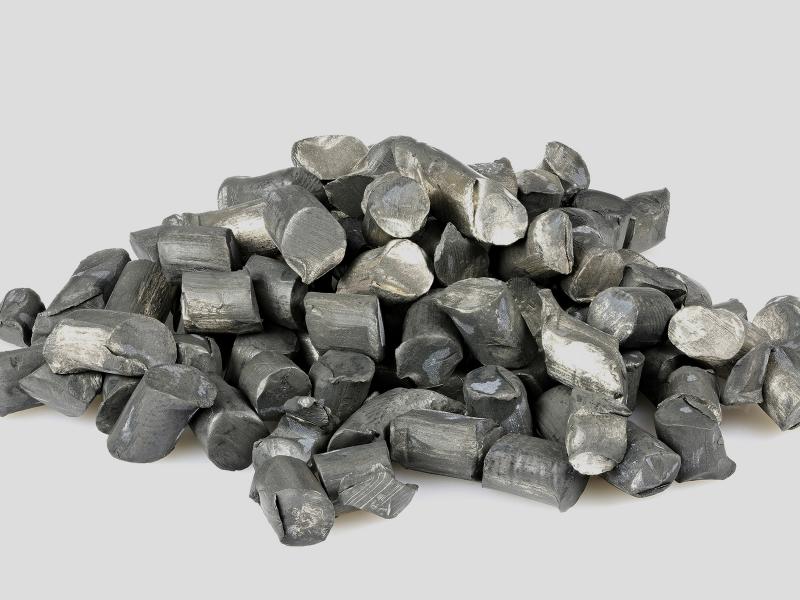
By combining computational modeling with experimental research, scientists identified a promising composition that reduces the need for a critical material in an alloy that can withstand extreme environments.
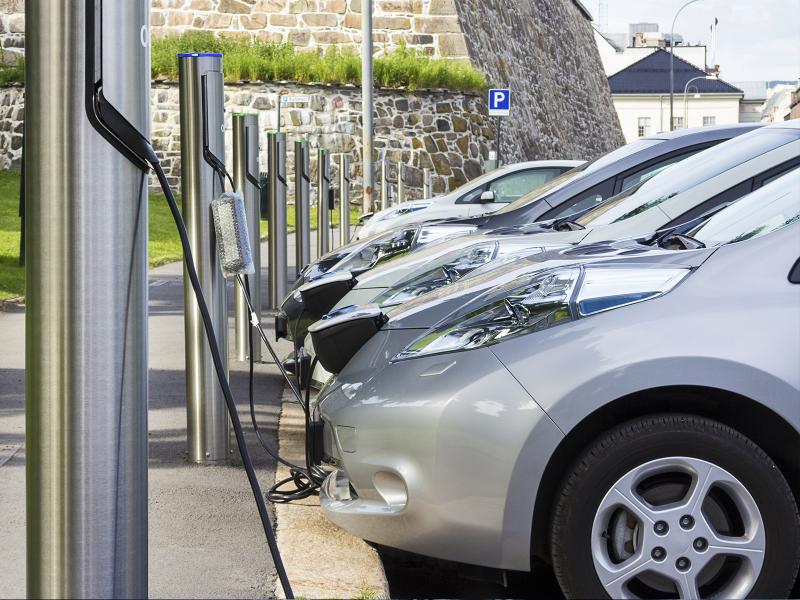
EZBattery Model allows energy storage researchers to more quickly and easily identify the best performing battery designs without the need for extensive physical prototyping or computationally expensive simulations.
PNNL researchers have developed a new, physics-informed machine learning model that accurately predicts how heat accumulates and dissipates during friction stir processing.
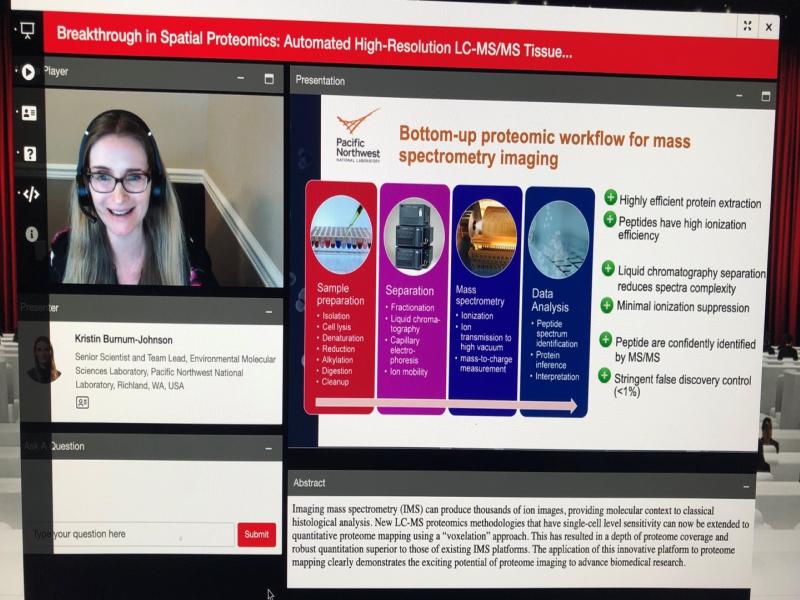
Spatial proteomics enables researchers to link protein measurements to features in the image of a tissue sample, which are lost using standard approaches.
New research findings published in Science Advances (November 2022), help explain the progression of Alzheimer-related dementia in each patient. The findings outline a biological classification system that predicts disease severity.
A paper published last year by scientists at Pacific Northwest National Laboratory was featured in the 2021 Editor’s Choice collection for the Cell Reports Physical Science journal.
Rotational Hammer Riveting, developed by PNNL, joins dissimilar materials quickly without preheating rivets. The friction-based riveting enables use of lightweight magnesium rivets and also works on aluminum and speeds manufacturing.
The Washington State Academy of Sciences consists of more than 300 elected members who are nationally recognized for their scientific and technical expertise.