The Facility Cybersecurity toolkit, developed by PNNL, is designed for federal facilities to help implement the presidential executive order on cybersecurity, but it is also available for commercial facilities without charge.
PNNL building energy-efficiency expert Theresa Gilbride has been invited to participate in a new task group that will provide guidance to make homes more resistant to hurricanes and high winds.
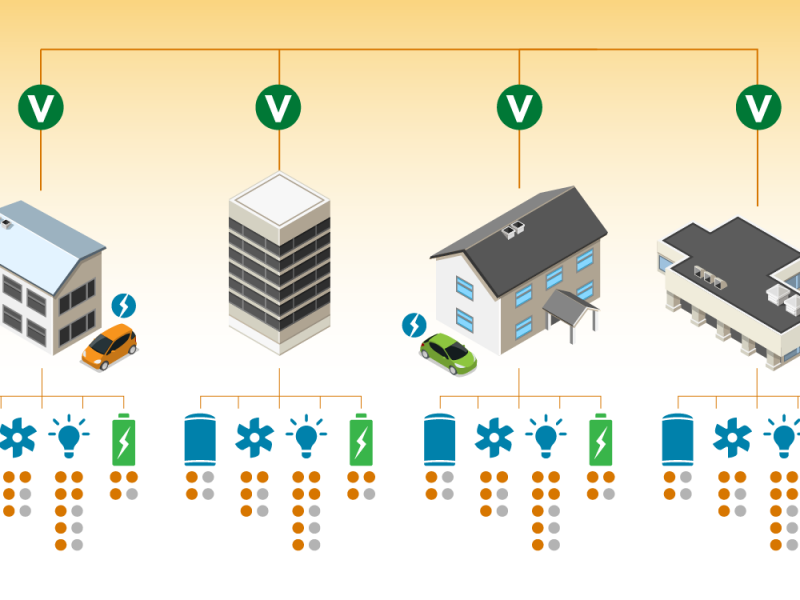
The PNNL-developed VOLTTRON™ software platform’s advancement has benefited from a community-driven approach. The technology has been used in buildings nationwide, including most recently on a university campus.
PNNL mechanical engineer Stephanie Johnson has been recognized by DOE’s Advanced Manufacturing Office for making a significant impact in energy-efficiency research.
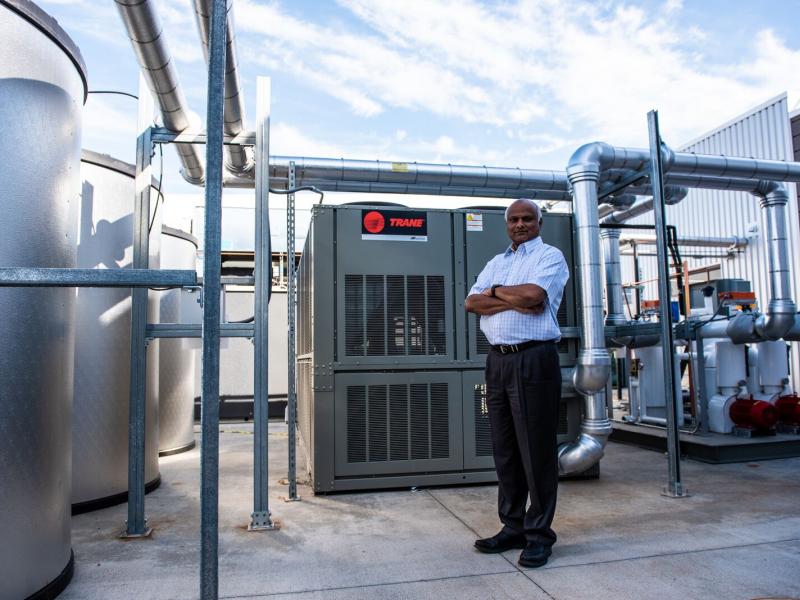
PNNL engineer Srinivas Katipamula was recognized by the American Council for an Energy-Efficient Economy with a 2020 Champion of Energy Efficiency Award.
Contributions from researchers across Pacific Northwest National Laboratory (PNNL) were recently recognized in the preliminary findings of a Secretary of Energy Advisory Board (SEAB) report.
Four researchers from PNNL were recently honored for contributing to two U.S. Department of Energy Office of Energy Efficiency and Renewable Energy initiatives that support the blue economy and building-grid integration.
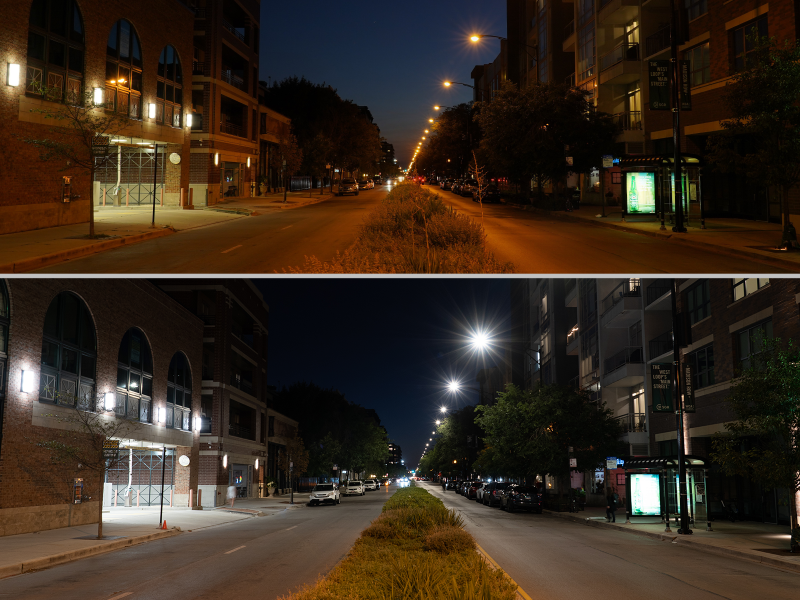
PNNL lighting experts partnered with the city of Chicago to help identify the best street lighting technology and field validation approaches to Chicago’s outdoor lighting modernization effort.
By studying discrete functional components of the soil microbiome at high resolution, researchers obtained a more complete picture of soil diversity compared to analysis of the entire soil community.
Six months into a pandemic that has claimed more than 570,000 lives worldwide, scores of PNNL scientists are engaged in dozens of projects in the fight against COVID-19.
Accurate identification of metabolites, and other small chemicals, in biological and environmental samples has historically fallen short when using traditional methods.
A new study using proteogenomics to compare cancerous tissue with normal fallopian tube samples advances insights about the molecular machinery that underlies ovarian cancer.
Sam Chatterjee, a senior operations research scientist at PNNL, was recently appointed as associate editor for the specialty section, “Water and the Built Environment” at the peer-reviewed, open access journal Frontiers in Water.
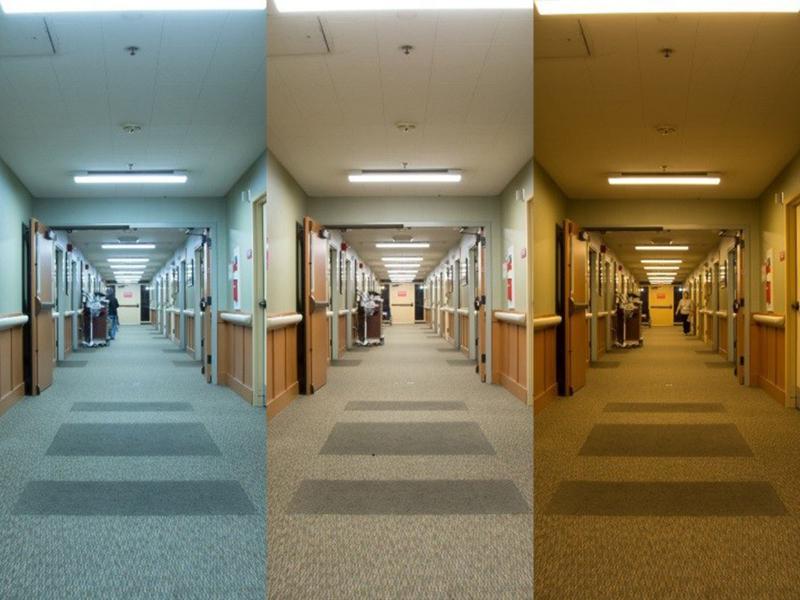
PNNL study evaluated "tunable" lighting and its effects on sleep at study in a California nursing home. Tunable refers to the ability to adjust LED light output and the warmth or coolness of the light color.
The Energy and Environmental Building Alliance recently invited PNNL's Theresa Gilbride to a three-year term on its advisory board and join the board’s technical committee.