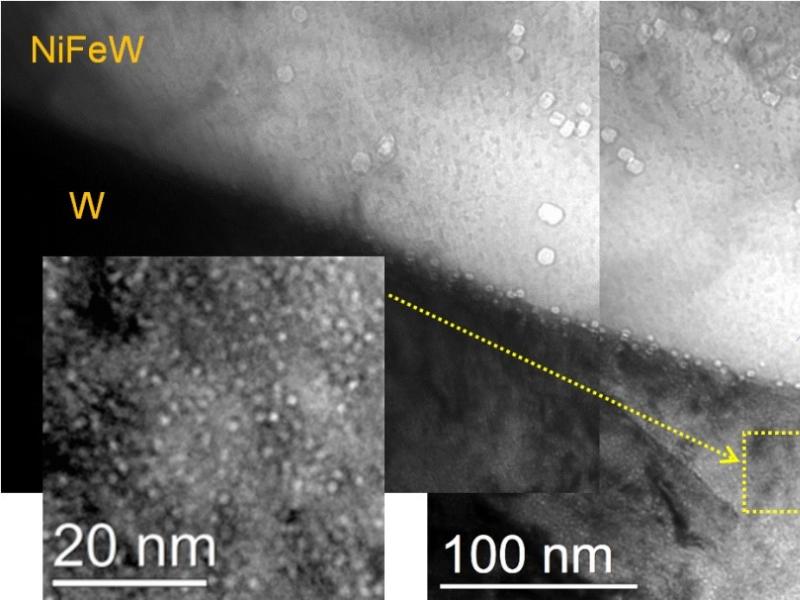
IDREAM researchers assess the potential of photon-in/photon-out XFEL techniques to explore early time reaction steps and ultimately improve nuclear waste processing strategies.
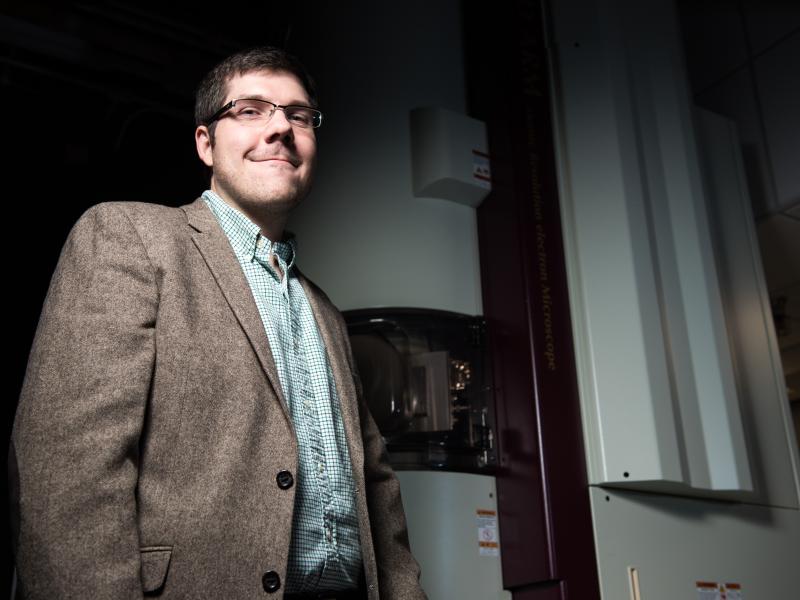
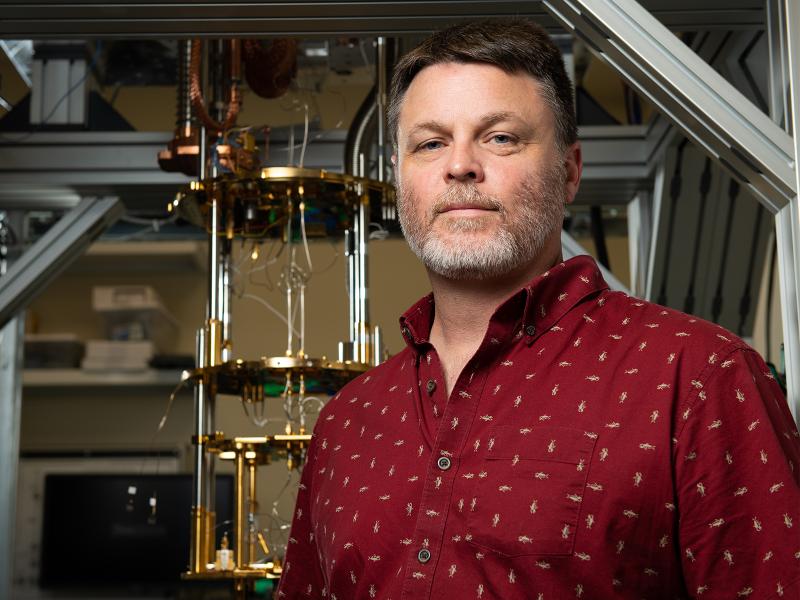
Steven Spurgeon, a materials scientist and microscopy researcher at PNNL, has accepted an affiliate associate professorship at the University of Washington Department of Physics.
The annual Secretary’s Honor Awards recognize federal and contractor employees who have shown exceptional creativity, drive, and commitment to projects that have lasting impact on the Department of Energy's mission.
Two PNNL studies that describe the potential value of offshore wind off the Oregon Coast and distributed wind in Alaska were published in the journal Energies.
PNNL engages in expert panels to address emerging policy issues surrounding deep space exploration; forms new partnership with University of Washington Space Policy and Research Center.
The Energy Storage for Social Equity Initiative will help up to 15 disadvantaged communities consider energy storage technologies to meet local energy goals.
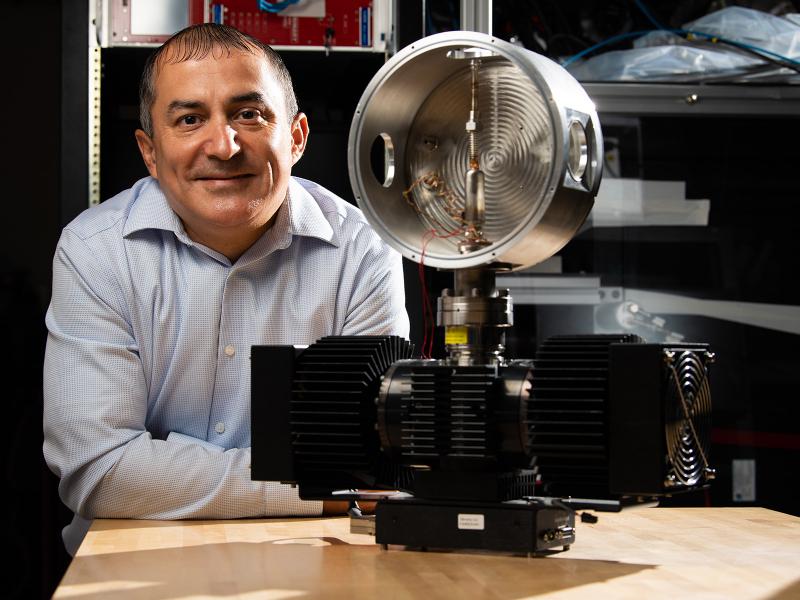
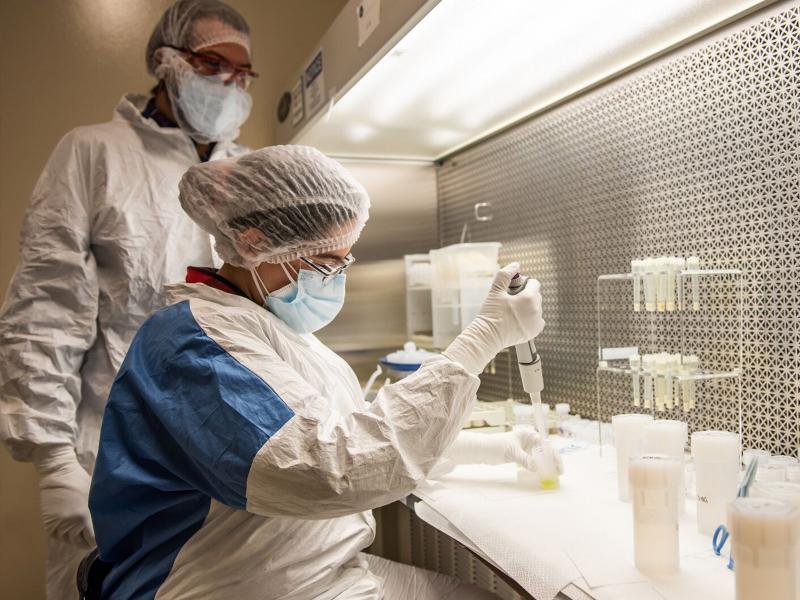
Rey Suarez is a nuclear nonproliferation researcher who is working on equipment that can detect radionuclides emitted from a nuclear explosion as part of treaty monitoring.
A paper by PNNL scientists on nuclear explosion monitoring technology is among top articles in nuclear instruments journal to draw most social media “buzz.”
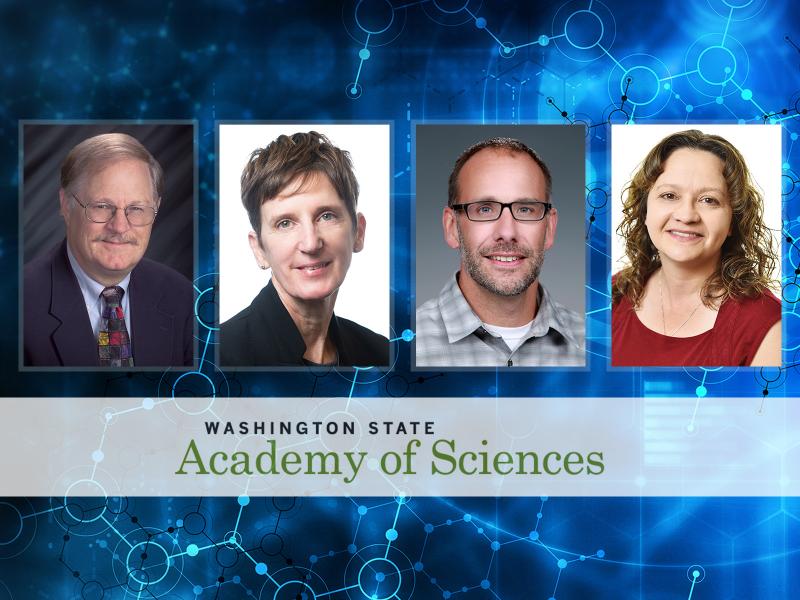
The Washington State Academy of Sciences consists of more than 300 elected members who are nationally recognized for their scientific and technical expertise.
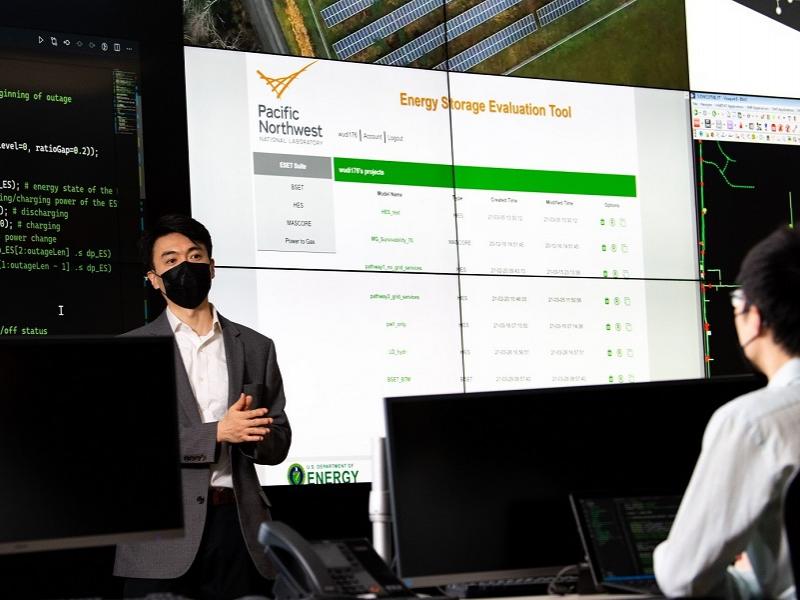
PNNL’s new Hydrogen Energy Storage Evaluation Tool allows users to examine multiple energy delivery pathways and grid applications to maximize benefits.
PNNL provided ultra-low measurements of argon-39 to date groundwater as part of a collaborative study of the aquifer in California’s San Joaquin Valley. PNNL is one of only a few laboratories worldwide with this capability.
As a physicist at PNNL, Jon Burnett’s work is about developing instruments to detect ultra-trace radionuclide signatures, analyze samples from around the world to look for evidence of nuclear explosions, and then interpret that information.
Project manager Larry Morgan has spent half a century at Pacific Northwest National Laboratory—marking one of the longest tenures in the laboratory’s history.