A team from PNNL joined the Department of Homeland Security Science and Technology Directorate and first responders from across the country to evaluate commercially available unmanned ground vehicles for emergency response.
A perspective paper recently published by PNNL researchers underscores how the Lab’s research on electrochemical energy storage is preparing the electric grid to meet the energy needs of the future.
PNNL has formed a partnership with the Orlando-based firm Refinity, which has licensed a key process from PNNL that will help the company convert mixed plastic waste into valuable industrial products like chemicals, plastics, and fuels.
PNNL and Maritime Blue, a Washington state-based strategic alliance promoting maritime business in the Pacific Northwest, have released a report highlighting challenges—and solutions—for reinvigorating shipbuilding in the region.
David Wunschel, a chemist and Laboratory Fellow, participated on a panel focused on how emerging technologies are transforming CBRN defense, detection, and response across military and government operations.
Matteo Muratori, director of transportation and industry programs at PNNL, has been named to the 2026–2028 cohort of the National Academies of Sciences, Engineering, and Medicine’s New Voices Program.
Utilities across Washington join PNNL and the Washington State Department of Commerce to explore new tools and strategies for building resilient and reliable power systems.
Distributed science is thriving at PNNL, where scientists share data and collaborate with researchers around the world to increase the impact of the work.
From developing new energy storage materials to revealing patterns of Earth’s complex systems, studies led by PNNL researchers are recognized for their innovation and influence.
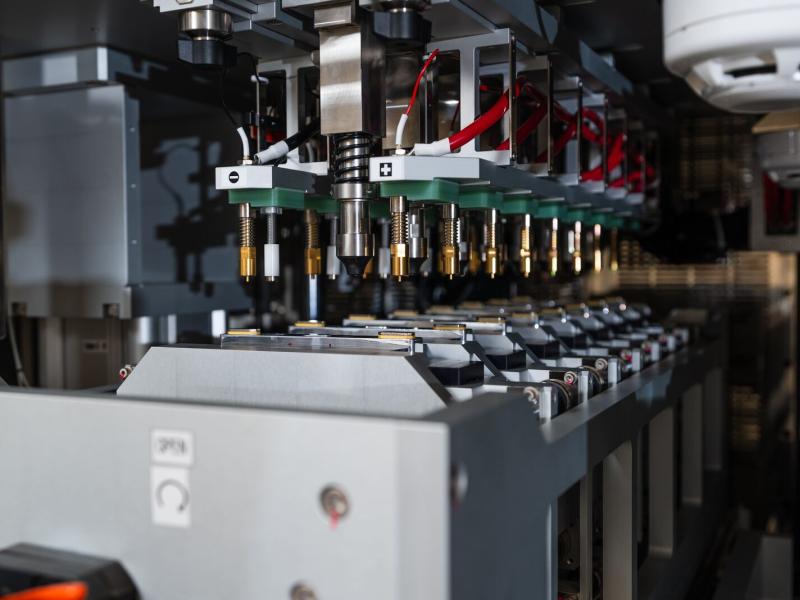
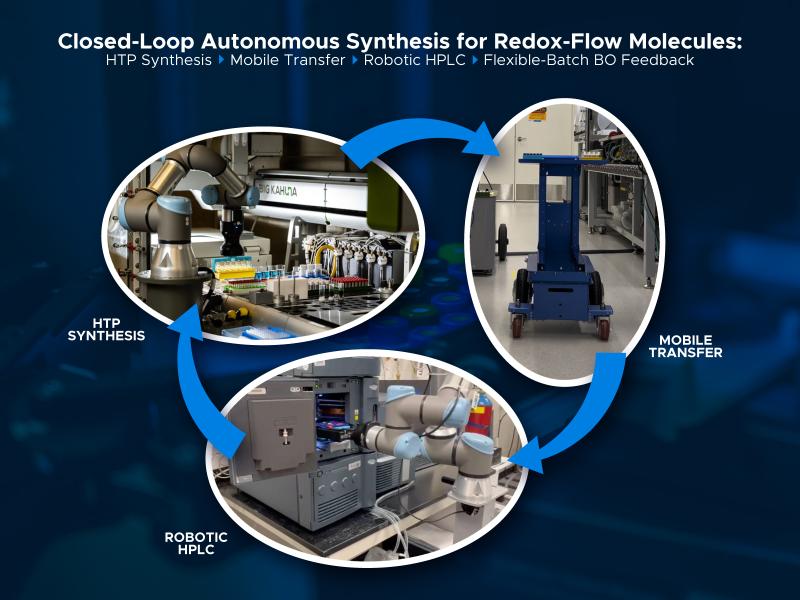
A closed-loop workflow brings together digital and physical frameworks to advance high-throughput experimentation on redox-active molecules in flow batteries.