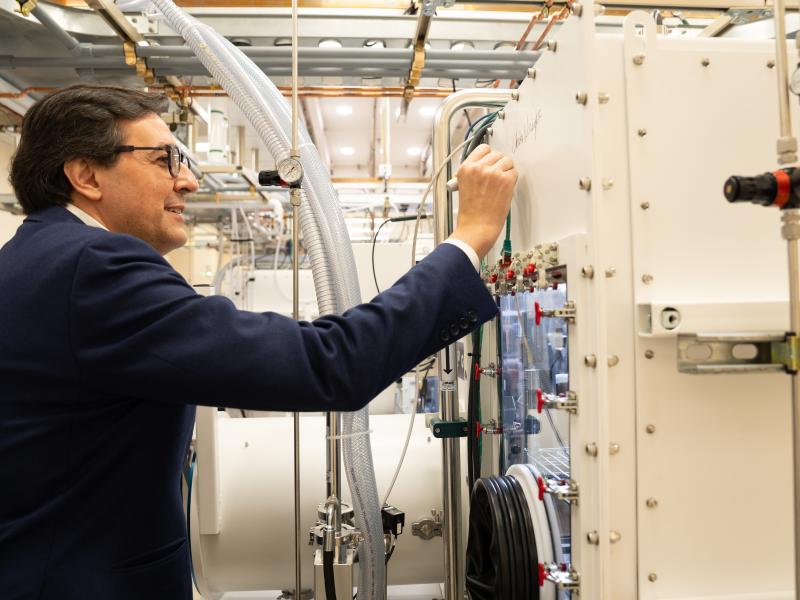
Thomas Komay, Ian Parzyszek, Hannah Patz, and Michael Romero are leveraging their backgrounds in radiochemistry, math, and nuclear engineering to advance NFTI projects. They gained a deeper understanding of nuclear forensics.
Researchers discovered that frustrated electric forces drive a novel precipitation pathway called microphase separation and identified a precursor intermediate state of ordered ion networks.
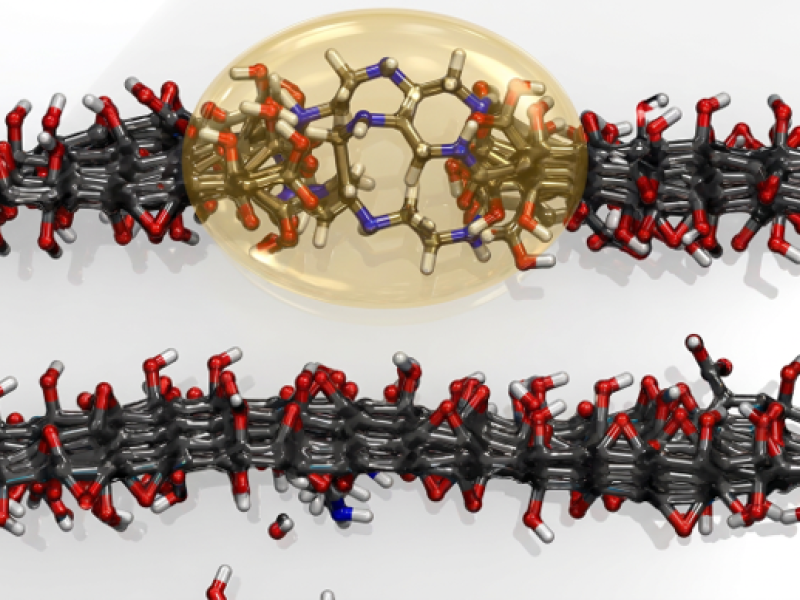
Amine functionalized graphene oxide yields laminates with an enhanced capacity to adsorb rare earth elements, improved water transport, and greater stability for effective membrane-based separation of critical minerals.
Research provided definitive spectroscopic characterization, reactivity, and deactivation of a reactive monomeric diphosphine-copper hydride intermediate.
A team from PNNL joined the Department of Homeland Security Science and Technology Directorate and first responders from across the country to evaluate commercially available unmanned ground vehicles for emergency response.
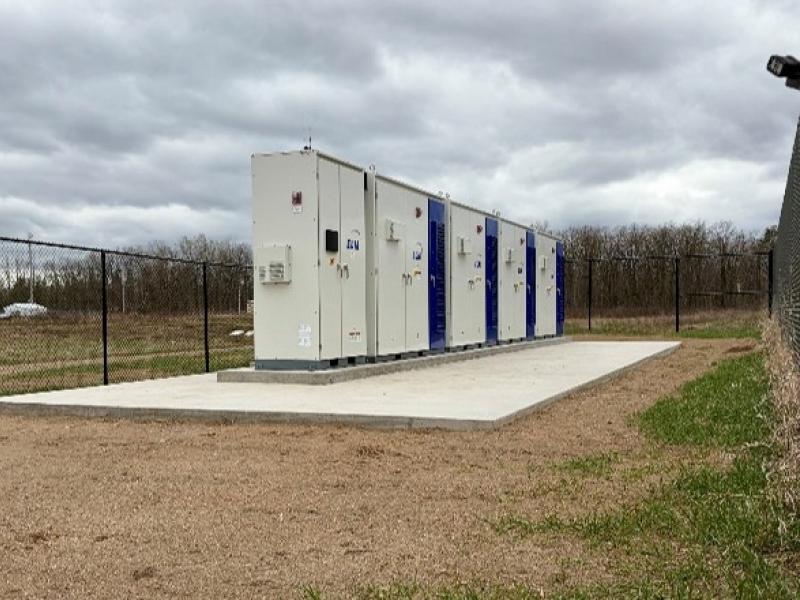
A perspective paper recently published by PNNL researchers underscores how the Lab’s research on electrochemical energy storage is preparing the electric grid to meet the energy needs of the future.