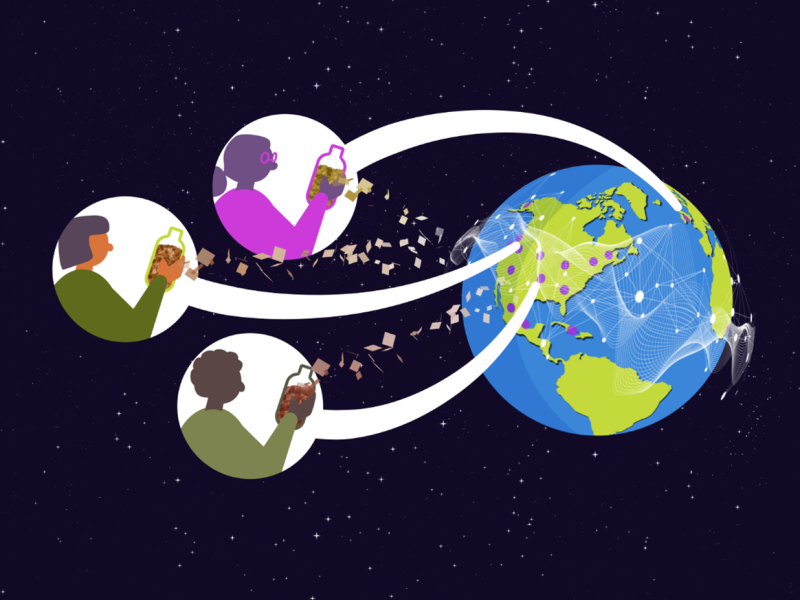
Distributed science is thriving at PNNL, where scientists share data and collaborate with researchers around the world to increase the impact of the work.
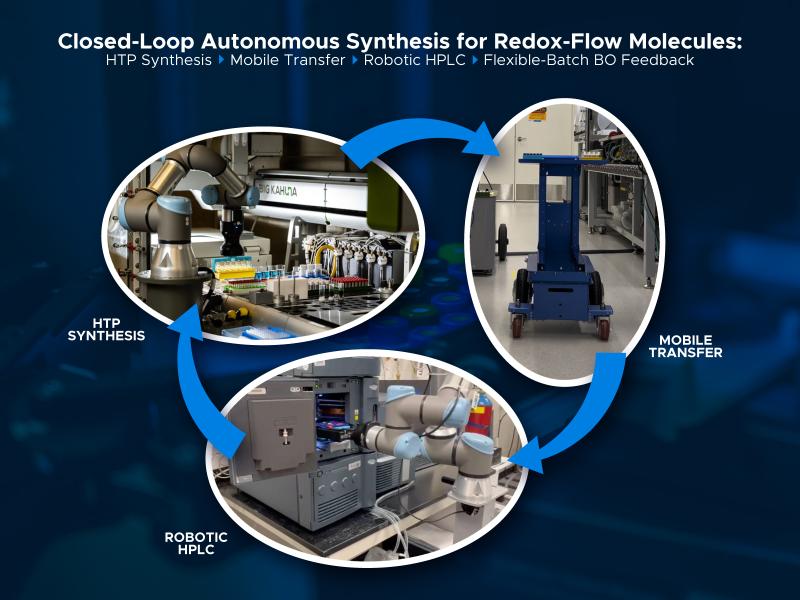
A closed-loop workflow brings together digital and physical frameworks to advance high-throughput experimentation on redox-active molecules in flow batteries.
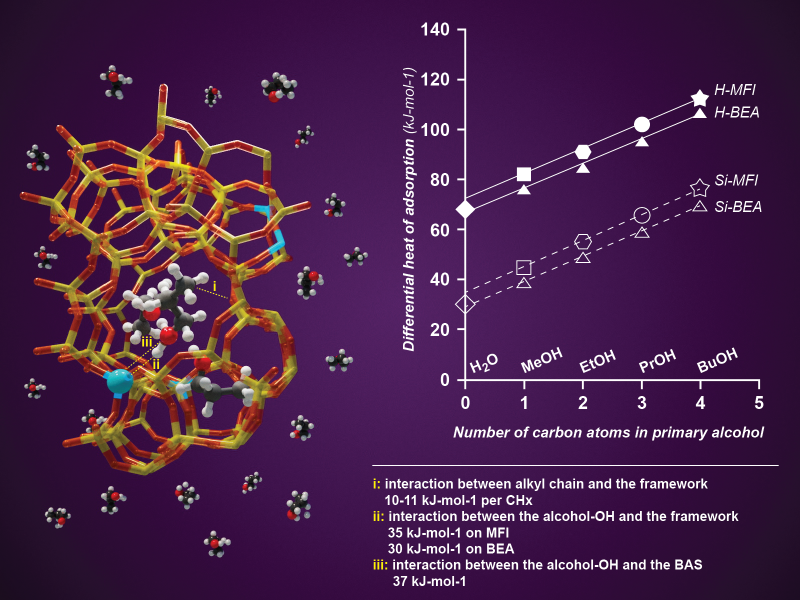
A comprehensive investigation provides quantitative data on the interaction between zeolite pores and linear alcohols, with hydroxyl group interactions playing the largest role.
PNNL researchers have found yet another way to turn trash into treasure: using algal biochar, a waste production from hydrothermal liquefaction, as a supplementary material for cement.
A switchable single-atom catalyst is activated in the presence of surface intermediates and reverts to its stable inactive form when the reaction is completed.
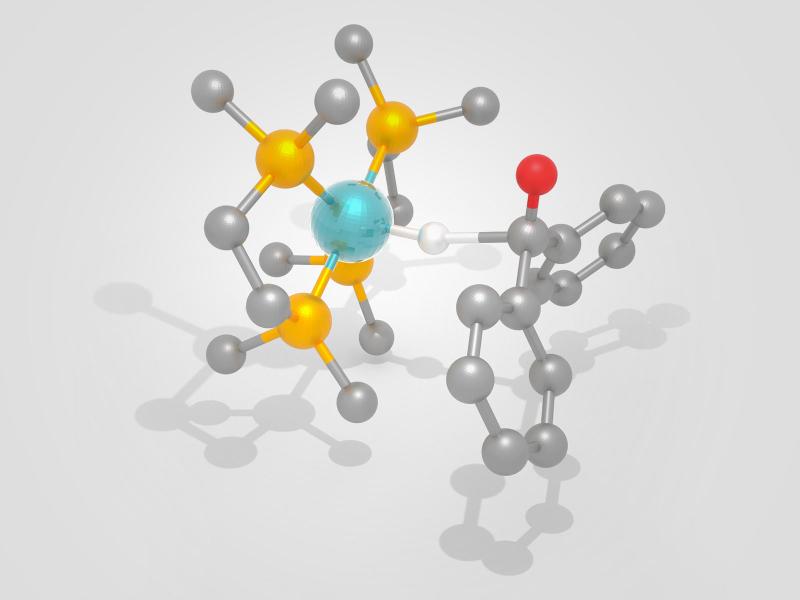
Catalysts that efficiently transfer hydrogen for storage in organic hydrogen carriers are key for more sustainable generation and use of hydrogen. New research identifies activity descriptors that can accelerate novel catalyst development.
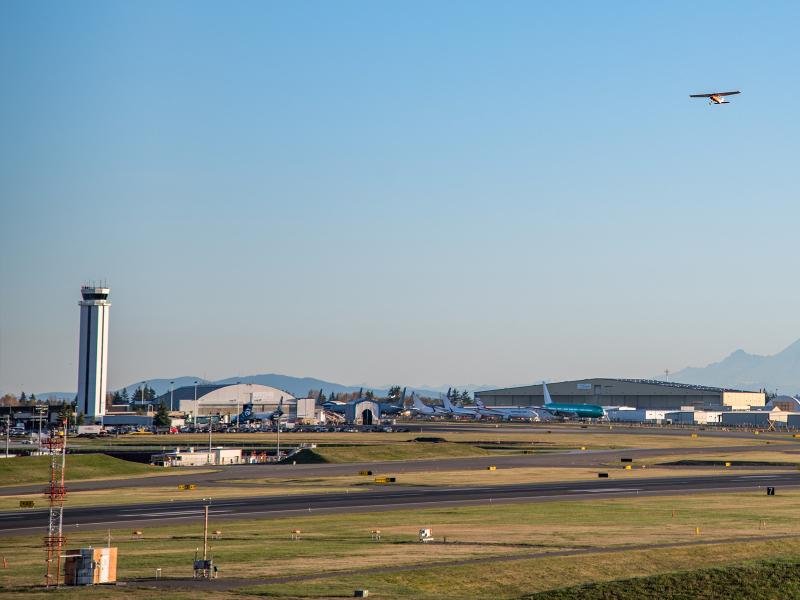
An initiative from Washington State University and Snohomish County leaders is aiming to make Paine Field a nexus for testing and improving sustainable aviation fuels made from non-petroleum materials.