NASA has awarded $2.5 million to the BioS-ENDURES consortium, led by the University of Washington and including WSU and PNNL, to advance space life sciences research supporting human health in space and Earth-based applications.
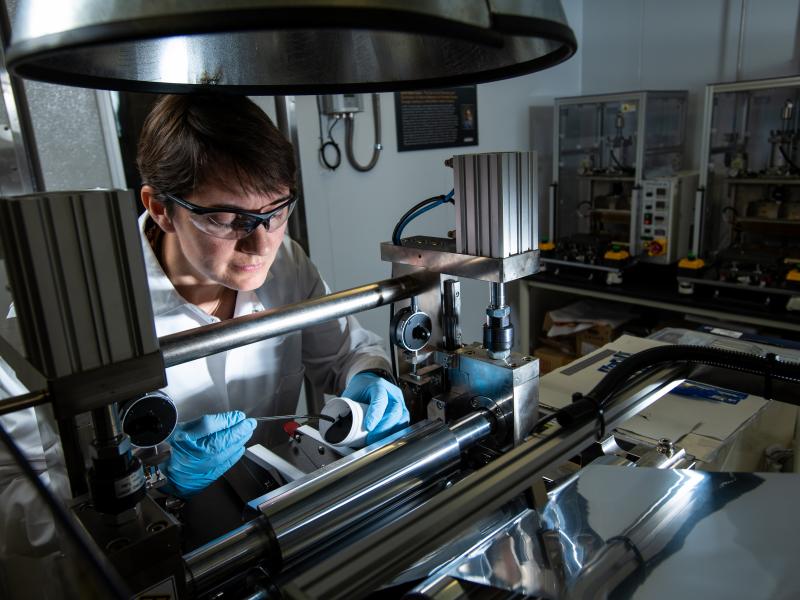
Global experts gathered at PNNL for the 9th International Conference on Sodium Batteries, sharing advancements in sodium battery research and development.
The demand for energy is growing—and so is the technology supporting it. However, future development of power generation technologies could be affected by a key factor: material supply.
Through a detailed examination of historical data supported by mechanistic analysis and model experiments, researchers unveil that a large-scale climate system intensifies heat extremes and wildfire risks in the PNW.
This study shows that dry dynamics alone is not enough to understand jet stream persistence. Instead, clouds and precipitation are more important contributors than internal “dry” mechanisms to this memory of the Southern Hemisphere jet.
Research that modeled increased heat pump adoption alongside climate change impacts in Texas showed that high-efficiency heat pumps buffer the strain that electric heating might put on the power grid.
The Sodium-ion Alliance for Grid Energy Storage, led by PNNL, is focused on demonstrating high-performance, low-cost, safe sodium-ion batteries tested for real-world grid applications.